
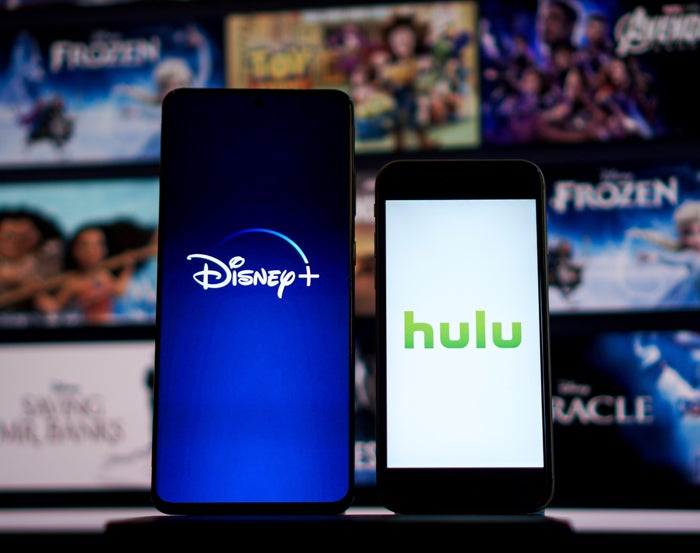
Connected TV ad targeting is a tricky dance for new AVOD services like Disney+ with ads, Max’s ad offering or the Netflix ad-supported tier. Move too fast, and the user experience suffers. Move too slow, advertisers get impatient.
Disney is trying to figure out its streaming ad choreography this summer.
It has its hands full moving Hulu’s ad targeting capabilities to Disney+, which launched ads in December. The programmer’s unified ad platform powers both services, but Hulu has been running ads for years. And it takes time to emulate a full suite of ad targeting products on a different app.
When it comes to incorporating Hulu ad offerings onto Disney+, Disney is choosing to do it right rather than quickly, which calls for a more gradual and thoughtful approach, according to Jeremy Helfand, EVP of ads and data platforms at Disney Entertainment and ESPN technology.

The work began earlier this year to add more gender-based demos and geotargeting to Disney+ ads, in addition to the initial targeting primarily for age-based demos.
Disney is still on track to reach its goal of full ad targeting parity across its platforms over the summer, Helfand says, before creating a “one-app experience” later this year that would put Hulu and Disney+ content in the same place.
Fit the format
But why does it take so long to make an ad-supported pivot?
Disney’s identity graph includes audience segments for both Hulu and Disney+ audiences that are available to buy directly or programmatically. But it’s not simple to move Hulu’s less conventional ad formats, such as pause ads and binge ads, over to Disney+.
Offering more formats outside of 15- or 30-second spots requires closer integrations between advertisers and Disney’s ad server so buyers can choose which placements work best for particular audiences. Ad insertion also works differently for live and on-demand content, so it takes time to make sure newer ad formats deliver properly in both viewing environments.
Plus, Disney has to carefully manage the ad load on Disney+ while integrating these new formats. Hulu currently has a higher ad volume, for example, and viewers who are overloaded with the same ad across services get frustrated with high-frequency targeting, even if the separate ad platforms are within their own frequency caps.
While Disney is monitoring feedback from advertisers, it must also have a finger on the pulse of user experience, since technical hiccups or advertising missteps could result in subscriber losses.
Get with the programmatic
Programmatic ads are the impetus behind Disney’s push for targeting parity.
Disney wants to automate its ad sales business by making more inventory addressable and available programmatically. More than one-third of Disney’s advertisers now buy programmatic ads, compared to one-quarter last year. If targeting improvements and ad format options come to Disney+, that number will keep increasing.
Core to Disney’s strategy is YODA (referring to Yield Optimized Delivery Allocation, not the little green guy), a tool in Disney’s tech stack “meant to help put programmatic advertisers on equal footing with [Disney’s] direct advertisers” by placing ads where they’ll perform best across Disney’s entire portfolio, Helfand says.
For YODA to work, advertisers need to reach programmatic inventory without going through the programmatic vendor ecosystem. Which means Disney must open up its top-shelf inventory to programmatic buyers.
The end goal is for ad targeting and formats on Hulu to be available on Disney+, both directly and programmatically. It’s a “very methodical and intentional process,” Helfand says, noting that Disney is getting positive feedback from advertisers along the way.
What I’m wondering is: How much will these upgrades improve return on ad spend once they’re fully available over the summer?
Let me know what you think. Hit me up at alyssa@adexchanger.com.