
Magnite Doesn’t Want To Be A DSP. It Just Wants To Own The Decisioning Layer
On Wednesday, Magnite CEO Michael Barrett painted a picture of a company that’s edging into the buy side by adding more DSP-style capabilities for planning and activation.

On Wednesday, Magnite CEO Michael Barrett painted a picture of a company that’s edging into the buy side by adding more DSP-style capabilities for planning and activation.

Disney got some cash back in its pocket after the OpenAI deal fell apart – but the company still plans to lean into AI.

Cuisinart’s marketing team has been eager to take advantage of generative AI-based creative.

Amazon’s advertising businesses earned a total $19.8 billion in Q2, the company reported in its quarterly earnings on Thursday. That’s up from $15.7 billion in Q2 2025, and good for a 26% year over year growth rate.

Guess there’s no pleasing investors. Despite Reddit delivering an objectively solid Q2, its stock cratered, in part because of search-related headwinds and low referral traffic.

Freewheel will begin reporting show-level data; Xbox will let users stream games for free if they watch ads; and Meta and Google can develop AI ads without even a prompt.

A combination of layoffs, lawsuits and AI operating costs set back Meta’s Q2 earnings, despite increased revenue.

Somewhere between what the ad industry says and what the market rewards is often where the truth lives. Here are the three industry storylines most in need of debunking.

Amazon’s million-dollar sellers are revolting against changes that undercut their margins and change where their ads run. From inside a meeting of these discontented sellers, AdExchanger Senior Editor James Hercher shares how they are fighting back – and why Amazon made these changes.

Sports are where the money is; Reddit’s rethinking its AI licensing strategy; and data targeting has its darker sides.

Investors didn’t bring up Google’s advertising business or ads in general once during the Q&A portion of Alphabet’s earnings report call on Wednesday.

Comscore is adding Spotify, SiriusXM, Triton Digital, Acast and Libysn to its Proximic targeting solution to build brand-safe, contextual audiences for omnichannel campaigns.

Kraft Heinz’s deal with Disney represents a food marketing trend; how buying location data is a legal loophole for the government; analysts rain on OpenAI’s ad parade.

We’re witnessing the end of the pageview era. But the interesting question isn’t how publishers replace their lost search traffic; it’s what they do with the audience they already have.

Megaphone becoming part of Spotify’s Ad Server impacts campaign setups; IAB finds 43% of buyers have little confidence in CTV ad supply quality; and Netflix’s ad-filled MLB Home Run Derby broadcast gets panned.
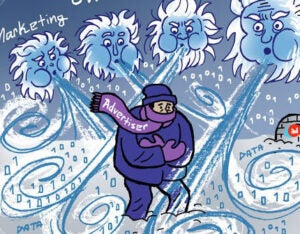
Google and Meta are quietly rewriting the rules of ad measurement, and they’re doing it with open-source marketing mix modeling tools that many marketers don’t even realize they’re using.

Advertising in AI-native destinations and experiences is already starting to look less like a series of experiments and more like an emerging market.

Instead of relying on rigid audience segments, modern systems can interpret a real-world moment in real time, combining layers of information to better predict what someone might actually care about right now.

Netflix considers live TV channels; Ofcom tells social media to cool it with the scam ads; and Meta gets weirdly nonconsensual with its AI images.

Jessica Padula, Nespresso’s VP of marketing, on tapping into existing communities, hanging out in Reddit threads and how the coffee brand is using data to stay close to its customers.

Creator marketing is taking over the B2B space; Reddit develops AI tools to fight spam; and Comcast-owned Sky will acquire ITV’s Media & Entertainment unit.

Paramount consolidates its ad tech and product teams; Meta execs are still figuring out the role of AI; and FIFA and World Cup sponsors lean on influencers.
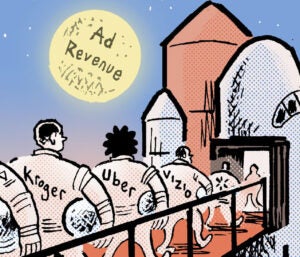
Retail media ramps up CTV partnerships to extend ecommerce audiences off-site; LaLiga’s piracy crackdown hits legit sites in Spain; and OpenAI mulls third-party ad measurement.

Reddit is now one of the main data sources feeding LLMs and AI search. In this episode, recorded live in Cannes, COO Jen Wong talks data licensing deals, how people use Reddit to validate what they’re about to buy and what it takes to stop bad actors from gaming its forums to sway AI results.

In a world being agentically orchestrated at scale, human judgment is the indispensable guardrail preventing us from optimizing right over the cliff.

Everyone’s investing in AppsFlyer; NBCU launches Rock Studios, a creative studio for brand integrations; and Meta wants to hop on the TV bandwagon.

The future of TV isn’t traditional vs. CTV. Rather, it’s a partnership of two sides. Fox and Roku represent this convergence.

Ask Ad Manger offers instant troubleshooting help when a campaign isn’t delivering as expected, ideally by diagnosing the problem and suggesting how to fix it.
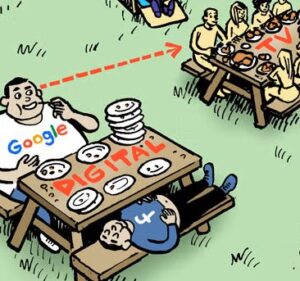
Where will OpenAI put its ads?; YouTube may or may not be considered TV; and Uber and Lyft deals really are too good to be true.

CloudX, which makes AI infrastructure for app publishers, is expanding from monetization to agentic buying for user acquisition.

Advertisers can now use Vistar to activate both off-the-shelf and custom audiences built on T-Mobile’s first-party location and app data.

Apple’s WebKit crackdown appears to extend well beyond The Trade Desk, putting hundreds of ad tech, data and identity vendors on a mysterious, dynamically updated block list.

Zoom has 99% unaided brand awareness, which sounds great on paper. But there’s a catch: Most people still think it’s just a video-call app.


Agencies are differentiating their tech stacks by building custom agentic AI tools for their clients. And they’re rethinking owning those AI tools – particularly since licensing them creates new revenue streams.

Agencies and marketers discussed the future of AI governance at AdExchanger’s Programmatic IO NYC this week. The main takeaway? Expect insurers to play an increasingly important role in managing AI compliance.

The Trade Desk is unable to serve ads to the Safari browser for Apple device owners that have downloaded iOS 27. Apple has been investigating the issue since last week.