It seems like all the streaming services are getting into vertical video these days.
Disney launched its feed for Disney+, called Verts, after experimenting with a similar feature on ESPN+. Netflix is rolling out its version at the end of the month; Peacock, which has housed vertical video on their app for over a year, is doubling down with an entire tab devoted solely to Bravo clips. And after months of speculation, Paramount just rebooted its mobile app to include – you guessed it – short-form video capabilities.
Obviously, you’d expect these announcements to come with details about new ad placement opportunities. If the goal, seemingly, is to compete with TikTok, YouTube Shorts and Instagram Reels, then it’d make sense to offer the same ad formats that those companies all do.
But ads aren’t on the menu – not yet, anyway. I’ve confirmed this with Disney and NBCU so far, although Paramount and Netflix didn’t get back to me in time for this newsletter.
There could be a couple of reasons for this lack of advertising opportunity. Pretty much all of these vertical video features are positioned as a discovery engine – a way to convert audiences toward a streamer’s available lineup of TV shows and movies. That’s why the focus seems to be on clipping and repackaging existing content, a concept already so ubiquitous that it served as a punch line at the Oscars last month.
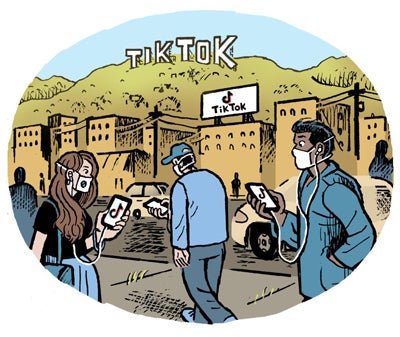
People are already used to seeing these types of clips on the usual suspects of social media, of course. Which means that if streamers want their users to start scrolling on their apps instead, they have to offer something that platforms like TikTok currently can’t: an ad-free environment.
Or maybe you have to allow users to form a habit before you can monetize the behavior.
And now for a micro-interlude
Speaking of habits, there’s also a common theory floating around that all these streamers are building out vertical video capabilities because they’re getting ready to dip their toes into the microdrama trend, another internet phenomenon that the entertainment industry seems eager to jump on. (In fact, Disney already hinted as much at CES this year.)
For the uninitiated, microdramas are an emerging genre of vertically shot, episodic narratives that first became popular in China. They’re often produced cheaply with non-union talent and tend to be rife with cliffhanger-driving clichés, as a way of compelling viewers to find out what happens in the next episode.
The media likes to compare microdramas to TV soap operas, but they actually have much more in common with mobile games and web-based romance fiction. That’s according to Thom Woodley, who’s created and produced microdrama content for apps like FareFlow and Shortical.
Some microdrama apps are free with ad support, but a lot rely on subscriptions or in-app currency, Woodley told me. They’re also built with a lot of churn in mind. Several million people might watch episodes for free until they hit the paywall, but less than a hundred thousand will make it to the end, forking over something like $30 to $40 for a cumulative two hours or so worth of story. (As a point of comparison, the average movie ticket ranges from $10 to $25.)
Additionally, most microdrama companies have the tendency to “spend $9 million to make $10 million,” in Woodley’s words. Which is part of why they seem to dominate social media, because all that money is going straight into advertising.
None of this means that traditional entertainment companies shouldn’t experiment with short-form storytelling, of course. Heck, having established players in the space might help to elevate the overall quality of what’s being produced. But it does complicate the idea that huge studios will be able to replicate the same kind of financial or even cultural success. (Need I invoke the dreaded spectre of Quibi?)
In the meantime, western-based microdrama companies are already beginning to explore their own direct relationships with brands and advertisers beyond the traditional studio system.
Microdrama app VeYou only launched last week, for example, but founder and CEO Tommy Harper told me he’s been having conversations with brands for months about how best to integrate their marketing into the content – not as traditional ad breaks, mind you, but as sponsorships and product placement that can do double duty as ad creative.
Back to your regularly scheduled scrolling
Maybe I’m being pessimistic (which tends to be my default position these days), but the corporate push to capture vertical video and short-form storytelling feels like it’s already too little, too late.
Don’t get me wrong: I don’t think vertical video is in danger of total extinction, and I don’t expect everyone in the world to throw their phones away anytime soon. But it sure feels like the current format of looping videos on a continuous feed has lost some of its luster, particularly as it’s become more commoditized.
Just look at the results of a recent study that The Harris Poll conducted of Gen Z TikTok users. Not only are they pining for an older, less polished version of the app, but they’re feeling mentally drained (43%) and overwhelmed (40%) when using the current version.
To me, this dissatisfaction suggests it’s only a matter of time before the internet finds something new – and presumably more authentic-seeming – to capture attention.
I don’t know if microdramas will serve as the solution for that particular form of malaise. However, I feel pretty confident that by the time the big streamers figure it out, we’ll all be ready to move on again.
What’s your take? Got an opinion you don’t think I’ve considered? Shoot me an email at Victoria@adexchanger.com.
🤖 P.S. Somehow, I managed to get through this entire endeavor without mentioning the effect of AI tech! But that might be because I’m saving all my energy for our upcoming Programmatic AI event, which will take place from May 18 to May 20 in Las Vegas. Tickets are already going fast, so make sure you reserve your spot and register ASAP!
🦩 P.P.S. If you’re going to be at POSSIBLE next week, keep an eye out for my partner in CTV-reporting crime, AdExchanger Senior Editor Alyssa Boyle!