This Creator Marketing Platform Has Gone Fully Agentic
Upfluence guides brands through the process of finding and executing creator partnerships using its agentic system, Jaice.
Upfluence guides brands through the process of finding and executing creator partnerships using its agentic system, Jaice.

Actionable uses causal AI to determine what leads to customer dissatisfaction, and addresses those problems before they lead to churn.

L’Oréal adopted creative AI platform Springboards to generate creative ideas that led to a collaborative, ongoing ideation process.

Halo Collar, a dog collar brand with direct-to-consumer origins, is preparing for its retail expansion by honing its first-party data strategy and incrementality measurement.

Creator marketing is the talk of the town, but how do you prove it genuinely drives sales? Emily Steele, co-founder and CEO of creator platform Hummingbirds, breaks it down.

AI startup Gradial aims to develop new, on-brand creative assets at scale and connect back-end marketing systems.

New York, NY (August 25, 2026) — AdExchanger, the leading voice in data-driven advertising and marketing, today announced the finalists for the 2026 AdExchanger Awards, recognizing the organizations, technologies and leaders driving measurable impact across advertising, media and ad tech. Selected by an independent panel of senior industry practitioners, this year’s finalists represent the companies […]

AI can help make media buying more efficient. But it’ll take some more time before AI agents are a seamless part of the modern media buying process, says Goodway Group’s Andrea Kwiatek, director of strategic partnerships.
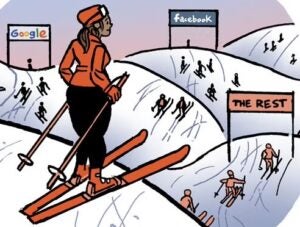
Two years ago, AppLovin launched an ecommerce beta program to bring in non-gaming advertisers. Now it’s launched a consumer ads segment with ambitions to take on the Big Tech platforms.
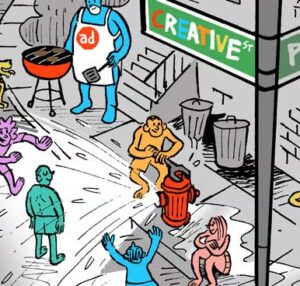
Holdcos get creative with M&A; striking a balance with influencer marketing; and social influencers are given marketing titles at brands.

Women’s sports is having a moment as publishers, advertisers and the tech vendors in between try to capitalize on rising viewership. Digital out-of-home is having a moment, too.

Sweetgreen turned the World Cup into a marketing moment for its new wraps, running video ads in public viewing spaces through Atmosphere TV.

Hightouch’s new creative generation tool helped HelloFresh develop creative at a larger scale and launch a Times Square activation.

Historically, non-human traffic was viewed on a spectrum from benign to intentional fraud. But AI agents represent a legitimate audience that brands will have to understand and engage.

For marketers, just knowing that an ad performed isn’t good enough anymore. To better understand the why behind ad performance, luxury real estate firm The Corcoran Group tapped an AI-based startup called mktg.ai.
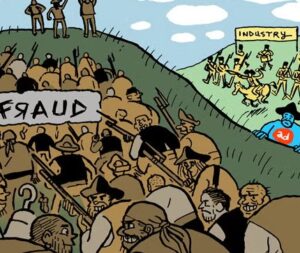
The purported best ways to counter ad fraud; CPG brands struggle in the face of GLP-1s; and the open web might be meeting its end.

Georgia-Pacific spent years building an in-house media and measurement team, and ended up with a hybrid model that keeps digital execution inside while leaving TV and CTV to its agency.

Triggers’ latest feature tracks how brand perceptions change over time by looking at consumer memories and subconscious associations.

Most brands worry about competitors. Whisker is worried about complacency, says CMO Hew Loyd – specifically, the millions of cat owners who have decided that scooping an open box of poop in their home is just one of life’s little chores.

Megaphone becoming part of Spotify’s Ad Server impacts campaign setups; IAB finds 43% of buyers have little confidence in CTV ad supply quality; and Netflix’s ad-filled MLB Home Run Derby broadcast gets panned.
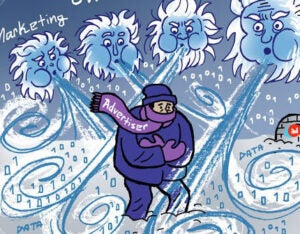
Google and Meta are quietly rewriting the rules of ad measurement, and they’re doing it with open-source marketing mix modeling tools that many marketers don’t even realize they’re using.

The “K” in “K-beauty” stands for “Korean.” But it should also stand for “kaboom” because Korean beauty product sales are exploding internationally, especially in the US market.

Jessica Padula, Nespresso’s VP of marketing, on tapping into existing communities, hanging out in Reddit threads and how the coffee brand is using data to stay close to its customers.

Xpln.ai announced the launch of Ideal Attention Time, an attention metric that helps advertisers understand exactly how much attention their creative needs to resonate and drive brand recognition.
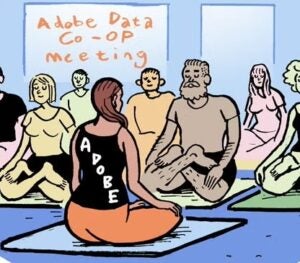
Last week, Adobe Advertising announced the general release of its own Custom Algorithms product, which is “a huge departure from the TubeMogul days,” Erwin Castellanos, GM of Adobe Advertising, tells AdExchanger.

This year, the percentage of ad spend going toward made-for-advertising (MFA) sites went up instead of down for the first time since 2023.
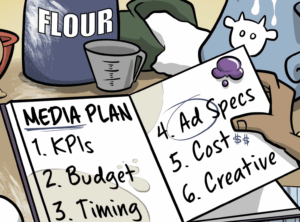
A new campaign planning tool from Strategus analyzes historical campaigns in the same vertical to see what targeting strategies are likely to perform.
Andrew McCalip is a founding engineer at Varda Space Industries, where he oversees the manufacturing of things like hypersonic reentry vehicles and satellite buses.

Creator marketing is taking over the B2B space; Reddit develops AI tools to fight spam; and Comcast-owned Sky will acquire ITV’s Media & Entertainment unit.

Paramount consolidates its ad tech and product teams; Meta execs are still figuring out the role of AI; and FIFA and World Cup sponsors lean on influencers.

As more brands, agencies, and media companies join in on the AI chorus of “better, faster, smarter,” the teams administering AI tools are singing a dissonant tune — managing a growing stack of AI-powered tools layered across planning, activation, measurement, reporting, and workflow management. It’s a familiar irony to anyone in advertising: Another innovation designed to […]

Agencies and marketers discussed the future of AI governance at AdExchanger’s Programmatic IO NYC this week. The main takeaway? Expect insurers to play an increasingly important role in managing AI compliance.

The Trade Desk is unable to serve ads to the Safari browser for Apple device owners that have downloaded iOS 27. Apple has been investigating the issue since last week.

The open web is done, stick a fork in it. Banner blindness is near universal, search traffic has run dry and publishers are struggling for oxygen. But what if that’s … not true?


Attention, publishers: Although you might not think of yourself as a data broker, in the great state of New Jersey, that’s not really your call anymore.

MMM can tell marketers what worked, but Lifesight’s open-sourced forecasting tool aims to tell them what to do next.

As programmatic buying becomes more common in audio, marketers and platforms fight the temptation to cram in as many placements as possible.