
Google Wants To Do Your Shopping For You At GML This Year
Agentic shopping is the next big thing. At least that’s the message from Google’s big annual conference for ad product updates.

Agentic shopping is the next big thing. At least that’s the message from Google’s big annual conference for ad product updates.
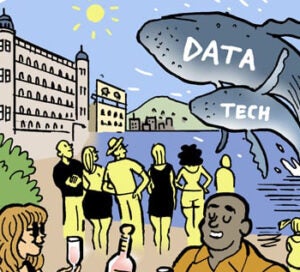
Hollywood shifts away from Cannes; SpaceX prepares to go public; and publishers aren’t prioritizing pageviews anymore.

If creators want brand dollars, they have to play by the rules of data-driven marketing and measurement, says Ryan Detert, CEO and co-founder of Publicis-owned influencer marketing platform Influential.

Hundreds of exasperated and unexpected ad industry phone calls were made on Sunday, as agencies and ad tech vendors discussed the fallout of Publicis Groupe’s $2.2 billion acquisition of LiveRamp over the weekend.
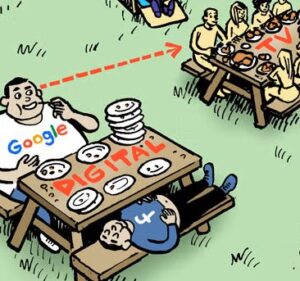
Keywords, Kinda The tabs, they are a-changin’. As in, campaign analytics tabs and what they’re meant to show advertisers. The biggest shift has been the move from “analytics” to “insights.” “Analytics” used to mean detailed, exportable data that brands could plug into their own systems. “Insights,” by contrast, are curated summaries and useful-sounding takeaways about […]

LLM environments introduce new dimensions to brand safety and suitability. Understanding them is the starting point for testing ChatGPT ads.

Netflix expands its ad ambitions with new programmatic tools; OpenAP pushes cross-publisher CAPI measurement for TV ads; Starlink bidstream data reportedly fuels surveillance tracking.

Viant’s modest growth story took a backseat to a far louder claim: that fed-up advertisers are finally ready to ditch the rigged economics of Big Tech’s walled gardens.
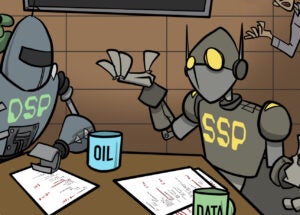
Agentic media buying may cut middlemen or add more chaos; Grocers are remodeling for retail media amid rising costs; Peacock is betting on the booming microdrama trend.

For companies like Shopify, Criteo and Instacart – and even for giants like Amazon and Walmart – figuring out if the agentic oasis is real or a mirage is their priority No. 1.

PubMatic has run more than 30 fully autonomous, end-to-end agentic campaigns through the SSP’s AgenticOS platform, in addition to more than 1,000 direct publisher deals.

TTD CEO Jeff Green laid out the DSP’s plan for winning in a new world of advertising that – AI aside – necessitates major changes in how marketers behave.

Clipping can be lucrative, but can – and should – it last?; AI Max raises the stakes for advertisers; and the ANA introduces a new fee to fund Aquila.
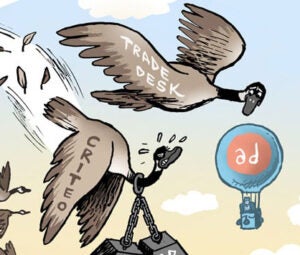
Criteo shares dropped by 20% Wednesday morning after the company reported shaky Q1 earnings and revised its guidance downward for the rest of the year.

There is a clear set of capabilities that CTV OEMs and streamers can offer advertisers that the original content owner cannot. Here are the most material gaps that the buy side experiences between supply sent from the publisher and supply sent from distributors.

Behind the scenes with Manscaped CMO Marcelo Kertész on the brand’s first Super Bowl spot – a musical ad starring singing hair balls (just watch it) – and how he’s shifting Manscaped’s marketing from performance-heavy DTC to a broader, brand-led strategy.

Amazon has packaged a handful of upgrades to its ads measurement solutions, obviously catered to TV and streaming media advertisers.

Instead of optimizing for raw reach, the social platform Spill is trying to build a business around trust, safety and tight-knit fandoms. As the platform grows, it begs the question: Is there room in global media plans for a smaller, high‑touch platform like this?
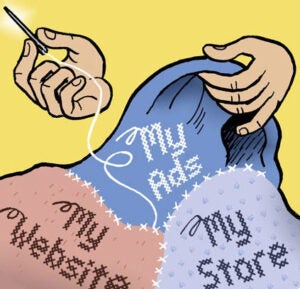
I find it useful on occasion to interview people who are marketing-adjacent, and thus possess a different and perhaps more highly clarified perspective on the tools we use for data-driven online advertising. One such recent briefing was with Joe Torreano, VP of product and UX for outdoorsy gear and clothing online retailer Backcountry.

Generative AI search has pushed traffic off a cliff across most of the internet, but not on social platforms. Reddit included.
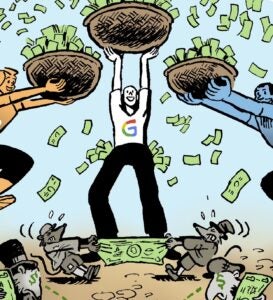
Alphabet earned $109.9 billion in Q1 this year, up from $90.2 billion a year ago. And that’s not even the truly gobsmacking number.
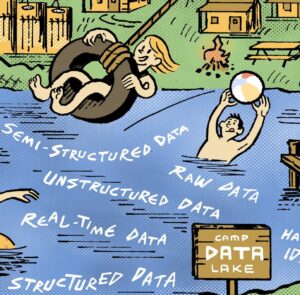
With its new funding, commerce data platform Chord plans to help brands access their data more easily by unifying it within one platform.

We can’t simply trust AI to make up for bland creative with sheer volume. The real performance shift happens when we use AI to push creativity further.
The two longest-standing names in the affiliate and partnership marketing category, Rakuten and Impact.com, have decided to stop fighting each other and will instead fight together.
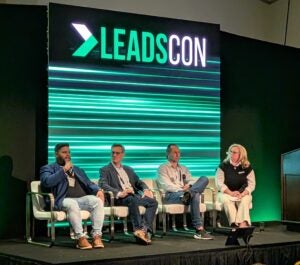
Last week, I went to LeadsCon in Las Vegas. After sitting through sessions on customer lifetime value and creator-led video performance, it became clear to me that lead gen and programmatic folks are trying to solve the same problem, just from different angles.
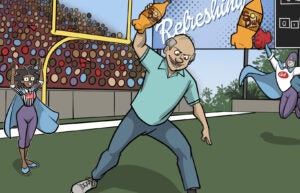
NBCUniversal successfully called its shot with the nickname “Legendary February.”
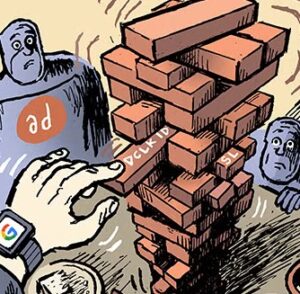
Partnerize has developed an an industry-wide standard to measure AI search performance and compensate publishers accordingly.

In the rush to scale globally, US brands are often content with “accidental attention.” But attention isn’t a lottery; it’s a strategy that requires a deep familiarity with context in real time.

OpenAI has its own tracking pixel; Amazon sellers are boycotting the platform; and DirecTV hops on the CAPI bandwagon.

The IAB’s Connected Commerce event in New York City this week felt to me like the retail media industry’s first sit-down explanation to a child who is now a “big kid” and must act accordingly.

VideoAmp is competing in the measurement space by sharpening its focus on TV audience data, ad performance and, of course, AI. The company is also making strategic hires and promoting from within.

The Prebid Summit in New York City on Tuesday exceeded the event’s reputation for liveliness.

The ad industry has become a community of people who say things like “This is going to sound relatable” and follow it up with a sentence that may as well be Martian to 99% of America.


LG home screen inventory is now available through agentic buying, opening up a premium TV placement to faster, more automated campaign setup.

Reorienting the ad auction so that ad servers bid into Prebid lets publishers access demand from Google AdX without also having to use Google’s ad server.

Starling recently launched as a connected TV SSP and wants to capitalize on the opportunity to address a major pain point facing CTV marketers: the lack of show-level data.