
PODCAST: The Big Story
Hallelujah, Retail Media Standards: Miracle Or Meh?
The IAB gave us new retail media standards for Christmas. But will the industry actually adopt them? Plus: how AI will be used in advertising in 2025.

The IAB gave us new retail media standards for Christmas. But will the industry actually adopt them? Plus: how AI will be used in advertising in 2025.

Achieving consensus on the definitions for even baseline retail media metrics required a tough 18-month slog. Unfortunately, this was the easy part.

After more than three years as SVP of retail media at Albertsons, Kristi Argyilan is taking a ride over to Uber to lead its advertising business.

The in-game advertising market’s stagnation is both unsurprising and frustrating. The onus is on the gaming industry to make gaming an essential channel for advertisers, rather than a nice-to-have.

What is incrementality testing? “I’ve been doing more interviews with journalists lately and realize I need a better answer to this question,” says Haus Head of Strategy Olivia Kory.

AppLovin’s ecommerce advertising beta program has sparked optimism and speculation. Plus, the results of YouTube’s auto-reply program have been mixed.

Cleaning the programmatic supply chain is slow going. Plus, Shopify’s ecommerce ad product will soon be available to all Shopify merchants.

Retail media and tech platforms now represent a return to agency scale dynamics. The proposed Omnicom and IPG merger is the latest example.

Antitrust regulation has counterintuitively favored the biggest ad industry players. Plus, another streaming service, anyone?

Publishers expect the agencies will eliminate tech redundancies as they consolidate, which could compel pubs to shed redundant tech themselves. The merger could also entrench principal-based buying, which may not be a bad thing.
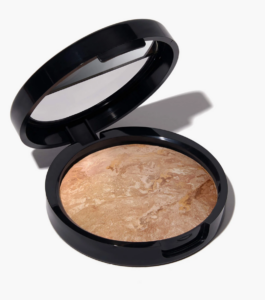
AS Beauty has been using the enterprise version of Shopify Shop Campaigns to acquire new customers and only pay for those that convert. Shop Campaigns went GA for all merchants on Wednesday.

“It’s going to be harder for [indie agencies] to compete,” said Rob Rivenburgh, the CEO of Mars United, who also now leads the Publicis Commerce global group.

Ad industry growth will slow to single-digits next year; consolidation hits the CPG market; and predicting the future of the FTC based on a commissioner’s pitch to the president-elect.

Curation is a reaction to programmatic’s worsening queries-per-second problem, says Permutive’s Joe Root. DSPs are biased toward impressions that have an identifier attached, so SSPs are using curated deal IDs as a stand-in for third-party cookies.

Enjoy this weekly comic strip from AdExchanger.com that highlights the digital advertising ecosystem …
This year, Black Friday stretched on for days and days. And the retail holidays is evolving in other ways, as online shopping takes over.
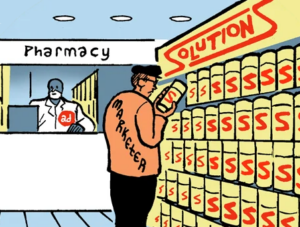
Retailers should always have a shopper-first mentality – and sometimes that may mean having to deprioritize their retail media business.

Personalization and customization are great, but when marketers go overboard with targeting, they don’t cast a wide enough net to attract new customers and foster growth, says JP Jansen, SVP of marketing and CMO for North America at Mars Pet Nutrition.
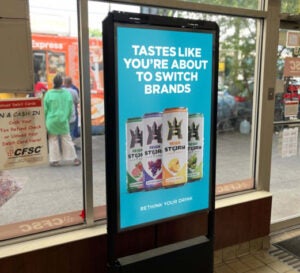
Western Union – which, fun fact, sent its first telegrams across the American frontier in the early 1850s – launched a media network last month that reaches 150 million people.

Black Friday ecommerce continues to surge, mainly on mobile; social platforms pull optimization features for health and beauty brands; and Google’s antitrust lawyers subpoena info about rival AI search startups.

Despite CEO Jeff Green’s denials, the rumors turned out to be true: The Trade Desk has spent the last three years quietly building its streaming OS, called Ventura, to compete with the likes of Roku, Amazon’s Fire TV and Google’s Android.

Dustin Hinz is CMO of Firestone Walker Brewing, which just launched its first non-alcoholic beer line. Now comes the marketing challenge.

Here are 12 essential tips to help advertisers optimize their retail media investments and thrive in this fierce new arena, based on insights from the ANA’s Retail Media Networks Fair.

Is the marketing funnel as we know it officially dead? Variations of that eternal question were posed over and over again to panelists at Paramount Advertising’s Performance Now Summit in New York City on Tuesday.

Forrester released its first SSP wave since 2014 last week, and there’s a surprise. The research firm ranked Google – whose sell-side ad tech platform is facing federal antitrust charges – as a mere challenger.

Why the agency pivot to alternative payment models is good for M&A; Zeta Global responds to a short-seller’s explosive claims; and X sees a mass exodus after the election.

IRIS.TV will remain an independent company, and Viant will push for CTV platforms to adopt its IRIS ID to provide contextual signals beyond what streamers typically share about their ad inventory.
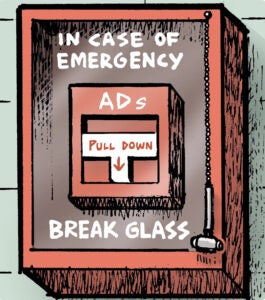
Threads will introduce ads to capitalize on users fleeing X; Perplexity tests ads and sponsored queries; and Amazon pulls the plug on Freevee.

Brands are getting back to basics. They’re rethinking their packaging and trying to figure out how they fit into the new world of retail store shelves. And while they are getting more data-driven, the data is not necessarily for advertising.
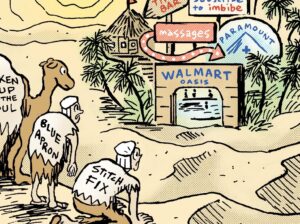
Walmart’s latest data play: an app for unlocking barricades on store shelves; training generative AI may rely more on scraping big-name sites than previously thought; and tracking the issues that mattered most to Trump and Harris, based on ad spending.

Infillion checked in with its latest acquisition on Friday: Foursquare. Apparently, if there’s a strategically interesting or distressed ad tech asset on the market, Infillion will find it.

A week ago, HBO MAX had its verified Reddit account overrun by a hacker group, which eluded notice for two days while it ran 108 different ad permutations targeting an unknown number of Redditors.

Adapting other channels’ strategies might be what gaming platforms need to do to get advertisers comfortable spending more. Leaning into gaming’s differentiators will come later, after bigger budgets arrive.

Taboola has made an offer to buy Dianomi, a UK-based ad tech company that connects financial advertisers with premium business and finance publishers.

When a creator already loves the product they’re marketing, it’s easy to work it into their content in ways that feel natural. That’s exactly what the Try Guys did.

The court has unsealed Judge Leonie Brinkema’s full remedies opinion in US v. Google (ad tech edition). So, what’s in there?