
AI Will Replace Marketing Jobs As CMO Budgets Stagnate, Says Gartner
CMOs’ ad budgets are flat this year compared to last year, according to Gartner. As a result, CMOs are looking for efficiency wherever they can find it, and AI is a top strategy.
CMOs’ ad budgets are flat this year compared to last year, according to Gartner. As a result, CMOs are looking for efficiency wherever they can find it, and AI is a top strategy.

Shopify is growing its advertising and data business; the privacy train is slowing down; Roku is striking deals to make its data more accessible.
Despite programmatic tech adoption, this world of three-letter acronyms is as foreign to some digital marketers as reading a medical journal.
At NewFronts, marketers weigh new budget priorities under the Trump tariffs; The New York Times isn’t letting tariffs temper its 2025 outlook; and video podcasting is taking over CTV.

WPP’s GroupM is getting a new name; there’s no such thing as a TikTok ban at NewFronts; and Meta’s ad growth prospects might be plateauing.
Why did Walmart buy Vizio? What happens when a CTV campaign turns on the S&P500+? Is Google losing its search engine edge?

Despite a 3% uptick in Q1 revenue to $451 million, Criteo’s stock fell by roughly 15% on Friday after news of a pullback by a major retail media client and tepid guidance.

PayPal embraces off-site media but says no to data sales; Google pivoted on cookies again, but what about the Google Ad ID?; and gen AI bots are blowing up publisher server costs.

Transparency has become the currency of credibility in advertising. Larger holding companies and black box AI platforms must recognize that their opaque practices are no longer sustainable.
Agentic AI aims to take the work out of campaign targeting; marketers are increasingly using retail media data in non-retail channels; and Puma drives sales by re-embracing its branding.

Incrementality measurement may be a sound methodology, but online ad platforms are not really bringing a steady river of new-to-brand customers with their incrementality-based solutions.
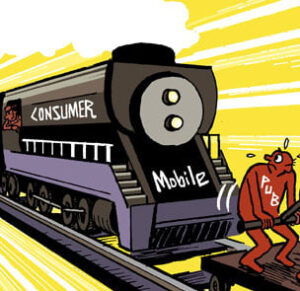
Criteo dives into video ads; after 20 years, YouTube might be the world’s biggest media brand; Threads opens up for advertising.

Shopify checkout might be coming to ChatGPT; private equity builds a French ad tech stack; and how Meta turning off news in Canada is affecting news access ahead of this month’s election.

The wave of ad tech headlines in recent weeks represents a long overdue moment of reckoning for companies who (still) hold disproportionate control over publishers’ website traffic and revenue potential.

Sabrina Sierant joined Mondelez more than 12 years ago, which seems like a prior age in shopping terms. In December 2019, she took on marketing for the US Chips Ahoy business, as Mondelez orchestrated a major rebrand and reinvestment in its cookie brand.

Jason Colon, until recently Publicis’ EVP and managing director of retail media, has taken a new role as EVP of Commerce Media at Horizon’s retail media agency Night Market.

Whether it’s on a shelf, on Instacart or an online shopping page, a brand needs to take advantage of every inch it has to express itself and entertain potential customers. At least that’s always been the perspective of Oatly, the Swedish oat milk brand known for self-deferential marketing.

The Trump tariff situation is in constant flux, creating uncertainty that spells doom for any potential growth in US ad spending this year. Plus, how retail media and other emerging channels could be threatened by tariff turmoil.

With “edible” in its name, how could Edible Arrangements not get into the budding cannabis delivery business?

Proof keeps piling up that gen AI makes marketing creatives lazy; Google stops serving ads to parked domains, prompting questions as to why those domains were ever monetized; and a resurgent David’s Bridal thinks it can reach profitability this year.

Yotpo, the retention-based marketing and analytics company, announced on Tuesday that it is acquiring fellow Israeli tech startup Coho AI, a customer data platform.

The retail media agency consolidation trend is still going with the announcement on Tuesday that indie shop Acadia has acquired fellow ecommerce marketplace ad agency Crush.

Forecasters expected tariffs would impact advertising growth projections. But that was before we knew exactly how steep these tariffs would be – and now that we do, it doesn’t bode well.

As most generative AI search engines focus on general adoption and subscription licenses, Perplexity AI is zagging toward advertising and commerce applications.

Audience suppression may be the missing link between annoying a consumer and building a lasting relationship.

The Google PMax whisperer releases his latest annual report; publishers brace for more disruptions from Google search updates; and stolen content is the least of Wikipedia’s gen AI concerns.

Wonder Group, a restaurant tech and meal delivery company, snapped up Blue Apron in 2023, Grubhub a year later, then Tastemade earlier this month. Tastemade brings new capabilities, says Wonder Chief Growth Officer Daniel Shlossman. But it’s an important step in the company’s plan to become a 360-degree advertising player.
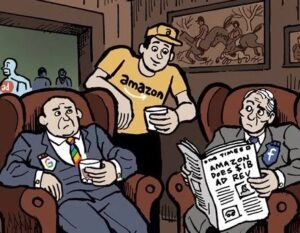
Oracle’s TikTok bid is a warmed-over Project Texas; Amazon’s ads biz has its sights set on Google; and gen AI search is a good traffic source for retailers, but bad for news pubs.

Dotdash Meredith (DDM) has hired Jim Lawson to run its ad tech division D/Cipher. Plus, can Target become a true advertising powerhouse?

Uber ended 2024 with its strongest quarter ever, posting 20% year-over-year revenue growth of $12 billion in Q4 – due in no small part to Uber Advertising.

Agencies are differentiating their tech stacks by building custom agentic AI tools for their clients. And they’re rethinking owning those AI tools – particularly since licensing them creates new revenue streams.

Agencies and marketers discussed the future of AI governance at AdExchanger’s Programmatic IO NYC this week. The main takeaway? Expect insurers to play an increasingly important role in managing AI compliance.

The Trade Desk is unable to serve ads to the Safari browser for Apple device owners that have downloaded iOS 27. Apple has been investigating the issue since last week.


The open web is done, stick a fork in it. Banner blindness is near universal, search traffic has run dry and publishers are struggling for oxygen. But what if that’s … not true?

Attention, publishers: Although you might not think of yourself as a data broker, in the great state of New Jersey, that’s not really your call anymore.

MMM can tell marketers what worked, but Lifesight’s open-sourced forecasting tool aims to tell them what to do next.