
TikTok Search, But It’s Going For Amazon; Can CTV Supply Outpace Demand?
TikTok announced this week that it would allow search advertising to be targeted by keyword. Plus, streaming ad supply now outpaces demand.
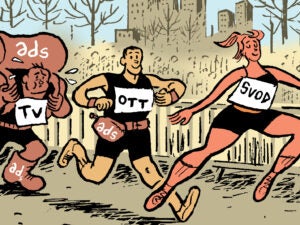
TikTok announced this week that it would allow search advertising to be targeted by keyword. Plus, streaming ad supply now outpaces demand.

Google isn’t perfect. But it offers convenient, cost-effective advertising tools that millions of small businesses use to find customers, grow and succeed. If the DOJ breaks up the company, it will also break those tools.

The US v. Google antitrust trial is over, but nobody’s done with the drama. Plus, Charter just struck a deal with NBCUniversal.
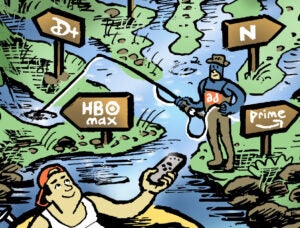
Winners and losers are emerging from the streaming melee. (Or at least the winenrs are.) Plus, CNN will begin testing metered content.
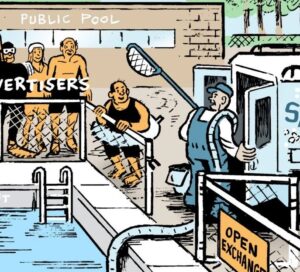
Here’s today’s AdExchanger.com news round-up… Want it by email? Sign up here. The Crusts Are Off The growth of online groceries and retail media puts new pressure on false advertising. It is not a coincidence that false advertising lawsuits have risen sharply. For one thing, claims made on packages on a store shelf or in a […]

The FTC’s got a new report on the data collection practices of large social media and video platforms. Plus, Amazon has its own “Shark Tank.”

Most retailers are long past withholding their shopper data from programmatic tech. They prefer the low-hanging fruit. But was that a good decision?

Two of the EU’s biggest Big Tech antagonists are set to resign; a GAM breakup could usher in post-ad-server programmatic; and how Google kept Prebid separate from the IAB Tech Lab.
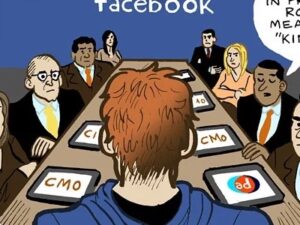
Is advertising to kids on social media as bad as advertising cigarettes to kids? Plus, DuckDuckGo doesn’t want Google’s scale to go away.

Pacvue has promoted COO Rahul Choraria to chief executive.

In today’s newsletter: How loosened ad restrictions helped snacks take over America; Brazil’s X ban dings stan culture; and Roblox partners with Shopify as it expands real-world ecommerce to all creators.

Wonderful hadn’t done an out-of-home (OOH) marketing push in more than 15 years. That is, until a week ago, when it began a campaign across six major markets to promote its new no-shell pistachio packs.

The bottom is falling out of the mass multichannel TV bundle. Plus, Amazon crushed its first-ever upfront this year.

In today’s newsletter: Google Demand Gen is the industry’s latest over-attribution controversy; data from third-party brokers might not be worth it; and The Trade Desk launches a CTV operating system.

In today’s newsletter: Amazon stands out among Upfronts CTV rookies; Google reveals how much revenue its ad tech divisions make; and women hold more marketing leadership positions than men, but churn is worse for women.

Enjoy this weekly comic strip from AdExchanger.com that highlights the digital advertising ecosystem …

Roku could start running ads every time you pause a blu-ray. Plus, the kickbacks required to play in the retail media market might eventually shut out all but the biggest brands.

Over the past month alone, there was a major Google Search ranking bug, a calamitous data breach involving Google Ads and Google Merchant Center and outages across Google Ads, the Analytics API outages and Google Merchant Center.
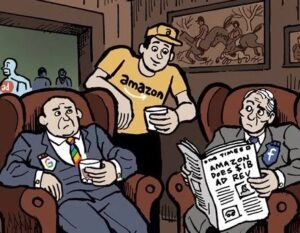
Is it time to retire references to the advertising “duopoly?” Plus, Omnicom wants to bring its major agency brands under unified leadership.

Have we finally reached peak retail media, or is the recent explosion of RMNs the sign of a healthy and thriving marketplace? “It’s the right question to be asking, especially at this time,” says Gopuff’s SVP of business, Daniel Folkman, who helped spearhead the company’s advertising business.
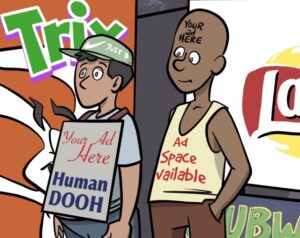
Yahoo DSP has new partnerships with the Planet Fitness media network and Rippl, a co-op of regional grocery and convenience store chains, including Wegmans.

In the past year, Baby product and mattress brand Newton Baby has put all its media channels through a new testing regime for incrementality. It was a revelatory experience.

The growth of Walmart’s ads business and third-party marketplace are separate, it says. Plus, Google and Meta’ve been targeting teens for a while.

In today’s newsletter: Digital twins are marketers’ cool new AI tool; Netflix pulls a Prime Video and defaults lapsed subscribers to the ad-supported tier; and California compromises with Big Tech on two journalism bills.

Adelaide used this latest cash injection to boost its valuation to $60 million ahead of an all-stock acquisition of Rita, an Amsterdam-based data marketplace with a focus on the EU.

Social commerce is already huge in the Asia-Pacific market, and it’s poised to blow up worldwide. Here’s how the success of TikTok Shop forecasts the future development trends of ecommerce and social commerce in the US.

In today’s newsletter: Walmart’s hottest growth drivers are ads and subscriptions; why The Trade Desk’s UID 2.0 could be regulators’ next target; and how the growth of CTV content fortresses is preventing breakout streaming hits.

Digital-native brands need to figure out how to win in retail shelves. They’re finding it difficult, to say the least.

With a landmark ruling potentially forcing Google to change its business practices, who is actually likely to steal some of its search market share? And what should marketers do about it?

In today’s newsletter: How membership bundles are creating new forms of consumer-facing partnerships; typically unflappable platforms leap to action when billionaires are harmed by bad ads; and X’s GARM lawsuit helped politicize brand safety.

Netflix’s revenue grew 12% YOY to $12.9 billion in Q3, which it maintains is in line with its forecast. Its ads business, however, is lagging slightly compared with expectations, causing Netflix to tweak its forecast for the rest of the year.

Apple is coming for identity resolution. WebKit’s latest tracking crackdown targets the infrastructure behind post-cookie IDs – and switching to a first-party setup won’t necessarily spare vendors.

Advertising supply chain intelligence company DecryptAds uncovered more than 2,100 AI-generated recipe sites that are monetized with programmatic ads and feature fabricated author profiles.


Most brands and businesses are trying to figure out how to improve their metrics when it comes to AI – and also what those metrics even are.

Minerva wants to turn fragmented customer data into something marketers can use, with AI agents doing the work behind the scenes.

VideoAmp is competing in the measurement space by sharpening its focus on TV audience data, ad performance and, of course, AI. The company is also making strategic hires and promoting from within.