
Like And Subscribe
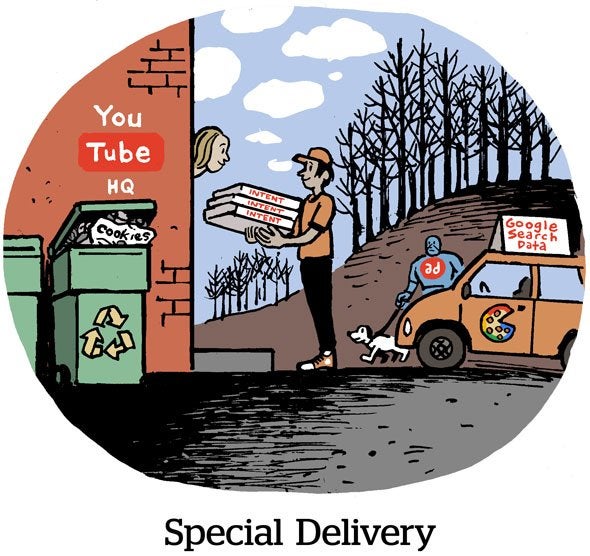
YouTube is officially bigger on TV than it is on mobile and desktop, Variety reports.
According to CEO Neal Mohan, TV is now the No. 1 device for YouTube in the US by watch time, as per Nielsen’s measurement.
For advertisers, this means the money they spend on programmatic YouTube ads gets them exposure on that big screen on the living room wall.
But YouTube is also pitching this shift in consumption behavior as an opportunity for creators.

In 2024, more than 50% of YouTube channels that earned $10,000 or more from platform rev share also made revenue from sources other than ads or YouTube Premium, the platform’s ad-free subscription tier. Think shopping recommendations (akin to an affiliate program) or memberships to specific channels.
Advertising can be a tricky revenue stream for creators. Only channels with at least 1,000 subscribers are eligible to make money on YouTube in the first place, which, by some calculations, is only 0.25% of channels.
AI Meets Local SEO
Last year, Google made a change to its local business prospecting system so that incorrect or shoddy leads are refunded automatically. Refunds were previously requested through a manual portal, which is now gone.
That was all well and good – until this calendar year. That’s when Google “started enshitifying all the leads with a ton of out-of-industry, out-of-city leads that are pure garbage,” posts Darren Shaw, founder of local SEO services firm Whitespark, on LinkedIn. (Tell us what you really think.)
Ginny Marvin, the liaison for Google Ads, responded that the automated leads system has issued more refunds than the manual way (though, to be fair, that could also be a sign that the leads have all gone to enshit).
Advertisers do get credits for leads they wouldn’t necessarily have manually requested. But it’s immensely frustrating when Google produces leads that are plainly off the mark – like for a totally different country or type of business – and there’s no way to demand a refund.
The refund mechanism isn’t even the core problem, though. Regardless of whether automated refunds are preferable for small business owners, many SMB and local business SEO agencies are in an uproar over a steep decline in Google’s lead quality overall, writes Search Engine Roundtable.
Never Break The (Supply) Chain
What do Temu and divorced parents have in common? They’re all getting half-custody, according to Bloomberg.
In Temu’s case, “half-custody” is a framework the ecommerce company started implementing last year and has accelerated in the wake of Trump’s election.
Essentially, sellers on the platform will have to ship their own products in bulk to American warehouses, and Temu will only manage the online marketplace. This differs from the original model, which saw Temu handling everything from price setting to shipping and marketing.
Not surprisingly, this shift is in response to the Trump administration’s new tariffs, which will drive up prices on all Chinese imported goods but especially small packages worth less than $800, which makes up most of what Temu ships.
The rule that would affect these smaller packages is in stasis for the time being, per a recent executive order from Trump that delayed ending it outright. But with Temu’s restructuring, it’s likely that fewer Chinese suppliers will be selling in the US regardless of how the tariff war shakes out.
But Wait! There’s More
André Swanston, who sold Tru Optik to TransUnion in 2020, raises $10 million for Phynd, a subscription-free smart TV cloud gaming startup. [VentureBeat]
How podcasters measure the role video plays in attracting incremental audiences. [Digiday]
New research from the BBC finds that AI assistants give accurate news information less than half the time. [BBC]
Meanwhile, ChatGPT’s political views and rhetoric appear to be shifting right. [Gizmodo]
Publicis Sports creates its own dedicated women’s sports unit. [Digiday]
In the voice of Ken Watanabe from the 2014 Godzilla movie: Let them fight. [Business Insider]
Sen. Dick Durbin (D-IL) sent a letter to Mark Zuckerberg asking about Meta’s role in advertising AI apps that generate nonconsensual nude images. [404 Media]
The far right’s war on content moderation comes to Europe. [Tech Policy Press]
Shopify has taken down an online store belonging to Ye, the artist formerly known as Kanye West, for selling T-shirts bearing a swastika. [CBS News]
You’re Hired
Verve names Grant Gudgel as SVP of marketing. [release]
Doceree appoints Ritesh Patel as chief growth officer. [release]
Thanks for reading AdExchanger’s daily news round-up… Want it by email? Sign up here.









