
Is JBP The New SPO?; Cloudy With A Chance Of Tariffs
What exactly are joint business partnerships? Plus, AI chatbot responses may be susceptible to Russian propaganda.

What exactly are joint business partnerships? Plus, AI chatbot responses may be susceptible to Russian propaganda.

What does it take to serve midsize brand clients? How is AI transforming media buying? And why, for the love of god, is measurement still so messed up? Mediastruction CEO and Founding Partner Marilois Snowman has a few thoughts.
T-Mobile may be considering an acquisition in the mobile data market; Google’s glitch shuts down ads for a weekend; and ad tech’s old guard is salivating over AI startups.
There are many open questions for marketers who want to implement AI-driven ad tech – and for customers considering the new AI-powered Oral-B. What does it even mean when a vendor touts its AI capabilities?

Curation is amazing – for SSPs. The question publishers continually ask is, “Is curation good for us?” That’s the wrong question.

Not every retailer has a solid handle on emerging AI tech. While some thrived, others stumbled – sometimes spectacularly. Here are some lessons to learn from Q4 campaigns.

According to CreativeX, ad creative is responsible for nearly half of sales lift, which is more than reach, recency and targeting combined. So why doesn’t creative get the credit it deserves? Until recently, says Anastasia Leng, CEO and founder of CreativeX, technology wasn’t advanced enough to measure creative decisions at scale.

US judge rules generative AI has no fair use claim; Snap sets its sights on SMBs; MMM comes to CTV; and Disney introduces ads in live TV, even for paid users.

Reddit’s ambitions to build its own AI-powered on-platform search business suggest even Google’s allies need to find ways to protect themselves from its influence – sometimes by copying its playbook.
Google’s open-source MMM product goes live; Amazon Prime Video’s ad biz turns one; and teens don’t trust Big Tech and have doubts about AI.

Slap on your Ray-Ban smart glasses, ask Meta AI to remind you to post on Threads and then hop into Horizon Worlds. Welcome to the near future, according to Meta.

The IAB predicts what privacy laws might be passed by the new congress; AI-generated newsletters are competing with local news; and the IAB Tech Lab ramps up production of new OpenRTB specs.

It’s not easy competing for business with massive holding companies (which are only getting more massive). But the Omnicom-IPG deal “also creates opportunities for the rest of us,” says Remy Stiles, North America CEO of programmatic agency Kepler.

Agents are autonomous and thoughtful, incredibly fast and knowledgeable. They won’t replace star performers, but they will supercharge your team’s delivery.

At long last, brands on Threads can buy ads. Plus, Meta is also trying to copy-and-paste an alternative to CapCut.
AI chatbots entice users into subscriptions with free trials; non-pornographic content creators are raking in ad bucks on PornHub; and the US TikTok ban has Americans flocking to other China-based apps.

Reddit COO Jen Wong shares how the company is banking on AI to push its conversation-driven performance marketing platform forward.
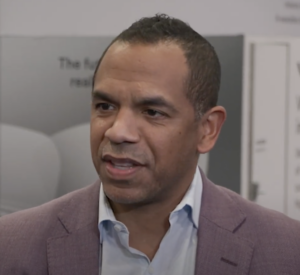
Experimenting more with AI is an item on the top of many New Years resolution lists – including with agencies. SKDK CEO Doug Thornell talks about where he sees opportunity for agencies to use AI in its processes. In this interview on the CES showroom floor, he also recaps the big changes in political spending […]

Recorded from the showroom floor at CES, the AdExchanger editorial team talks about the intersection of consumer electronics and advertising with our guest, Dave Meeker, head of AI innovation at Monks.

Morgan Pomish, head of innovation solutions at Digitas, shares what brand leaders and advertisers should consider before jumping on a tech bandwagon.

Tune into the first episode of the year with guest Andrew Frank, VP and distinguished analyst at research firm Gartner. We cover a lot of ground, from the impact of multiple major Big Tech antitrust trials to practical AI use cases (minus the BS).
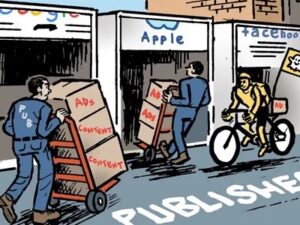
Meta recently revisited its goal to create AI-generated “characters” — which backfired. Plus, Apple’s trying to avoid a class-action lawsuit.

Enjoy this weekly comic strip from AdExchanger.com that highlights the digital advertising ecosystem …

2024’s most popular guest columns offer a snapshot of an industry in flux – and one that’s grown cynical due to repeated promises of unrealized change.

The IAB gave us new retail media standards for Christmas. But will the industry actually adopt them? Plus: how AI will be used in advertising in 2025.
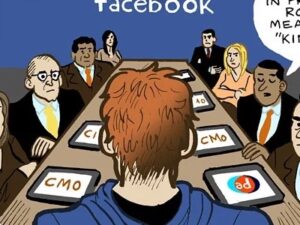
Publisher C-suite drama has been making headlines recently. Plus, there are now 27 different active lawsuits against various AI content generation companies.

Sports betting comes under fire over dubious ad claims and problematic targeting; Forbes says Google’s SEO crackdown on affiliate marketing caused it to cut freelancers; and SCOTUS takes on the TikTok case.

This year has been a series of highs and lows for Zeta Global. It acquired LiveIntent for $250 million – a high. And it was the subject of multiple withering short seller reports – a low. But CEO David Steinberg says he’s not sweating it.
Marketers are already beginning to prepare for a world without TikTok. Plus, the TV manufacturing industry is more focused on user tracking and monetizing with ads.

AppLovin’s ecommerce advertising beta program has sparked optimism and speculation. Plus, the results of YouTube’s auto-reply program have been mixed.

Paramount is merging the ad tech stacks behind Paramount+ and Pluto TV, releasing a new performance product, offering more control over ad placements and introducing dynamic ad insertion in live sports.

The IAB’s Connected Commerce event in New York City this week felt to me like the retail media industry’s first sit-down explanation to a child who is now a “big kid” and must act accordingly.

Meta is simplifying its CAPI setup and teaching its pixel new tricks, including adding an AI-powered feature that automatically pulls in data from an advertiser’s website.


TelevisaUnivision is the latest TV publisher to join the self-serve trend that’s rising in popularity across connected TV advertising. Its streaming inventory is now available to buy through fullthrottle.ai’s self-serve platform. The collaboration includes an ad bidder designed to improve both targeting and measurement.

Law firm Keller Postman is leading mass arbitration suits against Google, seeking advertiser damages for alleged monopoly overpricing. The total available pot is a quarter-trillion dollars.

Opal launched Gem, a new AI solution, to help large brands unify the layers of media and tech within their organizations.