Xandr Can’t Find Who It Doesn’t Know; The New Teenage Wasteland
Ad tech faces a GDPR compliance paradox. Plus, TikTok will make it harder to target teenagers and plans to give users more control.
The DOJ published the witness list for its upcoming antitrust trial against Google, and it reads like the online advertising industry’s answer to the Social Register.
Since removing IDFA on iOS, Apple has made it clear that probabilistic or fingerprint attribution is not allowed. Any method that lets an advertiser link users between apps is forbidden.
Electronic Arts is done slow-rolling into advertising. Plus, Sensodyne is experimenting with “content credentials” for its digital ads.
Yahoo may have earned itself a stay of execution with The Trade Desk. Plus, TV buyers are clinging to Nielsen for yet another upfront season.
Google is testing a new badge for shopping-related searches on some mobile devices. Plus, should brands have political opinions?
Publishers and SSPs aren’t incentivized to accurately label their video inventory. But increased pressure from the buy side could correct the skewed pricing dynamics that result from outstream being sold as instream.
Upfront negotiations might take longer than normal this year. Plus, Meta is already in hot water with the EU’s new digital regulations.
By now, the industry is well aware that Oracle, once the most prominent advertising data seller in market, will shut down its advertising division. What’s behind the ignominious end of Oracle Advertising?
The end of Oracle’s ad business is a major shift in the ad landscape. Here’s how to assess the impact on your business and begin to find a new path forward, according to Alliant’s Christopher Morse.
If Google were to shut off third-party cookies today and implement the current version of the Privacy Sandbox, publishers would see their ad revenue on Chrome tank by around 60% on average.
IPG announced what it’s calling a Climate Action Marketplace built in partnership with SeenThis and PubMatic to make it easier for marketers to do the sustainable thing.
Setting price floors can unlock additional revenue. But only by setting the “right” floor for any given impression can you increase and not harm yield.
In today’s newsletter: Mobile and email providers face political blowback if they enforce ad policies; a new analytics startup sets its sights on Amazon attribution; and CFOs and CMOs are more aligned than you might think.
It’s been almost one year since MediaMath went out of business. Two months later, Infillion acquired the assets out of bankruptcy. Now it’s time for the next phase, says Infillion CRO and CMO Laurel Rossi.
In today’s newsletter: SSPs lead the way on ad tech’s M&A resurgence; Disney rolls back CPMs to court more streaming ad demand; and why dating apps struggle to grow and monetize their audiences.
TTD confirmed to AdExchanger that, as of June 17, it had removed support for at least some of the online video inventory sold by Yahoo as a publisher.
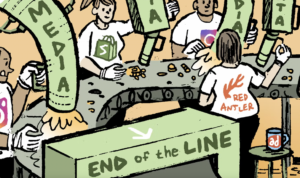
Enjoy this weekly comic strip from AdExchanger.com that highlights the digital advertising ecosystem …
United Airlines really wanted everyone who traveled to Cannes this year for the Lions festival to know it has a media network now. Before takeoff on the 7:50 p.m. overnight Saturday flight from Newark Airport to Nice, France, an ad for Kinective Media, which is the name for United’s new media network, played on every […]
The average CTV platform now authorizes 30 SSPs to sell its inventory. And one of the most noticeable effects of increased SSP saturation in CTV has been higher costs due to SSP reselling.
In today’s newsletter: Amazon’s argument that advertisers should trust optimization algorithms over alternative IDs; Japan passes an app store antitrust law targeting Apple and Google; and Google Ads ends support for credit card payments.
Companies like TripleLift that created the programmatic native category are now in their awkward tween years. Cue Advertible, a “native-as-a-service” programmatic vendor, as put by co-founder and CEO Tom Anderson.
Incrementality is a retail media term for attribution. It’s the attempt to measure the actual contribution of advertising to a business’ bottom line. But in a market where everything old is new and everything new has been done a thousand times, it’s important to focus on other kinds of incremental gains.
Pandora can match the email addresses of its logged-in users to UID2 tokens, which can then be passed through AdsWizz, The Trade Desk and other ad platforms that integrate with UID2.
The Global Media Sustainability Framework, which was announced Monday during a panel at Cannes, saw collaboration across all parts of the industry. Supporters include the 4As, IAB, Dentsu, Google, GroupM, L’Oréal, Omnicom, Publicis Groupe, Mastercard, Meta and Unilever.
In today’s newsletter: Pinterest launches an ad optimization solution with familiar-sounding name; consumers can’t live without YouTube; and ad tech leaders try out trade journalism.
In today’s newsletter: What the surge in political ad spend on CTV looks like for the end user; Mars Wrigley tries to make gum stick online; and Google neglects Fitbit after mining it for data.
PilotDesk offers AI- and machine-learning-based workflow software for ad buyers and sellers. These solutions are based on the company’s experience with how ad servers like SpringServe function.
Media governance measures advertisers can put in place to navigate the complexity of brand safety and gain better control of the quality of their media spend.
Equativ (formerly known as Smart AdServer) announced its acquisition of Sharethrough, an SSP with a specialty in native advertising.