
IAS Is Battling DV For Moat’s Soon-To-Be-Former Business
Integral Ad Science CEO Lisa Utzschneider told investors during the company’s Q2 earnings call on Thursday that IAS is “in the thick of the Oracle opportunity, and we’re playing to win.”

Integral Ad Science CEO Lisa Utzschneider told investors during the company’s Q2 earnings call on Thursday that IAS is “in the thick of the Oracle opportunity, and we’re playing to win.”

Athletes aren’t the only ones competing during the Paris Olympics. Advertisers are bidding to reach tens of millions of viewers during the first programmatic Olympic Games.

Enjoy this weekly comic strip from AdExchanger.com that highlights the digital advertising ecosystem …

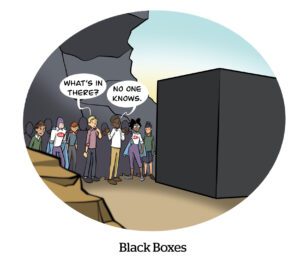
Pharmacies, groceries and even convenience stores have taken to locking up large swathes of merchandise. Plus, Roblox reported Q2 earnings on Thursday.

Q2 was relatively ho-um for Criteo. Its revenue ticked up by just 1%, although the company did move from a net loss of $2 million in the year-ago quarter to a $28 million profit.

The acquisition puts Reddit in a better position to compete with Google, Meta, Amazon and TikTok, which all built or expanded their AI creative generation and optimization tools within the past year.

Ranker saw a 5% increase in demand from a new fully automated Prebid wrapper optimization feature in Magnite’s Demand Manager.
In today’s newsletter: Google Performance Max enables third-party brand safety measurement for YouTube; gen AI firms roll out new data-scraping bots to replace those blocked by publishers; and RAG deals give publishers more leverage in licensing their content to gen AI.

Investor, industry veteran and former SpotX CEO Mike Shehan returns from the ad tech sidelines to join the C-suite at Telly, a startup that gives away free TVs in exchange for viewer data.

For some, Chrome’s news that it’s keeping third-party cookies was a moment of vindication. But was it a cruel blow to partners that tested the Privacy Sandbox in good faith?

By reversing its position on third-party cookie deprecation, Google’s is acknowledging its inability to effectively execute its plans for the Privacy Sandbox. It’s time Google commits to competing with the rest of the industry rather than dictating terms.

In today’s newsletter: To boost its ads biz, Walmart will show in-store ads for non-endemic brands; Hyve Group buys Possible; and the Senate advances KOSA and COPPA 2.0, but the bills face obstacles in the House.

With attribution-based platforms taking over, there aren’t many ways for an advertiser to bet (and win) big. Plus, what about the Google advertising ID?

If Chrome imitates Apple, there may be a de facto deprecation of the third-party cookies, since potentially only a slim percentage of users would consent to tracking. In that case, advertisers would still have to primarily rely on cookie alternatives, including the Privacy Sandbox.

Keep the cookies; hold for consent. We unpack Google’s reversal on third-party cookies and what it means for the ad industry, which was preparing for a cookieless future.

Despite setbacks, the mobile advertising industry has not only recovered but thrived post-ATT. What can overcoming the impact of ATT teach us about overcoming the latest uncertainty around the future of the cookie?

Media buyers and ad tech companies are accusing Pluto TV of bid duplication. Plus, Reddit is now only accessible via Google Search.

Alphabet is so big that, even when it’s growing slowly – YouTube, for example, disappointed with a lower-than-expected growth rate – it’s still outpacing competitors.

The industry shouldn’t let Google’s repeated delays slow down the progress we’ve made toward a more privacy-friendly advertising ecosystem. The need for innovation and collaboration is greater than ever.

Google appears to have thrown regulators for a loop with its surprise announcement on Monday that it no longer plans to deprecate third-party cookies in Chrome.

You read that headline right: Google is seriously considering scrapping its plans to deprecate third-party cookies in Chrome. Instead, it’s proposing some kind of TBD opt-out tool for third-party cookies.

In January, the Chrome browser removed third-party cookies for 1% of users, to facilitate testing of the Privacy Sandbox – and a new controversy was born.

The Threads app is a counterpoint to the argument that scale and reach are what count. Plus, the USPS has been disclosing info on customers.
We set the scene for Google’s upcoming antitrust trial in September, including details from the recently released witness list, a who’s who of the ad tech world.

Third-party cookies weren’t getting the job done for Indeed. So, two years ago, Indeed began working closely with LiveRamp to create a new audience engagement strategy that isn’t as vulnerable to third-party cookie deprecation.

The next Google Search core update is expected in “the coming weeks.” Plus, The TV industry moves slowly, but it’s going FAST now.

Business outcomes are now the most important KPI for determining success with digital video, according to the IAB’s annual report.

Dave Clark, who’s led TripleLift for the past two years, is stepping down, effective immediately, and is being replaced by a coterie of TripleLifters.

Sophia Cao, RTB House’s newly appointed director of private advertising advocacy, knows how to play nice in the sandbox – because, well, she used to work there.

Amazon’s Rufus: yet another example of Big Tech pushing AI bots onto its platforms. Plus, pushback against Google search engine monetization.

Warner Bros. Discovery has a new white paper analyzing the data and methodologies of five top video measurement providers: VideoAmp, iSpot, Comscore, Innovid and Samba.

Google and the Department of Justice filed the next round of paperwork that will determine what Google’s punishment will look like in the ad tech antitrust case.

Advertisers can now use Vistar to activate both off-the-shelf and custom audiences built on T-Mobile’s first-party location and app data.


Apple’s WebKit crackdown appears to extend well beyond The Trade Desk, putting hundreds of ad tech, data and identity vendors on a mysterious, dynamically updated block list.

Zoom has 99% unaided brand awareness, which sounds great on paper. But there’s a catch: Most people still think it’s just a video-call app.

Agencies are differentiating their tech stacks by building custom agentic AI tools for their clients. And they’re rethinking owning those AI tools – particularly since licensing them creates new revenue streams.