
Early Adopters Are Snapping Up Attention-Based Inventory Before Everyone Else Drives Up The Costs
Current ad pricing often doesn’t correlate to a site’s attention score, which means there’s an arbitrage opportunity for buyers and resellers.

Current ad pricing often doesn’t correlate to a site’s attention score, which means there’s an arbitrage opportunity for buyers and resellers.

Political ad strategies evolved quickly this year, as campaigns moved beyond exclusivity, focusing on flexibility and reach. Here’s what this cycle taught us and how it will guide our business in the medium term.

Why the agency pivot to alternative payment models is good for M&A; Zeta Global responds to a short-seller’s explosive claims; and X sees a mass exodus after the election.

IRIS.TV will remain an independent company, and Viant will push for CTV platforms to adopt its IRIS ID to provide contextual signals beyond what streamers typically share about their ad inventory.
Threads will introduce ads to capitalize on users fleeing X; Perplexity tests ads and sponsored queries; and Amazon pulls the plug on Freevee.

Integral Ad Science shares dropped more than 10% on Wednesday, after the company reported lackluster revenue growth and softened its guidance for the Q4 season.

The deal is a “platform investment,” in which Inverness Graham sees Alliant as a foundation to build on, potentially through further acquisitions.

Remember last quarter when PubMatic projected a $5 million revenue dip from a large DSP buyer having switched to a first-price auction?

In-game advertising is uncharted territory even for brands like Sony Electronics that consumers associate with gaming.

Advertisers new to CTV tend to misunderstand performance metrics and overemphasize cost per thousand impressions (CPM) as a measure of success.

“It’s hard not to be bullish about CTV when it’s both our largest channel and our fastest growing,” said The Trade Desk Founder and CEO Green during the company’s earnings report on Thursday.

AppLovin might be the next breakout in retail media. Plus, some advertiseres have already turned off TikTok Smart+.
CTV advertising continues to drive significant growth for Magnite. That’s all thanks to “increasing programmatic adoption by the industry’s largest players,” CEO Michael Barrett told investors on the company’s Q3 earnings call this Thursday.
LiveRamp reported an unexpected boost to Q3 revenue, from $160 million last year to $185 million in 2024, during its quarterly call with investors on Wednesday.

A Google breakup could lead to a more fragmented market, with multiple smaller entities competing for ad space. This will almost certainly result in increased competition and higher ad rates for publishers.
To court new programmatic buyers, SoundCloud is now selling its display and video ads via open auction and private marketplace deals that combine multiple types of inventory.
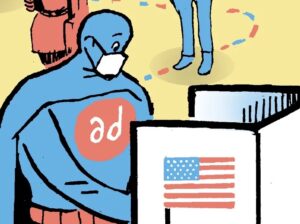
Nielsen has received accreditation from the MRC for a product that integrates a broadcaster or media company’s first-party streaming data into Nielsen’s TV panel ratings. Plus, Google launches a curation service that bundles ad inventory within its own Google Ad Manager.

If the DOJ wins its ad tech antitrust case against Google, it shouldn’t force a breakup, says Arete Research’s Richard Kramer, who proposes this novel solution instead: Google should spin out its network business into a public interest corporation with no hidden fees.

OpenAI’s ChatGPT will launch a web search engine. Plus, this year’s $12-billion-plus deluge in political advertising has priced brands out of certain markets.

To explain Forrester’s latest creative ad tech wave, we bring on the report’s author, Senior Analyst Nikhil Lai. Then, the untold story of how Prebid.org became an independent industry organization.

Integral Ad Science is raising rates on various products by one to three cents per CPM. Plus, Gannett is inching back to overall growth.

Brands have two options for avoiding election misinformation on YouTube: block all news, or only monetize credible news. But blocking all news restricts campaign reach and harms reliable journalists, just when we need them most.

On Thursday, TV measurement company Samba TV announced its acquisition of audience data and contextual targeting solution Semasio.

Brands need more automated tools for buying podcast ads at scale, says Publicis Groupe. Now, Barometer will provide brand safety rankings for all of Acast’s podcast inventory to assist pre-campaign planning.

Google holds court with bloggers bumped from its search algorithm; a backlash is brewing as the online recommendation engine goes into overdrive; and X pushes conservative politics to accounts with nonpartisan interests.

Google hit some impressive revenue benchmarks in Q3. But investors seemed to only have eyes for AI.
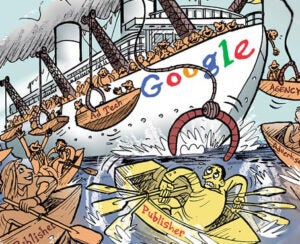
Retracing DPG Media’s journey to disentangle itself from the influence of Google’s ad platform and compete for direct ad budgets.

Adelaide may become the first vendor to receive accreditation for an attention metric. Plus, the IAB is leading a lawsuit against the FTC.

Ad revenue grew 56% YOY even without some of Reddit’s shiny new ad products, including generative AI creative tools and in-comment ads, being fully integrated into its platform.

Freestar adopted a new approach to curation developed by Audigent that gives buyers a priority lane to publisher inventory with higher viewability and attention scores than most open-auction inventory.
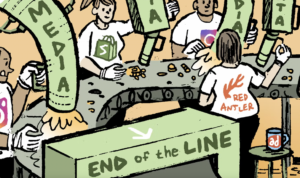
This week, the Commerce Media Newsletter catches up with a startup from outside the world of data-driven advertising, but with an interesting position when it comes to ecommerce advertising. That’s Clearco, a Canadian fin tech company founded in 2015.

Halo Collar, a dog collar brand with direct-to-consumer origins, is preparing for its retail expansion by honing its first-party data strategy and incrementality measurement.

The company is launching an accelerator program to help tech vendors pitch their solutions in a way that makes sense to advertisers.

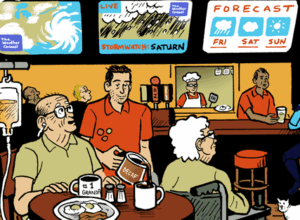
TWC is building a monetization model that treats weather as both a contextual and an emotional signal, and it’s using AI sales agents to bring it to market.

Simon Property Group, the largest shopping mall operator in the world, is taking its biggest step yet into the world of data-driven advertising. On Thursday, the company launched Simon Media Network, its version of a retail media network.

TTD is introducing agentic AI workflow improvements and automated audience building, which are quickly becoming table stakes for programmatic platforms.