Meta’s Shady Characters; Apple’s Shady Recordings
Meta recently revisited its goal to create AI-generated “characters” — which backfired. Plus, Apple’s trying to avoid a class-action lawsuit.
As the new year begins, expect CTV growth to continue blasting along with a vengeance. Experts are “bullish” on the channel and believe that many of 2024’s biggest CTV trends will continue well into 2025.
Dealmaking and AI (and blackjack) are top of mind for those heading to CES. Plus, don’t expect brands to reengage with hard news in 2025.
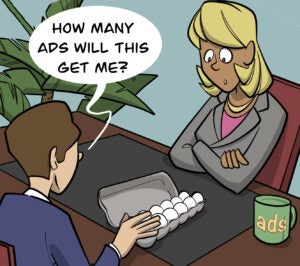
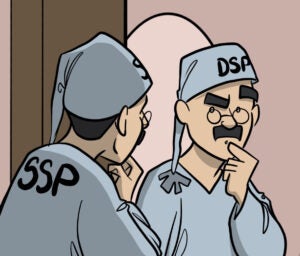
Every week, we publish an original comic creation inspired by trends in the online advertising industry. These are the stories – and the highly specific double entendres – behind AdExchanger’s top 10 comics of 2024.
What captured our readers’ attention this year was both a continuation of and a departure from years past. Our top 10 stories in the past year coalesce around two themes: kookies and kwality. Ahem, cookies and quality.
2024’s most popular guest columns offer a snapshot of an industry in flux – and one that’s grown cynical due to repeated promises of unrealized change.
As the ad industry awaits Judge Leonie Brinkema’s decision in US v. Google (ad tech edition), get up to speed quick with AdExchanger’s in-depth coverage.
But cookies aside – and don’t forget to leave a few real ones out for Santa – there were lots of other big privacy developments in 2024. Here are some of the highlights.
Google plans to create an “AI Mode” for its web search engine users. Plus, the social media vultures now circling the air above TikTok.
For all intents and purposes, 2024 is already over. Which means now is a fine time to see how far CTV advertising has come by looking back at some of this year’s most-read stories on AdExchanger.
The IAB gave us new retail media standards for Christmas. But will the industry actually adopt them? Plus: how AI will be used in advertising in 2025.
Publisher C-suite drama has been making headlines recently. Plus, there are now 27 different active lawsuits against various AI content generation companies.
In response to shifting ad industry trends, A360 Media abandoned its made-for-advertising model four years ago and streamlined its site design to court programmatic demand.
Achieving consensus on the definitions for even baseline retail media metrics required a tough 18-month slog. Unfortunately, this was the easy part.
The in-game advertising market’s stagnation is both unsurprising and frustrating. The onus is on the gaming industry to make gaming an essential channel for advertisers, rather than a nice-to-have.
What is incrementality testing? “I’ve been doing more interviews with journalists lately and realize I need a better answer to this question,” says Haus Head of Strategy Olivia Kory.
Two perspectives have emerged on curation: The value argument highlights refined audience targeting, while the ad network argument emphasizes enabling smaller players to compete with scaled giants.
AppLovin’s ecommerce advertising beta program has sparked optimism and speculation. Plus, the results of YouTube’s auto-reply program have been mixed.
Omnicom is acquiring IPG. We unpack the proposed deal with ad agency expert Brian Wieser, founder of the constancy Madison and Wall.
On Tuesday, mobile video ad platform LoopMe bought mobile monetization platform Chartboost from mobile game publisher Zynga. That’s a lot of mobile. But with more scale and direct connections to app publishers, said LoopMe CEO Stephen Upstone, “more brand dollars are going to move into the app environment.”
The IAB Tech Lab is officially rebranding its Seller Defined Audiences spec as “Curated Audiences” to spur adoption in response to this year’s sell-side curation trend.
Antitrust regulation has counterintuitively favored the biggest ad industry players. Plus, another streaming service, anyone?
Publishers expect the agencies will eliminate tech redundancies as they consolidate, which could compel pubs to shed redundant tech themselves. The merger could also entrench principal-based buying, which may not be a bad thing.
Rival browsers raise an objection to Google being forced to sell Chrome; ad agencies pivot to software and services; and people are turning to chatbots instead of search, with error-filled results.
Where and how brands choose to advertise is perceived as a reflection of the brand itself. That means we’ve entered the era of responsible advertising.
Curation is a reaction to programmatic’s worsening queries-per-second problem, says Permutive’s Joe Root. DSPs are biased toward impressions that have an identifier attached, so SSPs are using curated deal IDs as a stand-in for third-party cookies.
What happens if the TikTok ban comes to pass; Netflix’s live sports Hail Mary play; and Channel Factory surfs for buyers.
IPG buying Node continues the trend of agencies trying new business models; IPG and Publicis support principal-based buying while WPP opposes it; and billionaire owners believe controlling their newsrooms will win back public trust.
Cyber Monday may be done, but the ad tech deal making just won’t quit. Experian has joined the ad tech consolidation parade with its acquisition of Audigent, a startup DMP and curation vendor.
Mediaocean has a new certified partner program. Plus, Google’s “site reputation abuse” search update is cratering publisher affiliate revenue during the year’s busiest shopping season.