
OPINION: The Sell Sider
From Clicks To Connections: Three Essential Tips For The Post-Traffic Era
With no-click generative AI search gaining steam, here’s how publishers can thrive when search traffic disappears.

With no-click generative AI search gaining steam, here’s how publishers can thrive when search traffic disappears.
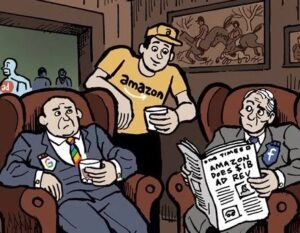
The Amazon DSP vs. The Trade Desk rumor mill; How SharkNinja has stayed sharp; Why nothing beats organic.

Nexstar’s digital strategy will now use Salesforce’s agentic AI capabilities, hoping to unify the sales pipeline into one system.

If journalists don’t decide the best use of AI in journalism, then AI firms will decide for them, says Christian Broughton, CEO of The Independent,
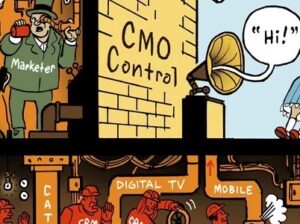
CEOs fear their marketing has lost the plot; WhatsApp introduces ads; Meta’s making its users feel unsafe.
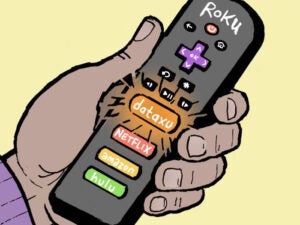
In the early hours of Monday morning, Roku and Amazon jointly announced a partnership that will reportedly result in the “largest authenticated TV footprint” in the US.

If there’s one safe prediction heading into Cannes this year, it’s that AI will be everywhere: in panels, on yachts and splashed across every DOOH ad within a 10-kilometer radius of the Croisette. But behind the noise, something real is happening. We are witnessing a strategic shift. AI is evolving from a shiny object into a performance engine that helps marketers uncover hidden audiences and iterate faster while delivering relevance at scale.
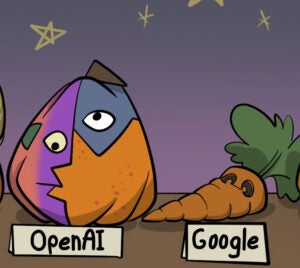
AI-generated mystery pages are appearing on brand sites; Amazon Prime Video doubles its ad load; and bipartisan efforts to protect kids online get a new partisan focus under the Trump admin.

For proof of the uncertainty facing marketers in 2025, look no further than the industry’s ping-ponging projections for ad spending. WPP Media’s revised forecast is just the most recent example.

Advertisers love new ad formats, especially on connected TV. Just look at how many platforms announced their own during the IAB NewFronts and TV upfronts last month. But it’s possible to have too much of a good thing.

Can the IAB Tech Lab’s Trusted Server initiative really help restore publishers’ ownership of monetization and wrestle back control from Big Tech and walled gardens?

Classify is entering a crowded space of AI-powered contextual curation offerings. But the company is already teasing some high-profile integrations thanks to its network of well-connected advisors.
YouTube is winning the CTV race by not just focusing on TV; ads threaten the gen AI user experience; and sports still brings brands incremental reach.
Nonprofit Science Moms partnered with The Weather Company on a campaign that used real-time weather conditions to raise awareness about climate change.

Amazon is integrating into Prebid. What does this mean for publishers? Plus, are Amazon and Google diverging in their product focus?
Magnite’s SpringServe deal illustrates why SSPs need a video ad server; Google grapples with AI search’s impact on publisher traffic; and Anthropic’s AI assistant is a law enforcement snitch.

Former Goodway Group CEO Jay Friedman shares hot takes on everything from curation (“absurd”) to brand safety (“botched”).

Even with the amazing storylines, this NBA season brought a steep decline in local TV viewership. While it’s tempting to frame this as waning fan interest, these drops are symptoms of a media ecosystem in transition.
Will programmatic buying inevitably lead to a repeat on CTV of what happened with digital media publishers? We asked Roku, Tubi and NCBU that question on stage at our Programmatic IO event in Las Vegas.
TV dealmaking has shifted to “always-on” models; “activation” is a classic bit of ad jargon; ChatGPT is sending more traffic to publisher.
Amazon Prime Video rolls out new audience and contextual targeting; streamers wring more revenue from subscription-weary consumers; and AI is an app, so it must obey Google and Apple.

The era of fragmented, adversarial ad tech is winding down. A new paradigm is emerging defined by AI-first, end-to-end platforms and collaboration among buyers and sellers.
Now that all the dust and confetti has settled after the upfronts, negotiations between marketers, agencies, networks and streamers are only just getting started.

AdExchanger spoke with DoubleVerify CEO Mark Zagorski just a few days after the company sued Adalytics alleging defamation over the latter’s recent report on bot detection.

Amid the glitz of TV upfront presentations, advertising executives take the stage to talk about things like new audience targeting capabilities or to ballyhoo new ad measurement partnerships. How, though, are we supposed to focus on brand lift statistics when we can all hear Lady Gaga belting a vocal warmup offstage?

The CFPB backtracks on plans to bar data brokers from selling financial data; Jamie Lee Curtis takes on Mark Zuckerberg over fake AI ads; and Gas Station TV drives traffic to Applebee’s.

If Netflix’s most recent upfront presentation is any indication, the third time must be the charm.

Like a pumpkin turning into an elaborate stagecoach, Disney’s programmatic ad sales have grown rapidly in recent months.

Concern over brand safety and suitability is now tied with campaign underperformance as the top reason for why advertisers pull back on budget.
Shopify is growing its advertising and data business; the privacy train is slowing down; Roku is striking deals to make its data more accessible.
Apple has a new block list for data brokers and ad tech vendors that do cross-site user tracking – which could expand to include a much broader slate of ad tech and martech vendors across the entire ecosystem. Plus: a few thoughts on Advertising Week New York.

Against the backdrop of Advertising Week New York this week, the programmatic ecosystem has been buzzing madly like the inhabitants of an overturned beehive after the release of Apple’s iOS 27.

Given how much agentic AI pervades nearly every conversation these days, it’s easy to overlook how nascent the technology still is, particularly when it comes to buying ads on connected TV.


OAAA COO Patrick Dolan explains how the organization is changing to guide the out-of-home channel through programmatic’s agentic era.

PubX has acquired media-quality startup Compliant and raised a $5 million Series A as it expands its agentic ad-buying platform into the US.

Warner Bros. Discovery has a new white paper analyzing the data and methodologies of five top video measurement providers: VideoAmp, iSpot, Comscore, Innovid and Samba.