
AI In Advertising: What’s Real Beyond The Buzz
AI in advertising has gone from a buzzword to a full disruptor in what feels like just a few months. If CES was any indication, there is no sign of this slowing down.

AI in advertising has gone from a buzzword to a full disruptor in what feels like just a few months. If CES was any indication, there is no sign of this slowing down.
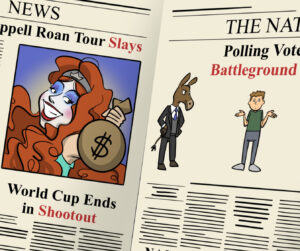
Amid a federal crackdown and local unrest, Minnesota’s biggest newsroom is proving brand safety and hard news can coexist.

Twitch gets into pause ads; CEOs would love to stop talking about AI agents; and so would brands and publishers, actually!

Roku has a simple equation for generative AI: cheaper content production leads to more viewing time and engagement which leads to more ad spend.

Enjoy this weekly comic strip from AdExchanger.com that highlights the digital advertising ecosystem …

Google faces another antitrust investigation; Americans want free, ad-supported news; and the K-shaped economy dings mass-market manufacturers.

Amazon opened up its Prebid adapter for beta testing on January 21. Publishers are preparing to test, and we spoke with Raptive and Unwind Media to learn how.

In a Q&A with Anthony Katsur, CEO of IAB Tech Lab, we examine where publishers can find real impact in 2026 amid growing pressure to deliver revenue now.

The OAAA’s new content taxonomy introduces new subcategories that OOH media owners can use to classify their inventory in OpenRTB bid requests.

When it comes to managing fraud, there are four steps CTV publishers should take to remove bad actors from the supply chain.
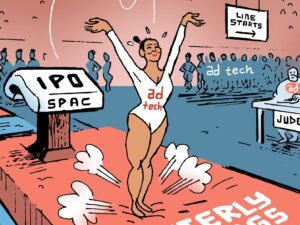
Wall Street is falling out of love with SaaS; OpenAI has an “ads integrity” unit; and the Super Bowl is getting more personalized.

At the IAB Annual Leadership Meeting this week, IAB CEO David Cohen demanded publishers receive payment from AI companies who are taking their content. As publishers grapple with AI redirecting the attention they receive from consumers, what’s their path forward?

Triton Digital’s new tool lets publishers see how their audience size compares to other podcasts at the show and episode level.

People Inc. is offsetting a 50% decline in Google search traffic through off-platform growth and its highest digital revenue gains in five quarters.
CloudX CEO Jim Payne – of MoPub and MAX fame – has a new startup that uses AI agents to take the pain (sorry, had to) out of mobile ad monetization.

On stage at the IAB’s Annual Leadership Meeting, IAB CEO David Cohen tore into AI companies, accusing them of “free riding” on publishers’ work – and calling it “stealing.”
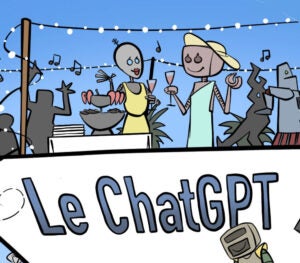
Big Tech seems overconfident their ad revenue growth isn’t tied to the economy; Microsoft AI launches a publisher licensing program; and the unique security vulnerabilities of Moltbook’s social media for AI bots.
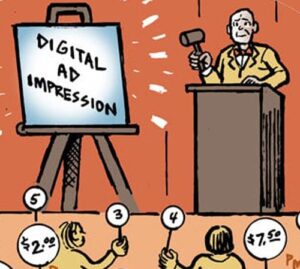
The MRC’s auction transparency standards aren’t intended to force every programmatic platform to use the same auction playbook – but platforms do have to adopt some controversial OpenRTB specs to get certified.

Last quarter, Disney’s SVOD services grew 11% year-over-year to more than $5 billion, driven by growth in both subscription and advertising revenue.
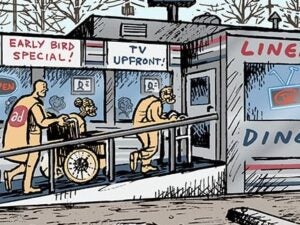
ICE is going ad tech; Streaming television is more original than ever; and YouTube wants to keep all its data to itself.

Prebid is on a roll: It will take charge of a seller agent, part of AdCP, and Amazon’s integration with Prebid is in beta. But there’s one sticking point: Microsoft is not going to cache video ad creatives anymore that come through Prebid, leaving publishers scrambling for an alternative.
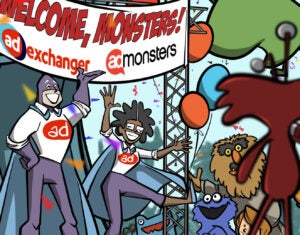
Enjoy this weekly comic strip from AdExchanger.com that highlights the digital advertising ecosystem …
All of Cadent’s SSP’s CTV supply paths are now direct; Netflix is thriving on repurposed YouTube content; and the Washington Post continues to struggle.

Sports content is a significant part of NBCUniversal’s streaming growth, and political tensions could impact its upcoming broadcasts.

Advertisers are still figuring out what value ChatGPT’s ads may offer. Are LLMs the next frontier for search, or a new channel entirely?

The group that turned header bidding software into an open standard is bringing the same approach to publisher-side AI agents.

Ad operations don’t always get easier when a publisher has a strong first-party data foundation to build on. In some cases, the strength of the underlying data can complicate monetization decisions. Ancestry can attest to that.

Big TV’s shift to programmatic brings in the performance brands; Meta rolls out premium subscriptions for Instagram, Facebook and WhatsApp; and Yahoo enters the crowded AI search market.
Most publishers have no idea that a major part of their video ad delivery will stop working on April 30, shortly after Microsoft shuts down the Xandr DSP.
AdMonsters is officially joining AdExchanger, unifying content under one site on AdExchanger’s domain to further connect our audiences.
Apple has a new block list for data brokers and ad tech vendors that do cross-site user tracking – which could expand to include a much broader slate of ad tech and martech vendors across the entire ecosystem. Plus: a few thoughts on Advertising Week New York.

Against the backdrop of Advertising Week New York this week, the programmatic ecosystem has been buzzing madly like the inhabitants of an overturned beehive after the release of Apple’s iOS 27.
Given how much agentic AI pervades nearly every conversation these days, it’s easy to overlook how nascent the technology still is, particularly when it comes to buying ads on connected TV.


OAAA COO Patrick Dolan explains how the organization is changing to guide the out-of-home channel through programmatic’s agentic era.

PubX has acquired media-quality startup Compliant and raised a $5 million Series A as it expands its agentic ad-buying platform into the US.

Warner Bros. Discovery has a new white paper analyzing the data and methodologies of five top video measurement providers: VideoAmp, iSpot, Comscore, Innovid and Samba.