Google Is Found Guilty Of Operating An Ad Tech Monopoly (!)
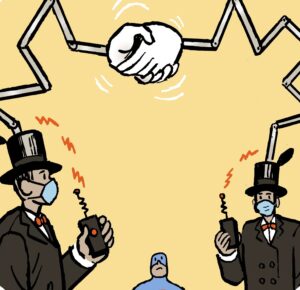
There’s a decision! On Thursday, Judge Leonie Brinkema published her long-awaited ruling in US v. Google, finding Google guilty of having monopolized two online advertising markets.
It’s important to have frank discussions with clients, explaining the need and value of brand safety. That way, marketers can make an educated decision on whether they truly need to pay for it.
Many well-intentioned advertising standards efforts gather digital dust thanks to industry politics and competing interests. Here’s how the industry can stop sabotaging its own progress.
Agencies around the globe weigh in on principal-based buying; live sports are king, but new sports like F1 are having trouble gaining traction; and Adobe gets roasted by Bluesky’s artist community.
After adopting OpenPath, Freestar pubs now see 3x higher inventory fill rate from The Trade Desk demand and 27% higher programmatic revenue from these buyers.
Comcast is trying to win over digital-native and social-savvy marketers for with its recently launched Universal Ads, a self-serve ad buying platform that makes it easier for SMBs to buy streaming TV inventory.
An Adalytics report released Friday details numerous instances of brands serving ads to known bots that appear on the IAB Tech Lab’s International Spiders and Bots list and TAG’s Data Center IP List.
The IAB Tech Lab is proposing that ad auctions move to a Trusted Server from the browser. Why its prototype attracted controversy. Plus, should data privacy be viewed as a badge of honor, or a baseline standard?
Warner Bros. Discovery officially launched OpenPath last week, with the goal of driving demand for its news sites’ display inventory. But for now, CTV is not part of the integration.
Could AppleTV+ be the next CTV platform to turn to ads in order to turn a profit? Plus, the bubble may have already burst on creators launching direct-to-consumer brands.
Why should browsers get to control publisher monetization? That’s the question the Tech Lab is aiming to answer with the release of an open-source framework for server-side ad management.
The Netflix Ad Suite, as the company is calling it, is set to launch April 1, the company’s new Advertising VP Nicolle Pangis disclosed during the Cynopsis and AdExchanger CTV Connect event in New York City last week.
Dotdash Meredith (DDM) has hired Jim Lawson to run its ad tech division D/Cipher. Plus, can Target become a true advertising powerhouse?
NBC, Fubo, Disney-owned ESPN and ad agency Mindshare weigh in on the creative flexibility offered on CTV and whether sports streamers really reach incremental audiences.
Just because curated PMPs and direct-to-DSP deals are trendy doesn’t mean they should be the focus of every publisher’s tech stack.
Canadian tech investment firm Redbrick has acquired Paved, a programmatic newsletter platform for publishers that specializes in native ad formats.
Juice manufacturer Welch’s – founded 156 years ago in 1869 – barely spends any of its marketing budget on traditional media, including linear TV.
The curation debate is missing a critical piece: standardized reporting. Without it, curation risks leaving publishers in the dark about its actual value.
PubMatic CEO Rajeev Goel dishes on sell-side curation, data fees, how the business model differs from buy-side curation and how publishers can control pricing for curated deals.
T-Mobile may be considering an acquisition in the mobile data market; Google’s glitch shuts down ads for a weekend; and ad tech’s old guard is salivating over AI startups.
Google has been spotted triple serving ads to search pages. Plus, good luck getting ads next to Oscars content this year.
The Brand Safety Institute released a new tool that lets publishers check whether their site domains have been flagged as MFA by third-party verification vendors.
Enjoy this weekly comic strip from AdExchanger.com that highlights the digital advertising ecosystem …
To solve ad tech’s intractable problems, there’s a solution that the advertising industry could borrow from the hacker world: bug bounties.
For publishers, digital advertising is a lot like playing craps, says Aditude’s Justin Wohl. It’s all about tuning out the noise while placing safe bets that work for your monetization strategy.
Since Connatix and JW Player first announced their merger in October, JWP Connatix – a temporary name for the newly joined companies – says things are going well at the six-month mark.
Spotify faces obstacles in its ticket sales aspirations; Apple switches to view-through attribution; and The Washington Post and Meta remove ads that were critical of Elon Musk.
When an ad shows up next to illegal content, there is often not a single point of failure. Adalytics Krzysztof Franaszek walks us through why he found ads showing up next to the worst kind of criminal content — and the simple and complex solutions to this problem.
Meta is no stranger by now to complaints from ad buyers, particularly ecommerce brands and social agencies, reporting major systemic platform issues, including outright bugs and glitches – not to mention decreased marketing returns at higher CPMs.
Roku reported $4.1 billion in revenue for 2024, an 18% jump year over year. Its platform business in particular, which includes ad sales and streaming distribution, reached $3.5 billion last year, also an 18% jump compared to 2023 (or 15% excluding political ad revenue).