
Clock’s Almost Out
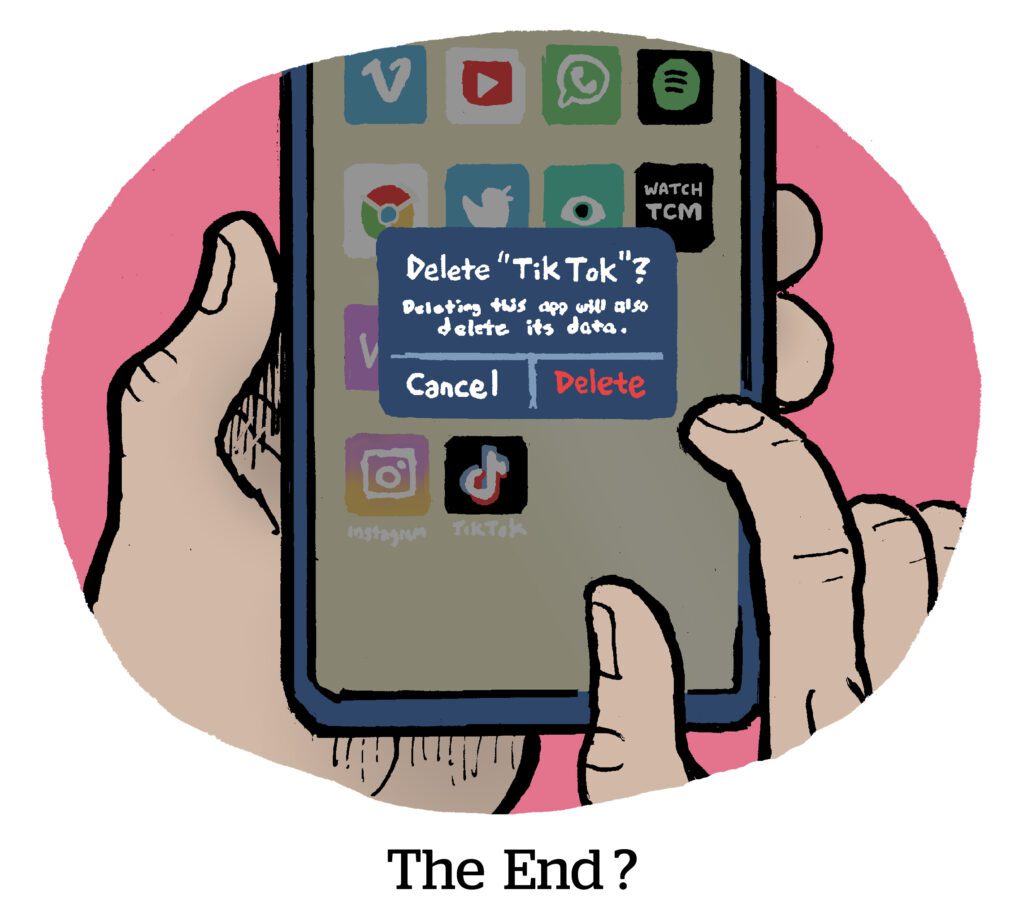
Nobody is acting like TikTok will actually be scrapped from American smartphones – or app stores, at least.
I mean, some last-minute Hail Mary has to happen, right? We have seen this end-of-TikTok dog and pony show before, after all.
Many expected the Hail Mary to be delivered by the Supreme Court – if the conservative majority flexed its decision on the case to accommodate incoming President Donald Trump’s request to delay the law.
But it looks like SCOTUS is unconvinced by TikTok’s arguments, based on a hearing last Friday, Bloomberg reports.

“Are we supposed to ignore the fact that the ultimate parent is in fact subject to doing intelligence work for the Chinese government?” asked Chief Justice John Roberts of TikTok’s lawyer. That’s a pretty clear-cut critique. And the legislation banning TikTok deals with the app as a national security threat, not as a media or content engine.
A definitive ruling will come before the law goes into effect on January 19.
Venu, I Hardly Knew Ye
Venu Sports got benched – for good.
On Friday, Disney, Fox and Warner Bros. Discovery declared their streaming joint venture, Venu Sports, dead. The idea was to create a “skinny bundle” of sorts out of the programmers’ sports content. But Fubo challenged the venture in court shortly after it was announced in February 2024.
“After careful consideration, we have collectively agreed to discontinue the Venu Sports joint venture and not launch the streaming service,” the statement reads. “We determined it was best to meet the evolving demands of sports fans by focusing on existing products and distribution channels.”
The decision to scrap Venu comes just four days after the joint venture agreed to collectively pay sports distributor Fubo $220 million to settle the antitrust suit Fubo filed in February.
It’s possible the joint venture wasn’t confident it could ultimately pass regulatory approval. If it had a chance at life, Venu Sports would have controlled roughly 55% of US sports rights, according to Citi analysts. That’s why Fubo sued in the first place.
As part of Monday’s settlement, however, Disney agreed to combine Hulu + Live TV with a similar Fubo offering as a separate joint venture. Also contrary to Friday’s statement, Disney still plans to launch a new ESPN+ streaming app in the fall. Any way you slice it, Mickey gets his cut.
First They Came For The Pride Themes
Remember how, as of Friday’s newsletter, it seemed unlikely that advertisers would pause ad spending after Meta scrapped its content moderation and fact-checking policy?
Well, Meta itself certainly isn’t making that decision any less fraught – not with how it seems to be rolling back nearly all its public support of marginalized groups.
Internal moderation guidelines shared with Platformer offer a grim view of how trans people in particular could (no, let’s be honest, will) be immolated in the name of free speech. Calling them “freaks” and “mentally ill” is now considered “non-violating” behavior.
Per 404 Media, Facebook also erased its trans and nonbinary pride-inspired Messenger themes this week – “without explanation or justification,” according to one employee. (Morale among LGBTQ workers there is understandably low right now.)
And Axios reported Friday that Meta shut down major DEI initiatives, including efforts to recruit talent from diverse backgrounds and work with minority-owned business suppliers.
Other companies have made similar moves, of course. X’s community notes launched in 2021; Target scaled back Pride merch in 2024; and Walmart cut back its own DEI programs in November after Trump’s election win.
But speed-running it all at once? Even actual bigots must be surprised by the rate that Meta’s backsliding.
But Wait! There’s More
Influencers sue Capital One over its shopping browser extension, which they say stole last-click attribution from digital media and content creators. [Business Insider]
The Consumer Financial Protection Bureau proposes a new measure to protect Roblox users from scams. [Polygon]
X is rolling out labels for parody accounts. Boy, if only there was a way to tell which accounts were the real ones – a sort of “verification process,” if you will. [TechCrunch]
Yahoo’s pitch for curation and partnerships at CES. [Marketing Brew]
Employment rates are up in the US overall, but not in Ad Land. [Adweek]







