
A Tangled Web3 We Weave
Coinbase, a hub for buying and selling cryptocurrencies, has acquired Spindl, a blockchain-based advertising and attribution startup.
“As we talk with builders every day, a consistent theme stands out: Builders want to go viral and we want to help them do that,” according to Coinbase in a blog post announcing the news.
“Builders,” in Coinbase’s view, are developers who build blockchain-based applications and services that plug into the crypto financial universe. Coinbase’s own blockchain development platform is on the Ethereum chain, although it also integrates with others.

But, unlike mobile gaming and the DTC brand economy – which are heavily reliant on Facebook – crypto has never had an effective advertising and attribution flywheel.
Speaking of Facebook, though, Spindl’s founder and CEO is Antonio Garcia-Martinez, an early ad tech exec at Facebook back when it launched its audience network and ad exchange.
“There’s a natural flywheel here,” per the Coinbase blog. “We support developers who build onchain apps, those apps attract users onchain and having more users incentivizes more developers to build onchain.”
No Safe Spaces
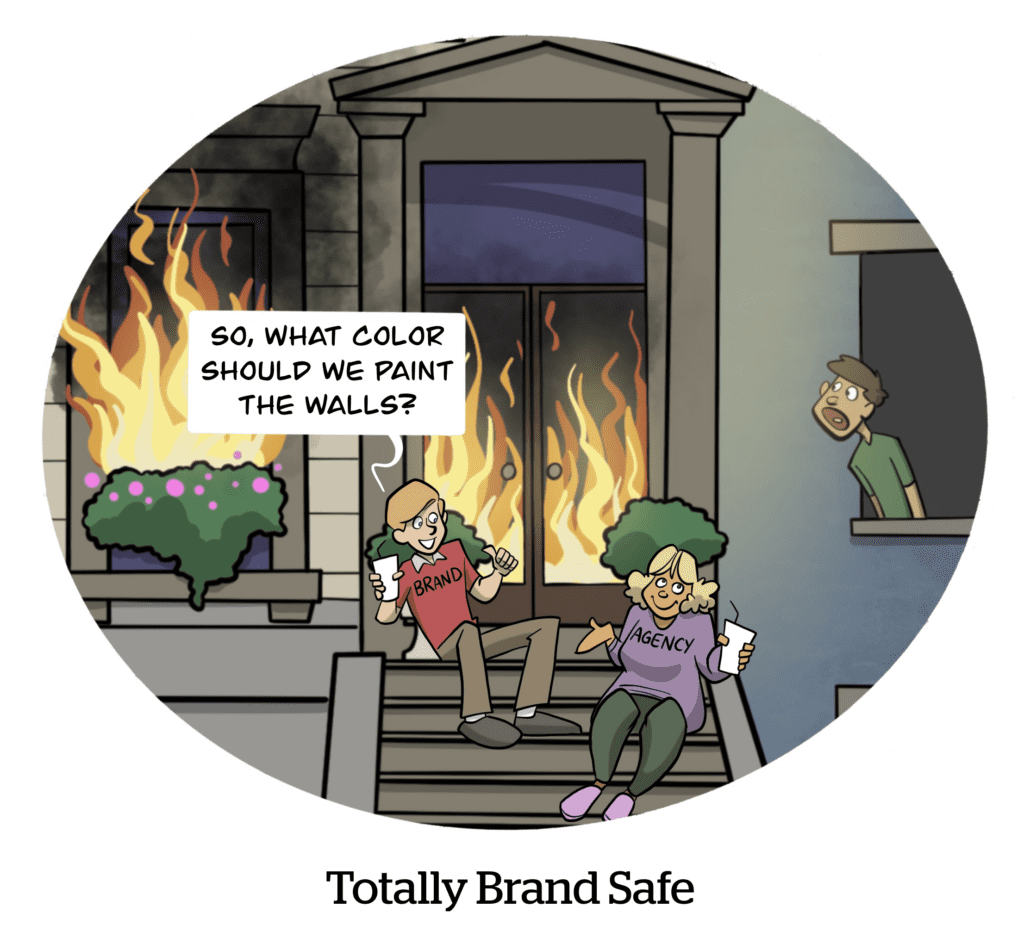
Brand safety on social media is a myth that advertisers no longer believe in, according to advertisers who recently spoke with Digiday.
For example, marketers started reconsidering their ad spend on X in 2022, when now-owner Elon Musk did away with the platform’s content moderation tools. A year later saw another large exodus of major brands, including Disney, Apple and Comcast, after reports from nonprofit org Media Matters that their ads had appeared next to hate speech and pro-Nazi content on the site. (The fact Musk was sharing some of it himself probably didn’t help.)
But now those advertisers have started returning to X – and they never even left Meta, despite the company announcing a similar rollback in January. Instead, social platforms are seen among advertisers as “a necessary evil,” as one anonymous brand marketer put it to Digiday.
But given the current political climate in the US, it’s also easy to speculate that there may be other incentives for not drawing a line in the sand anymore. (As an aside, Media Matters is still facing a lawsuit from X.)
Assuming social platforms still lead to conversions, the financial motivation is probably enough on its own.
Brands Play Ball
Super Bowl ads are getting less enjoyable.
Data analytics company MarketCast crunched some numbers on Super Bowl ads from the past 12 years and found that the likability of these very expensive commercials has tanked steadily over the last few years.
The “most liked” ads all aired between 2012 and 2015, according to MarketCast data shared with Ad Age. The company gave 2013 a 54% likability rating because the ads were funny that year, playing off sarcastic or risqué themes, like kids pressing their parents on where babies come from.
MarketCast’s likability score for Super Bowl commercials was 49% in 2014 through 2015 and decreased to 38% in 2017. That number will only drop further as marketers place safer creative bets to avoid the rise (or perceived rise) of consumer pushback against brands that take social or political stances, including on diversity and inclusion initiatives.
As far as the commercials this year are concerned, “I expect a very muted Super Bowl – no sharp elbows, no provocative statements, nothing that will challenge the orthodoxy,” Marcus Collins, an author and professor, tells Adweek.
Guess we won’t be seeing any more pickup truck commercials with innuendos about erectile dysfunction.
But Wait! There’s More
How publishers are choosing which LLMs to use. [Digiday]
Apple made $100 billion in services revenue last year, which includes advertising. [TechCrunch]
“Everything I say leaks,” says Mark Zuckerberg in leaked audio. [404 Media]
TikTok traffic is recovering, but it’s still not back in app stores. [The Verge]
You’re Hired
Matt Bruot has been appointed as president of The Shipyard Collective, an independent agency services company. [release]
Digitas appoints Anne Stagg as CEO. [Campaign]








