
At Spotify, Podcasts Remain A Priority After An Anemic Q2 For Its Ads Business
Last month, Spotify began making podcast inventory available programmatically, which is something buyers have been asking for, says Spotify’s Chloe Wix.

Last month, Spotify began making podcast inventory available programmatically, which is something buyers have been asking for, says Spotify’s Chloe Wix.

The competitive set has shifted and it’s stacked against independent DSPs. But, instead of chasing what competitors already own, TTD can own what they can’t: trust.

Perplexity didn’t just try to buy Chrome; product placement in TV and film is on the rise; and the FCC is on one again.

The Trade Desk has won the battle for supremacy on the open internet, says Needham & Company’s Laura Martin. But it might just be losing the war for the future of the web to walled gardens and AI search.

According to Adam Paul, executive director of media alliances at LiveRamp, the old-school programmatic ads – the ones bought across multiple platforms without regard to context or audience – are underperforming on CTV these days.

Enjoy this weekly comic from AdExchanger.com that highlights the digital advertising ecosystem …

Walmart Connect’s deal with The Trade Desk isn’t so exclusive anymore; Amazon is competing with everyone except publishers; and Meta’s chatbots don’t exactly inspire confidence in the company’s ability to deliver effective AI tools.

Today’s developers face mounting challenges: heavier workloads, complex tech stacks and an increasingly fragmented advertising landscape demanding automation at scale. This complexity limits their ability to adopt new products and innovate.

Protected by Mediaocean, Mediaocean’s ad verification division, is partnering with the Internet Watch Foundation to crack down on CSAM and ensure children’s online safety.

Human-made content will remain the most important source of information for consumers online. And our appreciation for human expression will only grow as we experience derivative outputs created by AI models.

Some accuse The Trade Desk of becoming a walled garden; short form video clips are the only way to go viral; and a new startup touts “micro-dramas.”

When The Trade Desk sneezes, ad tech catches a cold.

Alphonso co-founder Lampros Kalampoukas is suing Kroll for allegedly undervaluing the company by nearly $100 million to aid LG Electronics in a shareholder dispute.

Today’s biggest retail events are noisy, fast-moving and fiercely competitive. From back-to-school time and Prime Day to Black Friday, Cyber Monday and the entire holiday shopping season, success comes down to securing attention before the rush begins.
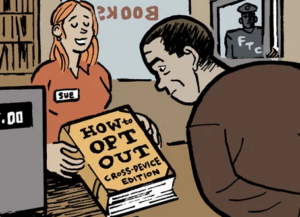
Data brokers de-index their opt-outs; Meta is still the go-to for influencer ads; and Perplexity offers to buy Chrome.

Television advertising has undergone a remarkable transformation in recent years, with connected TV (CTV) emerging as a powerful channel for marketers seeking the impact of traditional television with the precision of digital targeting.

Product review site HouseFresh bounced back from losing 91% of its Google traffic last year. Here’s how it’s pivoting in response to stiffer affiliate marketing competition and zero-click AI search.
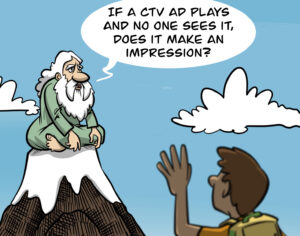
The ad tech startup Vaudit, founded last year by Mike Hahn, aims to automate the process of campaign reconciliation atop major ad platforms.

A recently proposed Senate bill seeks to determine fair use cases for LLMs training on personal data and copyrighted material, along with the penalties for misuse.
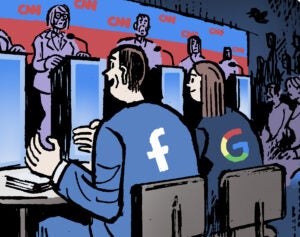
Sometimes, price can itself be promotional marketing; Reddit is no longer playing nice; and AI scrapers are reshaping the web in another way.

New social media content moderation policies will enable connections with audiences that reflect a broader range of perspectives, expand inventory, and provide opportunities for contextual alignment.

In today’s digital advertising landscape, speed, scale and sophistication have become both a promise and a problem. Innovation has accelerated – but so too has fragmentation. Marketers are expected to drive performance across an ever-expanding universe of platforms, formats and data streams – often without the clarity or confidence they need to succeed.

How will the California Privacy Protection Agency’s new rules on automated decision making and AI impact ad targeting? We asked the experts.
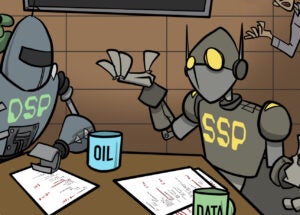
Creative agencies are trying to adapt to AI’s sudden invasion of their turf; it’s a sunny day for TikTok travel influencers; and publishers have more than just Google’s AI overviews to worry about.

Why sue Google now, when so many years have passed? Because “the pattern of anticompetitive behavior continues,” OpenX CEO John Gentry tells AdExchanger.

I didn’t attend WWE’s “Monday Night RAW” event in Brooklyn for love of wrestling. No, I was there to check out the ad content – to the point where I set up a brand-new ad-supported Netflix account from my phone to see where and when the ad breaks actually start.
The Trade Desk continued its shaky 2025 earnings schedule when it reported Q2 results on Thursday.
Enjoy this weekly comic from AdExchanger.com that highlights the digital advertising ecosystem …
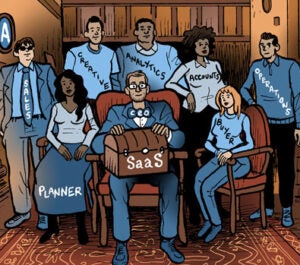
The pivot to AI has led to a gap in many SaaS and ad tech companies’ payment models; AppLovin bounces back in Q2; and Grok might be your newest media planner.

Total revenue for the quarter was $9.8 billion, up only 1% year-over-year from the last Q2 quarter total of $9.7 billion – which is modest, but at least in line with company expectations.