By Definition
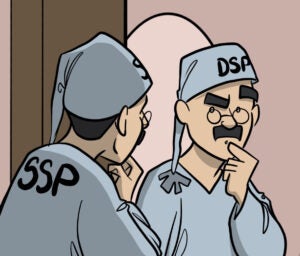
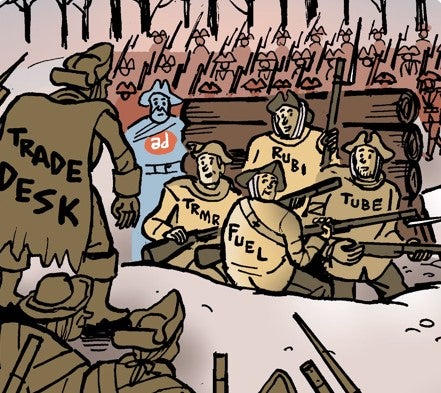
Last month, The Trade Desk revealed that Kokai, its new, machine learning-based buying platform, would categorize all supply-side platforms as “resellers” and thus disfavor their supply.
SSPs are, unsurprisingly, not happy with this arrangement.

To be fair, some supply-side vendors specialize in multihop programmatic supply chains and are “actually taking more than the value they create,” Index Exchange CEO Andrew Casale acknowledged during a fiery panel this week at an ExchangeWire conference in London, as reported by Digiday.
Casale maintains that “the only part of this market that gets to decide whether or not a vendor is a reseller is the customer.”
By which he means publishers, which is really the crux of the issue here.
For TTD, the “customer” is an advertiser. While it matters a great deal to Index Exchange that its media clients recognize it as a close partner and a direct or authorized seller of their inventory; advertisers just see a hop in the chain.
Nobody is immune from getting disintermediated, though. Even The Trade Desk, having established direct publisher connections via OpenPath and a single owned pipeline to inventory, may someday fall into the category of “ad network.”
Community Planners
When Brian Lesser, now the CEO of WPP Media, was attempting to build AT&T’s media and advertising business after its acquisition of AppNexus, his rationale was that he was building a “community garden” mainly for streaming and online video ads.
His thesis is that other telcos, broadcasters and streamers would be okay allocating their ad inventory to a frenemy like AT&T if it meant they could earn more per ad. All AT&T needed to do was to beat their current rate. Or that was Lesser’s hypothesis, at least.
However, AT&T balked at using any of its mobile customer and location data to support its nascent advertising biz. Also, it turns out that other broadcaster/telco conglomerates weren’t interested in handing the reins to AT&T.
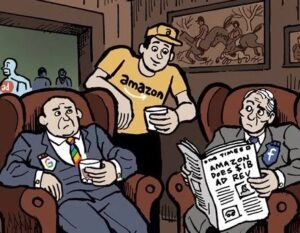
But maybe the community garden’s time has finally come, but for Amazon DSP.
Amazon DSP just announced a new partnership to sell Netflix inventory, following similar deals earlier this year to carry Disney and Roku supply, Ad Age reports.
The goal, according to Paul Kotas, SVP of Amazon DSP, “is to remove the guesswork for advertisers by making it simple to manage all of their TV planning and buying with Amazon Ads.”
Maybe the garden just needed a different gardener.
Can’t Spell ‘Bad’ Without ‘Ad’
The ad industry is once again collateral damage in a regulatory crackdown on a large business vertical.
This time, the spotlight is on US pharmaceutical companies.
The FDA is sending thousands of notices to pharma brands and influencers informing them of stricter enforcement of laws regulating misleading ads, The Wall Street Journal reports. The Department of Health and Human Services also plans to close drug marketing loopholes, including a requirement to list only major side effects in TV ads.
These moves aren’t related to any new regulations, but rather to an executive order by President Trump directing the FDA and HHS to enforce existing laws.
In a statement, Health Secretary Robert F. Kennedy, Jr. referred to pharma advertising as a “pipeline of deception.”
Pharma companies spend 20% to 25% of their budgets on marketing, according to FDA commissioner Marty Makary, who argues the money should go toward lowering drug prices instead.
But Wait! There’s More!
Short-seller investors are targeting AppLovin’s stock once again. [Bloomberg]
Reddit launches new tools for publishers to track and share stories. [release]
Video platform Vimeo is being acquired by European mobile app developer Bending Spoons at a $1.38 billion valuation. [TechCrunch]
Like Cracker Barrel, Jaguar Land Rover caught flak from the right for a so-called “woke” rebranding. But the auto company is refusing calls from President Trump and others to reverse course on its marketing. [WSJ]
You’re Hired!
Beverage company Celsius Holdings appoints former PepsiCo exec Rishi Daing as CMO. [Just Drinks]
Here’s today’s AdExchanger.com news round-up… Want it by email? Sign up here.