PODCAST: The Big Story
Reaching For More Reach
With RFPs in flux, diverse-owned media companies are finding ways to use their data to improve reach. Plus: Why we’re in retail media’s “potty-training” phase.

With RFPs in flux, diverse-owned media companies are finding ways to use their data to improve reach. Plus: Why we’re in retail media’s “potty-training” phase.

A new marketing intelligence platform helps brands like nutpods address fragmentation by unifying data and inventory across the digital ecosystem.
Medvi caught in AI deepfake scandal; Delta SkyMiles members get 24-hour free NYT access. Source Golf launches a YouTube network.
I’m keenly interested by emerging grocery aisle trends, snacks especially. So, I was quick to grab an interview with Andrew Thomas, head of marketing for the meat snack brand Archer, who was being offered to speak to a case study with GumGum regarding CTV pause ads.

The industry has spent years debating third-party cookies, but AI has settled the debate. First-party data isn’t just preferred; it’s structurally necessary. And the capital is already moving.
We open with insights from attending a duo of privacy conferences this week, the IAPP Global Summit and IAB Public Policy & Legal Summit, including one reason regulators are paying more attention to data privacy: Their constituents consider it a “kitchen table” issue. Then, we turn to the mash-up of retail media and sports, which is opening up new opportunities across media and ad tech.

Now that we have not one but two reporters covering the CTV advertising space, we thought we’d try something different and share the roundup newsletter this week!
The retail media revolution of data-driven, digital marketing monetization is coming to the sports industry.

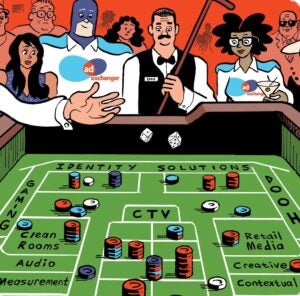
Enjoy this weekly comic strip from AdExchanger.com that highlights the digital advertising ecosystem …
The NewFronts, digital video’s week of splashy sales pitches, is in full swing. Our reporters share what they learned on the ground. Plus: What can ad tech learn from Data, a new off-Broadway play?

Samsung teases a shoppable TV integration with Amazon; hackers target AI search users for marketing account takeovers; and new research shows young news audiences are “social-first.”

Brave’s chief of ads Jean-Paul Schmetz on competition in the search and browser markets, the fallout from the Google Search antitrust ruling and whether AI search will help smaller upstarts compete with Big Tech.

The age-old question for streaming TV advertisers is, how to target the viewers they want while reaching the scale their businesses need. The quick-serve restaurant operator CKE, which owns Carl’s Jr. and Hardee’s, sought an answer in a case study with Attain and Amazon Ads.

Marketers debate whether to build or buy their tools; Meta is shutting down the VR version of Horizon Worlds; and influencer marketing strives for authenticity.

Publicis recommends some clients ditch The Trade Desk; ChatGPT reconsiders its “unlimited” enterprise subscription; and how NYC’s Washington Square Park became an influencer hub.

MyFitnessPal has just announced the launch of a data-driven advertising business that draws on its wealth of user-provided meal planning, fitness and nutrition data.
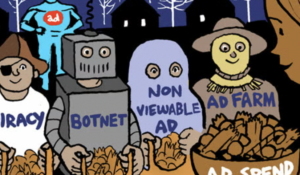
Heluva Good! gets heluva weird; OpenAI isn’t so sure about operating checkouts; and who AI fact checks the AI fact checker?
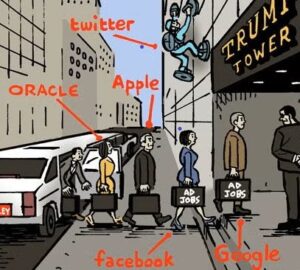
Jeff Green doubles down on OpenPath’s value; Amazon wants Perplexity to disable agentic shopping; and the creator economy takes on political fundraising.
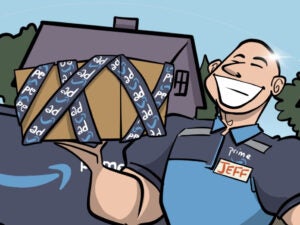
Amazon’s Fire TV redesign is extra friendly for ads; Anthropic benefits from its newfound spine; and the children yearn for the malls.

The NHL develops new revenue streams; malware makes its way into the programmatic ecosystem; and Target plans to open 30 new locations this year, along with revamping existing ones.

Sallie, the major issuer of US education loans, is getting into the retail media network business.

Ad platforms are nixing credit card payments; LLMs are getting really good at unmasking online users; and McDonald’s offers a case study in how not to do organic social media.
The strategic value of commerce data continues to rise, as Infillion snaps up Catalina. Then, a court filing reveals where agencies spend clients’ money.

Buyers dig Netflix’s ad platform changes; OpenTable puts the “restaurant” in “RMN”; and Google and Amazon blame human error even when it’s AI’s fault.

The future of retail media depends on a shift away from siloed in-store and online metrics to a full-funnel approach that reflects how customers actually shop.
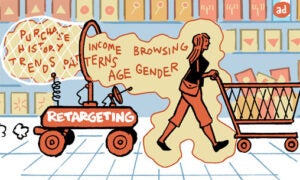
Infillion, an ad tech business built on M&A, is back with another acquisition. This time it’s Catalina, a century-old market research and shopper marketing company with roots in physical cash register machines.
The Winter Olympics show us how far streaming live sports has come – and how much linear viewership remains. Plus: CPGs are pulling back on ad spend, as they steer through economic challenges and the ripple effects of policy decisions.

Agentic commerce can’t stop, won’t stop; Perplexity is officially done with its ads business; and AppLovin may launch its own social media platform.

“Fully a third of our profit in the most recent quarter was related to advertising and membership income,” Walmart CFO John David Rainey told investors on Thursday.

A 2004 statute prevents owning enough TV stations to reach 39% of households. But without the scale afforded to other digital content companies, local TV is at a competitive disadvantage.

Companies like P&G, PepsiCo and Colgate-Palmolive are cutting marketing spend as the easiest and quickest way to protect profitability.

Paramount might have outlasted and outbid Netflix in the competition to acquire Warner Bros. Discovery, but Netflix is not overly fussed about the loss.

Paramount is merging the ad tech stacks behind Paramount+ and Pluto TV, releasing a new performance product, offering more control over ad placements and introducing dynamic ad insertion in live sports.

The IAB’s Connected Commerce event in New York City this week felt to me like the retail media industry’s first sit-down explanation to a child who is now a “big kid” and must act accordingly.


Meta is simplifying its CAPI setup and teaching its pixel new tricks, including adding an AI-powered feature that automatically pulls in data from an advertiser’s website.

TelevisaUnivision is the latest TV publisher to join the self-serve trend that’s rising in popularity across connected TV advertising. Its streaming inventory is now available to buy through fullthrottle.ai’s self-serve platform. The collaboration includes an ad bidder designed to improve both targeting and measurement.

Law firm Keller Postman is leading mass arbitration suits against Google, seeking advertiser damages for alleged monopoly overpricing. The total available pot is a quarter-trillion dollars.