
Here’s today’s AdExchanger.com news round-up… Want it by email? Sign up here.
Improved Transparency (Sure … )
The Digital Advertising Alliance (DAA) has launched a certification program for addressable media identifiers (AMIs), which have become super important since ATT.
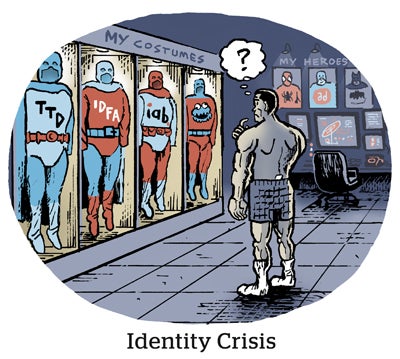
If you haven’t heard of AMIs, don’t worry. It’s not a common term, at least not yet, although you may know them by a different name. UIDs and Google PPIDs are AMIs. Guess we just don’t have enough three-letter acronyms (TLAs) in ad tech.
Hang on to your hat: PRAM, the “Partnership for Responsible Addressable Media,” which is supported by the IAB, WFA, ANA and some other TLAs, transitioned governance over AMIs to the DAA back in February.
What are some other AMIs? Well, LiveRamp operates the largest graph of AMIs with its RampID (formerly IdentityLink, which went by IDL … a tough loss for the TLAs).
And, wouldn’t you know it, LiveRamp is the first vendor to agree to the DAA AMI certification. The review will cover RampID and LiveRamp’s Authenticated Traffic Solution (ATS), the product publishers use to collect emails and PPIDs … I mean UIDs … or, wait, AMIs. Anyway.
“The DAA certification is an important step in bringing improved transparency and accountability to digital advertising,” according to a statement by Criteo Chief Product Officer Todd Parsons in the release. Parsons is also cited as “PMC Chair of the Prebid Addressability Framework.” (Call it the PAF, c’mon.) PMC stands for “project management committee.”
It’s time for a drink.

A License For Swill
One of the EU’s main antitrust arguments against Google is that it purposely reduces the value of its commercial tech for customers as a way to improve its own products by comparison. Last year, Google lost an appeal and was hit with a $2.8 billion fine for self-preferencing its own price-comparison search results.
A reprise of that strategy could work again in a new suit targeting Google and Microsoft’s search engine licensing businesses, Politico reports.
Google licenses search ads to online marketplaces and retailers, other search engines, such as Startpage, and to mobile phone manufacturers. Microsoft Bing is the white-labeled search ad distributor for DuckDuckGo, Ecosia, Qwant and other engines.
Data compiled by ad tech researchers – who go unnamed “for fear of damaging commercial relations between Microsoft or Google” – reportedly proves that the big platforms siphon quality ads for themselves and send cruddy spam ads to licensees. Valuable searches like “buy sofa online” prompt relevant, rich media placements on the home search page, while a licensed service may not be able to serve an ad at all.
A Google spokesperson says it’s the advertisers that choose to target Google only or the partner network. So guess it’s up to them to fix Google’s licensed search?
I CD-See You
The CDC tracked millions of phone locations as it monitored the spread of COVID-19 and of people’s movements during different stages of quarantine.
That isn’t news. The center’s relationship with location-data seller SafeGraph for access to pandemic-related data was already reported two years ago. The data was used to track how border closures affected coronavirus rates, Vice reports, and to evaluate policy programs with the Navajo Nation.
Even so, the report is sure to inflame, although there’s little substance.
The CDC did monitor curfews and footfall, but not to track individuals who broke the rules. It monitored aggregate data to see whether shopping or commuting impacted the spread of the disease.
Vice says the revelations are “likely to be controversial” even if the data use itself is a nothingburger. No matter what, high-strung vaccine mandate truthers and government-tracking conspiracy theorists will no doubt make hay out of the report.
That’s not a strong reason against the CDC’s use of location data to track the spread of COVID-19.
But this is: The same data could also be used for nefarious purposes. For example, SafeGraph data could be used to track where people came from on their way to or where they went after visiting a Planned Parenthood clinic.
But Wait, There’s More!
Vice Media has hired financial advisors to seek a buyer, and may sell itself in pieces. [CNBC]
Lightshed Partners: Why did Charter choose Comcast’s Flex over Google TV in the tvOS war? [blog]
Speaking of, Comcast Technology Solutions launched a dynamic linear addressable ad insertion product. [release]
How Coke and Pepsi’s rivalry shaped marketing – and where it goes next. [Marketing Dive]
Publicis Groupe acquires ecomm software startup Profitero for $200 million. [WSJ]
You’re Hired!
Frank Einecke, Google’s former managing director of global marketing partners, is ad blocker operator eyeo’s new CEO. [release]
Sarah Van Mosel joins iHeartMedia as EVP of the iHeart Audience Network. [release]







