
Platforms Dial Back The Slop; Bullying The Media
Social media companies are cutting the junk from their diet; Trump is trying to reshape American media; and selling ads is always the last resort.
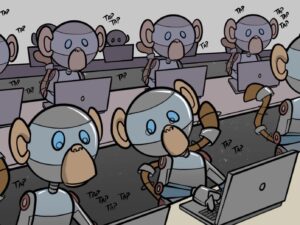
Social media companies are cutting the junk from their diet; Trump is trying to reshape American media; and selling ads is always the last resort.

Pixels attached to articles explaining a recent health diagnosis – without consent – led Healthline to a record $1.55 million fine for violating CCPA. Plus: the new AI contract.

Netflix, which reported its Q2 earnings on Thursday, generated more than $11 billion in overall revenue last quarter, up 15.9% year-over-year.

TV audiences are rallying around CTV, and advertisers are following suit . But with this shift comes a persistent challenge: How can advertisers ensure brand safety, campaign efficiency and audience relevance in a fragmented, opaque streaming ecosystem?

The IAB Tech Lab’s new initiative suggests regulations for how AI bots can access content, ensuring that publishers are fairly compensated.

Hearst has seen improvements in addressability between 30% and 200% since introducing AURA, its AI-powered ad targeting solution, last year.

The layoffs at TripleLift come roughly four months after the company hired Dave Helmreich as its new CEO.

Curated deals were once seen as a smart way to bring structure to programmatic chaos. Today, they’ve become table stakes.

Here’s what Head of Performance Media Josh Palau had to say about how Pfizer currently navigates the CTV landscape, including why having your own hands-on-keyboard experts is key and how new ad formats can be slow to accommodate pharmaceutical brands.

Generative AI tech is hurting publisher search traffic, but it’s also helping pubs optimize their ad sales efforts. The head of publisher ad tech solutions for AWS explains how AI is transforming how advertisers value media and the implications for publishers large and small.
YouTube accounts are uploading recent Hollywood movies, racking up views while advertisers (and sometimes creators) remain in the dark. Plus: Could Cloudflare’s AI bot blockers provide a salve for digital media’s traffic declines?

CTV advertisers have carried over one-to-one programmatic logic from display and online video into a channel that behaves nothing like them. We need to stop chasing CTV impressions and start chasing impact.

Critics say the FTC’s deal with OMG/IPG prohibits agency practices that don’t exist. And it distracts from legitimate concerns about brand safety news blocking and principal media.

On Wednesday, AI-powered audio intelligence platform Sounder launched a new version of its brand suitability and contextual targeting tool for podcasts that can understand the nuances of Spanish-language audio content.

Where would the New York Times be without its recipes?; Cannes Lions deals with controversy; and Netflix wants to get ultra-personal with its ads.
The FTC approved the Omnicom-IPG merger, but with a brand-safety caveat: The agencies cannot create agency-level blocklists of any media that’s political or ideological. With Ad Fontes CEO Vanessa Otero, we unpack the consent order’s ramifications.

Pub tech SaaS startup Swivel wants to make ad ops much less manual and time-consuming with an AI-driven yield optimization tool designed by people who used to build ad servers.

AI app marketplace Dappier ensures that chatbot responses using Benzinga’s data link back to the original source, and it also shares revenue from ads placed in these responses.

With no-click generative AI search gaining steam, here’s how publishers can thrive when search traffic disappears.
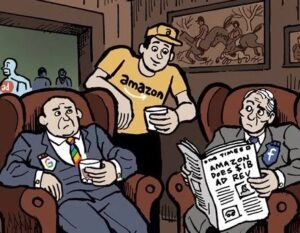
The Amazon DSP vs. The Trade Desk rumor mill; How SharkNinja has stayed sharp; Why nothing beats organic.

Nexstar’s digital strategy will now use Salesforce’s agentic AI capabilities, hoping to unify the sales pipeline into one system.

If journalists don’t decide the best use of AI in journalism, then AI firms will decide for them, says Christian Broughton, CEO of The Independent,
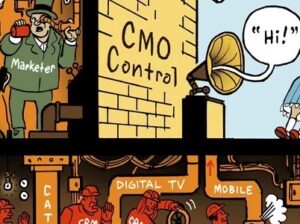
CEOs fear their marketing has lost the plot; WhatsApp introduces ads; Meta’s making its users feel unsafe.

In the early hours of Monday morning, Roku and Amazon jointly announced a partnership that will reportedly result in the “largest authenticated TV footprint” in the US.

If there’s one safe prediction heading into Cannes this year, it’s that AI will be everywhere: in panels, on yachts and splashed across every DOOH ad within a 10-kilometer radius of the Croisette. But behind the noise, something real is happening. We are witnessing a strategic shift. AI is evolving from a shiny object into a performance engine that helps marketers uncover hidden audiences and iterate faster while delivering relevance at scale.
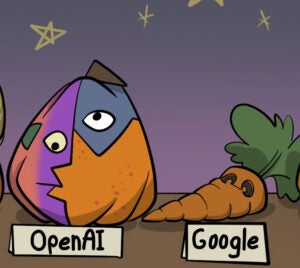
AI-generated mystery pages are appearing on brand sites; Amazon Prime Video doubles its ad load; and bipartisan efforts to protect kids online get a new partisan focus under the Trump admin.
For proof of the uncertainty facing marketers in 2025, look no further than the industry’s ping-ponging projections for ad spending. WPP Media’s revised forecast is just the most recent example.

Advertisers love new ad formats, especially on connected TV. Just look at how many platforms announced their own during the IAB NewFronts and TV upfronts last month. But it’s possible to have too much of a good thing.

Can the IAB Tech Lab’s Trusted Server initiative really help restore publishers’ ownership of monetization and wrestle back control from Big Tech and walled gardens?

Classify is entering a crowded space of AI-powered contextual curation offerings. But the company is already teasing some high-profile integrations thanks to its network of well-connected advisors.

Inside how Jones Road Beauty is trying to turn messy, conflicting measurement signals into a single testing roadmap for its media mix.

IAPP’s Global Summit in DC was a reminder that AI is moving fast – and judges, privacy lawyers and practitioner are racing to keep up.

An upcoming paper from CIMM doesn’t just demonstrate that differences in media quality can be measured. It also argues that tying media value to short-term outcomes has perpetuated longstanding industry challenges.


Not unlike last year, the mood during TikTok’s NewFronts presentation last week felt like cautious optimism, if not outright relief.

Can a good sales presentation offset the impact of a very bad news week? That’s a question for Meta, which collected two guilty verdicts in court this week for failing to protect children and creating additive products.

Meet Clamor, a new social listening product that pulls cultural insights from online conversations in real time. Clamor helped Manscaped freshen up its marketing, including for this year’s Super Bowl.