Broadsign’s acquisition of Place Exchange last week is a defining moment for programmatic out-of-home (OOH).
But it is not the endgame; it is merely the setup. The OOH stack is being rebuilt from the inside out. The final owner is not yet in the room.
When you look at the sequence of recent deals, the pattern becomes clear.
OOH platforms are merging for enhanced scale of inventory and programmatic infrastructure. But no OOH platform can reach the scale digital marketers demand on its own. Instead, OOH needs to lean into omnichannel strategies to compete for programmatic ad budgets with digital-native channels.

Broadsign may actually be building a platform that will make an attractive acquisition target down the road. And one of the major cross-platform Big Tech players feels like the most likely buyer.
Shoring up infrastructure, not demand
For proof of where OOH is heading, consider some of the other recent moves that have shaken up the market.
Perion acquired Hivestack in 2023. Broadsign acquired OutMoove in 2024. T-Mobile acquired Vistar Media earlier this year.
Those weren’t deals aimed at securing demand; they were meant to expand the inventory where demand can be placed. Platforms with meaningful advertiser budgets want more reach, more screens and more pathways to distribute that demand with precision.
Now Broadsign, the largest infrastructure provider in OOH, has pulled Place Exchange into its system. Today, the chessboard looks very different than it did two years ago.
Place Exchange brings broad pipes, clean integrations and steady demand from The Trade Desk, plus a light stream of demand from Google DV360. But it does not bring industrial-scale demand. Broadsign knows this. The Place Exchange acquisition fully shores up Broadsign’s supply and workflow footprint, but the demand equation remains unchanged.
So this acquisition reads less like a final strategic posture and more like prepositioning.
When a company controls the CMS layer, the SSP, the workflow fabric and measurement, it starts to resemble an asset being prepared to be acquired by a much larger player. The kind of player that already sits on massive advertiser budgets and wants to plug those budgets directly into a vertically aligned OOH stack.
Some will frame this acquisition through the lens of buyer access or marketplace openness. But that is not the real story.
Buyers follow efficiency, performance and workflow advantages. Programmatic OOH is entering a phase where leverage comes from controlling infrastructure at scale. The stack that aligns inventory, data and operations will shape the next decade of OOH.
How AI changes the equation
There is a new variable complicating the infrastructure play: AI.
Neither Broadsign nor Place Exchange offers robust AI-native tools. In the age of AI-driven planning, with AdCP reshaping supply paths and routing decisions, the question becomes sharper: Will owning legacy infrastructure matter as much when buyers can lean on AI to collapse planning, allocation and optimization?
Time will tell.
Whatever happens with demand and supply optimization, Broadsign is still the solution for serving the ads. Knowing how slow media owners are to adopt new content management systems and ad servers, I see Broadsign’s positioning as an ad serving platform remaining strong and defensible. But this feels like Act One.
Act Two will be written by whichever strategic acquirer decides that the combined Broadsign and Place Exchange stack is too valuable to leave unattached.
Soon enough, Amazon or Google or Meta will awaken to the opportunity. That future deal could set the new standard for M&A in the programmatic DOOH industry.
“Data-Driven Thinking” is written by members of the media community and contains fresh ideas on the digital revolution in media.
Follow AdOmni and AdExchanger on LinkedIn.
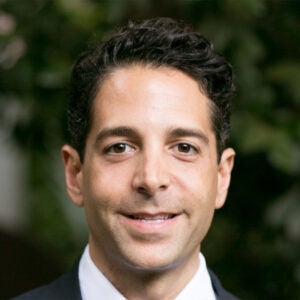
For more articles featuring Jonathan Gudai, click here.