
Cadent Gets Direct; Curating YouTube, Netflix-Style
All of Cadent’s SSP’s CTV supply paths are now direct; Netflix is thriving on repurposed YouTube content; and the Washington Post continues to struggle.

All of Cadent’s SSP’s CTV supply paths are now direct; Netflix is thriving on repurposed YouTube content; and the Washington Post continues to struggle.

Sports content is a significant part of NBCUniversal’s streaming growth, and political tensions could impact its upcoming broadcasts.

Supply-path optimization may not be the trendiest three-letter acronym in ad tech anymore, but the SPO trend is still playing out – especially in the CTV category.

Big TV’s shift to programmatic brings in the performance brands; Meta rolls out premium subscriptions for Instagram, Facebook and WhatsApp; and Yahoo enters the crowded AI search market.

Advertising’s “agentic” future is a compelling vision, but one that relies on capabilities that do not exist yet. AdCP may one day make buying easier, but it will not make buying better by itself.

Despite deepening consumer distrust of AI content, marketers and streamers are embracing AI-powered products. Now, generative AI is complicating the already rather bloody streaming wars.

Ads were going to be a “last resort” for ChatGPT, OpenAI CEO Sam Altman promised two years ago. Now, they’re finally here. Omnicom Digital CEO Jonathan Nelson joins the AdExchanger editorial team to talk through what comes next.

PayPal announced plans to acquire Cymbio, a startup that helps brands improve their presence in AI searches. Plus: Hollywood seems to have forgotten how to do good movie marketing.

YouTube is finally delivering on the promise of shoppable CTV ads. Starting Thursday, they’ll roll out to all of Google’s Performance Max and Demand Gen campaigns, YouTube confirmed to AdExchanger.

Netflix beat its revenue expectations for last year, ending 2025 with $42.5 billion in revenue, a 16% year-over-year jump. Of that, $1.5 billion came from advertising.
Returning to the news desk after a year away from CTV beat reporting is like discovering a time capsule with the industry’s core dilemmas. One thing that has changed, however, is the CTV industry’s infatuation with agentic AI.

Meta cuts its metaverse investment by 30%; Netflix makes a renewed push in the gaming market; and the rush to slap an AI label on everything is placing existing ad tech under renewed scrutiny.

Content is still king – so long as you measure it correctly, Comscore’s Chief Commercial Officer Steve Bagdasarian told AdExchanger at CES 2026 in Las Vegas.

Political advertising has always evolved alongside media consumption. But the shift from linear television to streaming has introduced challenges that campaign managers are still working to navigate. While connected TV (CTV) promises precision and flexibility, the reality facing political advertisers today is far more complex and less standardized.
Maggie Zhang from Amazon Ads talks interactive video strategy, including opportunities on Amazon Prime Video and which genres drive the most engagement.
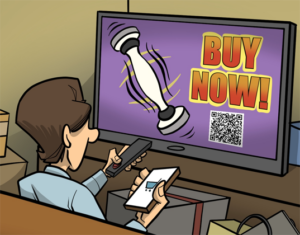
For years, interactive CTV advertising was the star of industry demos – promising, flashy and mostly theoretical. In 2025, they finally made the leap from proof of concept to practice.

Omnicom unveils the latest version of its ID and analytics tool; there’s a new Google Search update in town; and Omnicom Media addresses CTV ad frequency.
If there’s one thing Disney knows how to do well, it’s brand-building. Now, the massive media conglomerate is developing new tools specifically designed to help its advertising clients do the same.

NBCU’s early embrace of ad tech – led by Ryan McConville, its chief product officer and EVP of ad platforms – set the stage for a pandemic-fueled digital transformation that blurred the line between traditional TV and streaming. But that doesn’t mean linear isn’t still a top priority.

NBCU is testing agentic systems that can automatically activate campaigns across its entire portfolio – including live sports on linear.

If any single event can be considered the jumping-off point for TV upfronts, it’s the Consumer Electronics Showcase (CES), which kicks off this week in Las Vegas, Nevada.

This year, programmatic companies faced tough decisions about privacy, awkward acquisitions and the cookie die-off that never quite happened.

The generative AI trend generated endless hot takes this year, but the ad industry also had plenty to say about growing competition between DSPs and SSPs. Here are AdExchanger’s top 10 most popular guest columns of 2025 and why they resonated.
TV ad measurement is breaking down. Tatari’s Benjamin Heaton explains why signal loss and privacy shifts are reshaping how TV campaigns, and how it can be fixed.

Programmatic media buying is expected to account for the majority of growth in the CTV market in 2026. This year alone, over 90% of CTV ad dollars were transacted through programmatic pipes. That data isn’t surprising. Programmatic has solved a real problem by helping brands reach TV viewers with targeted precision at much lower costs.

Roku’s streaming data will now be integrated into Nielsen’s campaign measurement and outcome tools, the two companies announced on Monday,

First, the VAB clashes with Nielsen over Big Data, and Pinterest teams up with tvScientific. Plus, Google Ad Manager rolls out major EU changes, from ditching Unified Pricing Rules to deeper data sharing with publishers.

Let’s close out the year with a roundup of the most impactful CTV stories of the year, from Netflix’s ad surge to Nielsen’s measurement missteps.

Viant struck a deal with IHeartMedia and its Triton Digital advertising platform that will make IHeart’s broadcast radio inventory available through Viant’s DSP.

The film and TV studio Lionsgate has chosen Comcast’s FreeWheel as its exclusive ad server to help manage and sell the growing volume of ad inventory Lionsgate creates with new FAST channels.

PubMatic says adoption of its AgenticOS, combined with strong CTV and mobile demand, set the stage for double digit growth in the second half of this year.

The Trade Desk, once a Wall Street darling, now faces the challenge of rebuilding goodwill across the investor community and the ad tech industry.

While the outcome of Paramount Skydance’s bid for Warner Bros. Discovery hangs in the balance, Paramount is laser-focused on driving streaming growth.


On Wednesday, and in time for the upfronts, Nielsen added more than 200 advanced audience segments in Nielsen ONE, its cross-platform analytics dashboard.

In pursuit of ad revenue, Dow Jones is betting on a tried-and-true strategy: direct relationships, first‑party audiences and a disciplined approach to using data to enrich ad campaigns.
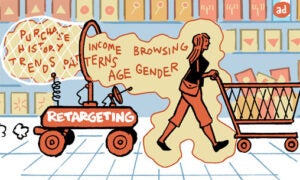
Infillion, an ad tech business built on M&A, is back with another acquisition. This time it’s Catalina, a century-old market research and shopper marketing company with roots in physical cash register machines.