
PubMatic Is All In On Agentic AI
PubMatic says adoption of its AgenticOS, combined with strong CTV and mobile demand, set the stage for double digit growth in the second half of this year.

PubMatic says adoption of its AgenticOS, combined with strong CTV and mobile demand, set the stage for double digit growth in the second half of this year.

The group that turned header bidding software into an open standard is bringing the same approach to publisher-side AI agents.

The generative AI trend generated endless hot takes this year, but the ad industry also had plenty to say about growing competition between DSPs and SSPs. Here are AdExchanger’s top 10 most popular guest columns of 2025 and why they resonated.

Bringing programmatic ads to AI chatbots marks a shift in the business model for AI search, while traditional publishers must find new ways to monetize.

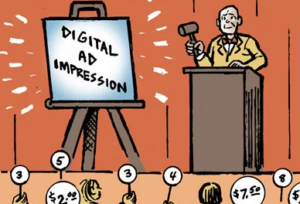
Enjoy this weekly comic from AdExchanger.com that highlights the digital advertising ecosystem … and happy Thanksgiving!

Competitive tensions and ad tech drama have flared all year. And this drama has rippled out into the investor circle, as evident from a slew of recent ad tech company earnings reports.

We break down some of the most interesting financial trends coming out of Q3 earnings reports, and what rises to the level of being worth covering in the first place.

In July, PubMatic saw a temporary drop in ad spend from a “large” unnamed DSP partner, which contributed to Q3 revenue of $68 million, a 5% YOY decline.

Social CPMs have risen. The ability to find incremental audiences on social platforms has declined. Add the growing brand-safety concerns, and the equation looks even worse.

The Trade Desk and PubMatic announced a new API-based integration for managing deal ID campaigns built atop TTD’s Price Discovery and Provisioning (PDP) API, which was announced earlier this year.

The fate of the open web will be decided on who controls the data that drives monetization and the AI that determines distribution. Google controls both, and proposed remedies to its ad tech monopoly do not address this imbalance.
GAM’s dinner with ad agencies sparked speculation that Google is preparing to spin off its bundled SSP and ad server as a remedy to its ad tech monopoly. But Google says it’s just part of the trend of SSPs going direct to buyers.

On Monday, PubMatic became the second sell-side platform to file a follow-on antitrust lawsuit against Google.

Google’s SSP tries to cut out its DSP ahead of a possible ad tech breakup; Perplexity’s head of ads skips town; and Amazon’s search ad pause flooded the market with big spenders.
The IAB Tech Lab video classification updates introduced much-needed clarity. But valuable inventory, now categorized differently, is being deprioritized or rejected, even though its performance hasn’t changed.
The Trade Desk has won the battle for supremacy on the open internet, says Needham & Company’s Laura Martin. But it might just be losing the war for the future of the web to walled gardens and AI search.
Over the past few years, sell-side curation has gained popularity as a way for advertisers to target high-quality publishers. Companies like OpenX are expanding their toolkits to support advertisers as well as publishers.

Classify is entering a crowded space of AI-powered contextual curation offerings. But the company is already teasing some high-profile integrations thanks to its network of well-connected advisors.
PubMatic’s new AI curation features are helping it forge closer relationships with ad agencies like GroupM that are ramping up their use of AI.

The era of fragmented, adversarial ad tech is winding down. A new paradigm is emerging defined by AI-first, end-to-end platforms and collaboration among buyers and sellers.

While some Privacy Sandbox testers lamented their seemingly wasted effort, they remain committed to post-cookie targeting and measurement – even if Google eventually abandons the Sandbox entirely.

More competition between SSPs and ad servers should be a boon for publishers in the long term. But publishers will feel some growing pains if there is a sudden disruption in Google’s ad payouts or if their ad server fees increase.

Would the internet be a better place if it weren’t run by billionaires? Plus, more brands are cutting out the ad tech middlemen.

What is the future of curation in 2025? On the CES conference floor, PubMatic Chief Revenue Officer Kyle Dozeman talks about why curation is such a hot topic in ad tech.

Advertisers’ obsession with “following the audience” allowed low-quality sites and vanity metrics to thrive while brand integrity suffers. But a cultural shift back toward focusing on quality is underway.

Forrester released its first SSP wave since 2014 last week, and there’s a surprise. The research firm ranked Google – whose sell-side ad tech platform is facing federal antitrust charges – as a mere challenger.
Remember last quarter when PubMatic projected a $5 million revenue dip from a large DSP buyer having switched to a first-price auction?
To court new programmatic buyers, SoundCloud is now selling its display and video ads via open auction and private marketplace deals that combine multiple types of inventory.
On Thursday, the US district court in Alexandria, Virginia boarded a time machine back to April 18, 2019 – the day of a tense meeting between Google and publishers.

PubMatic’s $5 million loss from DV360’s bidding algorithm fix earlier this year suggests second-price auctions aren’t completely a thing of the past.