
Get Out Of Jail Free?
We’re in the age of spinoffs. “Young Sheldon,” “How I Met Your Father,” “House of the Dragon” and maybe Google Ad Manager (GAM).
Google has spent the past several months helping GAM grow more self-sufficient, The Information reports. Staffers have been attempting to entice ad agencies with a new tool that would allow them to buy directly via GAM – cutting out Google’s DSP, DV360, in the process.
GAM is also reportedly offering discounts for using its buy-side tools – discounts that rival firms have been offering for several years, according to two ad buyers. And Google’s pivot to bringing its SSP direct to buyers lags behind similar efforts by rival SSPs, including PubMatic and Magnite.

Still, this broader portfolio of offerings would put GAM on par with most other independent ad tech companies. But, The Information notes, it would be counterproductive if GAM remains at Google, since that would put the unit in direct competition with preexisting Google businesses – namely, DV360.
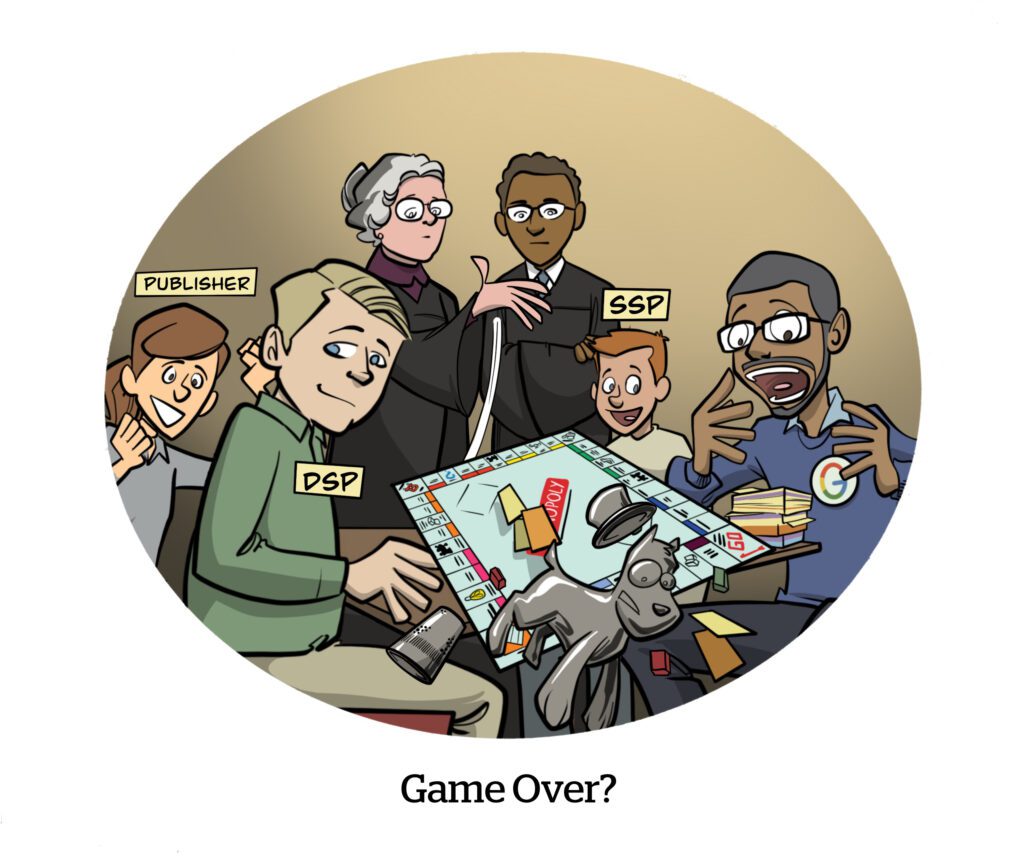
These changes are happening as Google prepares for the remedy phase of its ad tech antitrust trial. In April, a Virginia judge ruled that Google was operating a sell-side monopoly in the market. One of the possible remedies to the case could be a full spinoff of Google’s sell-side ad tech. So is Google fighting the case in court but preparing to make a spinoff easier by changing how it operates its SSP?
Peace Out, Perplexity
Perplexity has been having a perplexing couple of weeks. It’s enough to make one wonder about the viability of the generative AI firm’s business.
Taz Patel, Perplexity’s head of advertising and shopping, left the company after less than a year in the role, Adweek reports. It’s the latest indication that things might not be going so well for Perplexity, and it comes after a bruising month of the company being dragged by critics.
In addition to facing legal challenges from aggrieved publishers, Perplexity was called out by Cloudflare for unauthorized scraping of publisher sites in early August. A few weeks later, IAB Tech Lab CEO Anthony Katsur blasted Perplexity for not engaging with the Tech Lab’s new publisher working group and its AI content licensing initiative.
All this heat with publishers seemed to motivate the new partner program Perplexity announced for its Comet web browser last week. But, notably, the partner program aims to pay participating publishers with a cut of a new subscription service Perplexity launched to support the program – rather than pulling from ad revenue.
Indeed, Perplexity’s nascent ad business was still in the product testing phase as of March, Patel told AdExchanger. And it looks like building up that business amid the company’s many PR challenges wasn’t worth the squeeze.
Priced Out
When Amazon paused Google Shopping spend in July, performance marketers hoped the drop-off in demand would lead to lower prices for search ads.
During the pause, some brands saw CPC rates for Google Shopping ads fall by 10% to 30%, Digiday reports. But for those that saw CPCs drop, “the cost relief lasted only a few days,” says OMG Commerce’s Heidi Sturrock.
The void left by Amazon was quickly filled by other online retailers, including Target, Etsy and Wayfair. Now, Amazon is resuming spending in what’s become a more crowded channel – and it could price out smaller performance brands.
After July 22, Amazon’s share of Google Shopping spend dropped from 70% to 0%, according to Smarter Ecommerce’s Mike Ryan. But, as of August 23, Amazon’s share is back to 74% in all markets outside the US.
What explains Amazon’s 31-day pause? It could be an incrementality test or it could be a strategic pullback during the lull between Prime Day and the holidays. Amazon isn’t telling.
Now, with Amazon back in the mix, CPCs could end up even higher than before.
“Someone’s got to lose out on this situation,” Smarter Ecommerce’s Ryan says, “and somehow, I don’t think it will be Temu and Walmart.”
But Wait! There’s More!
How AI search is harming publishers large and small – and what publisher tech and trade orgs are doing about it. [AdMonsters]
Google will face a “modest” antitrust fine in the EU due to anticompetitive practices in its ad tech business. [Reuters]
The Trade Desk’s shareholders are weighing whether CEO Jeff Green should keep his supervoting shares in the company. [Adweek]
WPP COO Andrew Scott plans to retire by the end of this year. [Reuters]
Walgreens cut its internal media buying team as it shifts its focus back to its core retail and pharmacy business. [Adweek]
Who could benefit the most from buying Dentsu’s international agencies? [The Drum]
We know who isn’t benefiting from Dentsu: T-Mobile. After less than two years of using Dentsu as its lead creative agency, the telco decided to shift creative in-house. [Ad Age]
You’re Hired!
Scope3 names Tim Collier as chief commercial officer. [Adweek]
Thanks for reading AdExchanger’s Daily News Roundup. Want it by email? Sign up here.








