
Know What They Can’t Generate? Profit; Racing Through Infancy
OpenAI may be opening up to the idea of serving ads. Plus, Television for toddlers is quietly powering streaming media ratings.

OpenAI may be opening up to the idea of serving ads. Plus, Television for toddlers is quietly powering streaming media ratings.

Dave Strauss, VP of revenue operations and strategy for North America, spoke with AdExchanger about The Guardian’s PMP priorities and how it’s tapping into other emerging revenue streams.

Black Friday ecommerce continues to surge, mainly on mobile; social platforms pull optimization features for health and beauty brands; and Google’s antitrust lawyers subpoena info about rival AI search startups.
Meta’s privacy policies are uniquely impenetrable. Plus, Google once thought Apple would likely expand its ad business to third-party apps.

Meta changes policy on “sensitive” ads; Texas AG launches an investigation into GARM; and the CMA takes it easy on Apple and Google when it comes to cloud gaming.

Despite CEO Jeff Green’s denials, the rumors turned out to be true: The Trade Desk has spent the last three years quietly building its streaming OS, called Ventura, to compete with the likes of Roku, Amazon’s Fire TV and Google’s Android.
Live video threw sports broadcasts for a loop – and the losses are only just being tallied. Plus, media buyers are dealing with a surge of AI-generated, made-for-advertising websites

The Justice Department will ask Judge Amit Mehta, who ruled in August that Google operates a search monopoly, to require Google to sell Chrome. Plus, the ad tech wants the IAB Tech Lab to roll out curation standards.

Forrester released its first SSP wave since 2014 last week, and there’s a surprise. The research firm ranked Google – whose sell-side ad tech platform is facing federal antitrust charges – as a mere challenger.

Political ad strategies evolved quickly this year, as campaigns moved beyond exclusivity, focusing on flexibility and reach. Here’s what this cycle taught us and how it will guide our business in the medium term.

Advertisers new to CTV tend to misunderstand performance metrics and overemphasize cost per thousand impressions (CPM) as a measure of success.

A Google breakup could lead to a more fragmented market, with multiple smaller entities competing for ad space. This will almost certainly result in increased competition and higher ad rates for publishers.
Nielsen has received accreditation from the MRC for a product that integrates a broadcaster or media company’s first-party streaming data into Nielsen’s TV panel ratings. Plus, Google launches a curation service that bundles ad inventory within its own Google Ad Manager.

OpenAI’s ChatGPT will launch a web search engine. Plus, this year’s $12-billion-plus deluge in political advertising has priced brands out of certain markets.

Brands have two options for avoiding election misinformation on YouTube: block all news, or only monetize credible news. But blocking all news restricts campaign reach and harms reliable journalists, just when we need them most.

Google holds court with bloggers bumped from its search algorithm; a backlash is brewing as the online recommendation engine goes into overdrive; and X pushes conservative politics to accounts with nonpartisan interests.
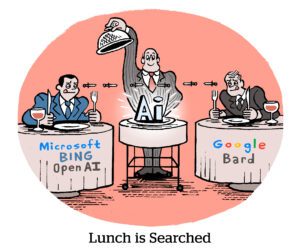
Google hit some impressive revenue benchmarks in Q3. But investors seemed to only have eyes for AI.
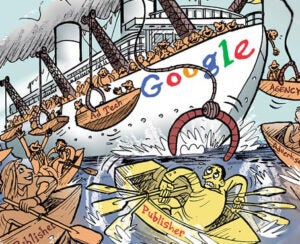
Retracing DPG Media’s journey to disentangle itself from the influence of Google’s ad platform and compete for direct ad budgets.

Ad revenue grew 56% YOY even without some of Reddit’s shiny new ad products, including generative AI creative tools and in-comment ads, being fully integrated into its platform.

Google Search dings big-name pubs’ affiliate-link-laden articles; Google’s new audience prospecting guesses user intent from less obvious keywords; and TikTok Shop’s success could finally make social commerce a thing in the US.

A tool popular with law enforcement can track devices to sensitive locations. Plus, black boxes are getting a bit more transparent.
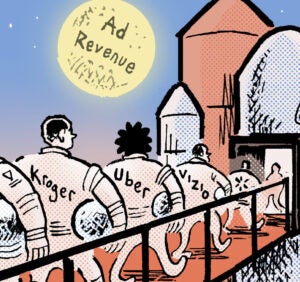
Airbnb gets one step closer to launching a retail media biz; Google shakes up its ad tech executive team; and streamers struggle to balance ad and subscriber revenues.

At Tuesday’s Prebid Summit, a panel of publisher and pub tech execs shared tips for how publishers can get the most out their flooring strategies.

Fertility companies are having their ads blocked on Google, TikTok and Meta. Plus, will the digital dark ages soon be upon us?
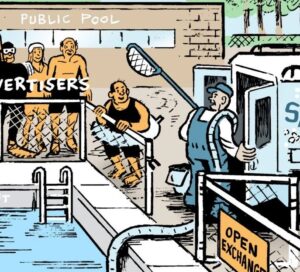
NCIS: Ad Tech takes off as Washington zeroes in on Adalytics reports; Kroger says attention has yet to prove correlation to performance; and inside California’s backroom deal with Google to fund journalism and AI.

In-game ad platform Frameplay joins with competitors to chase scale; top-level domains become a top-level concern; and could Google be forced to open its data warehouse?

PayPal officially launched its ads business. Plus, Media buyers are worried that “an advertising mistake can become the news.”
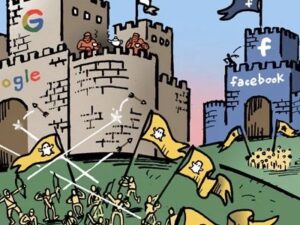
Pinterest is picking up supporters on Wall Street. Plus, what’s the deal with the search advertising, AI and data licensing deal between Google and Reddit?

The online advertising industry is staring down the barrel of not one but two potential shutdowns that could radically change where brands put their ad dollars in 2025, according to Madison and Wall’s Brian Weiser and Olivia Morley.

Google isn’t perfect. But it offers convenient, cost-effective advertising tools that millions of small businesses use to find customers, grow and succeed. If the DOJ breaks up the company, it will also break those tools.