
Primed For Context; Streamers Turn A Profit, But Will It Last?
Amazon Prime Video rolls out new audience and contextual targeting; streamers wring more revenue from subscription-weary consumers; and AI is an app, so it must obey Google and Apple.
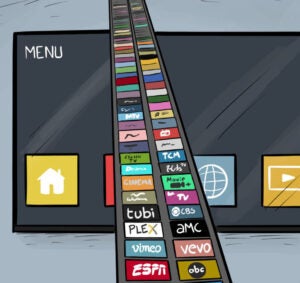
Amazon Prime Video rolls out new audience and contextual targeting; streamers wring more revenue from subscription-weary consumers; and AI is an app, so it must obey Google and Apple.
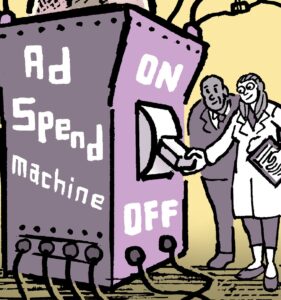
Google and Amazon compete for people’s time and wallets, and for advertisers’ budgets. And on Wednesday, they both kicked off their marketing industry conferences and announced a round of big ad tech news.

AirBNB considers introducing ads (just not right now); antitrust enforcement is about more than shrinking Big Tech; and broadcasters want to get the ball rolling on sports again.

Political advertisers, by necessity, have built precise, privacy-conscious targeting strategies that work without relying exclusively on third-party data like cookies.

Jerry Dischler leaves Google; a bunch of marketing execs join AI companies; agency holdcos don’t know which way is up.

Shopify is growing its advertising and data business; the privacy train is slowing down; Roku is striking deals to make its data more accessible.
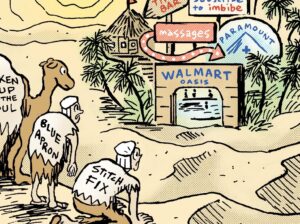
Why did Walmart buy Vizio? What happens when a CTV campaign turns on the S&P500+? Is Google losing its search engine edge?

According to Google, DV360 now reaches 98% of CTV households in the US and represents 5 billion hours of ad-supported watch time per month – roughly 40% more than The Trade Desk and 90% more than Amazon’s DSP.
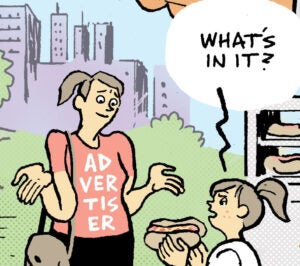
Does programmatic feel like it’s gotten more confusing? It’s not just you. Plus, Fubo’s ad revenue dropped during Q1 and Bing might not be as big a punchline as we all thought.
AdExchanger spoke to a number of programmatic leaders who testified in the DOJ’s Google antitrust trial last September.

LinkedIn launches a creator rev share program; AdSense comes to third-party AI chatbots; and the verdict in Apple v. Epic Games cracks down on Apple’s App Store fees.

PayPal embraces off-site media but says no to data sales; Google pivoted on cookies again, but what about the Google Ad ID?; and gen AI bots are blowing up publisher server costs.

A long-awaited development: Advertisers will soon be able to see around three of the most important transparency blockers in PMax.

Transparency has become the currency of credibility in advertising. Larger holding companies and black box AI platforms must recognize that their opaque practices are no longer sustainable.

Erez Levin, a former Googler and current outspoken consultant, on why the digital ad industry should transact on media quality signals like attention instead of optimizing to outcomes and other flawed attribution models.

The programmatic “sustainability” and “waste” conversation has shifted. Plus, the 2010s called – they want Facebook back.
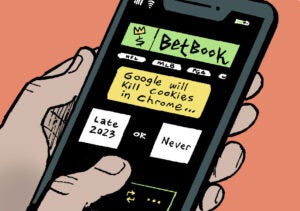
Google isn’t a regulator. From an attorney’s point of view, its decrees don’t carry the force of law, and that’s what lawyers are concerned with: the law.

Alphabet had another stellar earnings report. But neither its leadership nor investors ever mentioned the two landmark ongoing antitrust suits. Chrome’s reversal on third-party cookies also never came up.

Enjoy this weekly comic strip from AdExchanger.com that highlights the digital advertising ecosystem …

When platforms choose to label any significant portion of an ad buy as “other,” it’s a deliberate decision to withhold information for the seller’s benefit and the buyer’s detriment.

Google’s SSP and ad server businesses have been ruled monopolies. And Google Chrome isn’t going to change its third-party cookie opt-ins, further preserving third-party cookies. Go inside this momentous news.
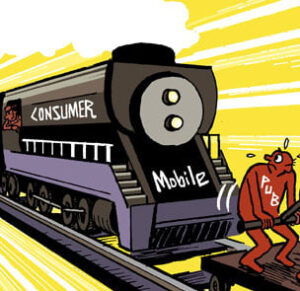
Criteo dives into video ads; after 20 years, YouTube might be the world’s biggest media brand; Threads opens up for advertising.

If the court ultimately orders Google to spin off AdX or DFP, the result would be a fundamental rebalancing of power across the digital advertising supply chain. For marketers, the implications are just as significant.

More competition between SSPs and ad servers should be a boon for publishers in the long term. But publishers will feel some growing pains if there is a sudden disruption in Google’s ad payouts or if their ad server fees increase.

The wave of ad tech headlines in recent weeks represents a long overdue moment of reckoning for companies who (still) hold disproportionate control over publishers’ website traffic and revenue potential.

What does the end of impulse shopping mean for advertising? Plus, Remember Google+? Meta sure hopes you don’t.

The Google antitrust ruling will have wide-reaching implications for the tech industry at large, not just the ad businesses therein. But in the meantime, it’s only natural to see programmatic veterans letting off a bit of steam.
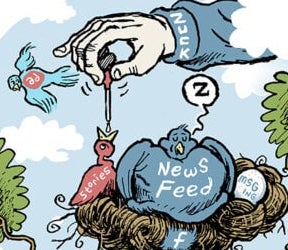
Do Google AI Overviews really bring exposure to more websites?; Meta considered an all-ad Instagram feed; and agencies are cautiously optimistic even as tariff concerns threaten upfronts season.

Temu’s US ad spend grinds to a halt; Publicis posts a strong Q1; and creative personalization tech is back in vogue.
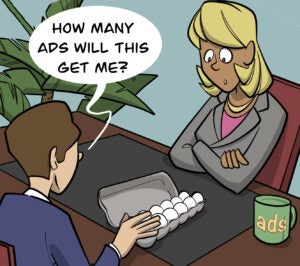
The rest of the world is still preparing its tariff countermeasures. Plus Google has started inserting links to new Google searches into AI overviews.