
Daily Bread
The Daily Mail provides an interesting case study on news monetization and readership.
The British publisher is touting that its digital subscription program – Mail+, of course – has now passed a quarter-million paying readers, writes The Press Gazette.
That’s pretty good, considering Mail+ launched in its native UK in 2024 and in the US and Canada last month. And it’s up from 100,000 subscribers in November.

Also, the Daily Mail has a very lenient paywall. Only about 5% of its overall articles are gated on a given day. When content is mostly free, it’s considered tougher to add subscribers.
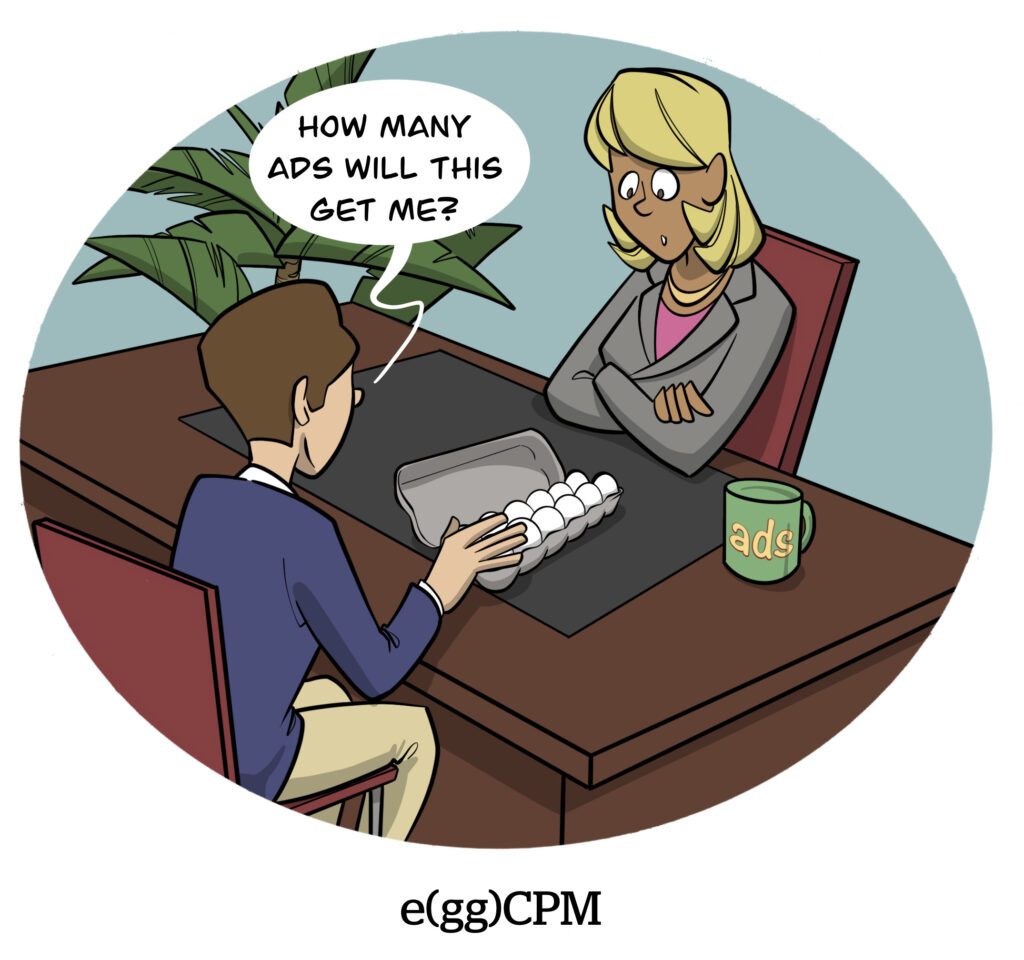
On the other hand, the Daily Mail’s ad experience is pretty … rubbish, you might say. And becoming a Mail+ subscriber means readers see 80% fewer ads on pages that are normally packed with banners, native ads and videos.
Not to be mean, but click any article on the homepage and you will find a screen pasted with ads. Anecdotally, the headline article as of this moment has six overlapping, above-the-fold ads that refresh multiple times per minute, and scrolling down unlocks three separate sound-off video ads that play at once, not to mention an Outbrain chumbox. Which may be why people are paying to (mostly) turn those ads off.
What’s In A View?
YouTube will change how it credits Shorts views, the seconds-long vertical video posts that are essentially repurposed from TikTok. The change should assign more credit (or at least more total views) to creators’ videos.
To date, YouTube has taken the approach of counting a view when a video is seen for at least a few seconds, and only credited once for a viewing session, TechCrunch reports. This is fair enough. It’s pretty much how YouTube works.
However, it’s not how TikTok works. And now YouTube Shorts will adopt TikTok’s views metric, which credits a new view any time a video starts, however fleetingly, and racks up views when a video is replayed on a loop, as often happens with this type of quick, thumb-stopping feed.
Within its creator analytics UI, YouTube will still allow accounts to parse “engaged views,” rather than the inflated numbers shown to general users.
Even without these more inflatable metrics, Shorts has been on a tear. As of last year, Google disclosed that Shorts were being viewed 70 billion times per day and was already boasting of Shorts views overall surpassing five trillion.
But Google’s still hungry. It’s going for a quadrillion views. That despite creators barely making a buck on their already heavily inflated Shorts posts.
MAGNA Projects MAGA Slump
US ad spend in 2024 was the second-highest in 25 years, behind only the post-COVID bump of 2021, MAGNA reports. But don’t expect the good times to keep rollin’.
MAGNA’s final estimate for 2024 US ad sales is $380 billion, a 12.4% YOY increase (or 9.9%, excluding cyclical spending). The banner year was powered by “a strong, stable economy and ongoing media/advertising innovation,” says MAGNA’s Vincent Létang.
The outlook isn’t as good for 2025..
MAGNA revised its non-cyclical ad spend growth projection for this year to 6.3%, down from its earlier prediction of 7.3%. It expects publisher ad revenue to grow by 4.3% in 2025.
MAGNA always expected 2025 to be weaker than 2024. But rising economic uncertainty – tariffs and trade wars with US allies, anyone? – prompted it to lower its expectations.
Traditional publishers could see their revenue decline 1% to $103 billion this year, according to MAGNA. Meanwhile, MAGNA expects digital video and audio, search, social and retail media to see a 9.6% bump to $293 billion.
CTV will remain a hot channel. MAGNA projects $46 billion in combined linear and streaming ad sales, up 14% YOY – with CTV offsetting a 7% reduction in linear TV spend.
But Wait! There’s More
Major brands are increasingly seeking to hire ad agencies via LinkedIn, upsetting the status quo of consultant-led pitches. [Ad Age]
Insiders reveal how indie ad agency Madwell was rocked by its co-founders’ legal battles, reckless spending and CEO Chris Sojka’s apparent downward spiral. [Adweek]
Watch TikTok ad chief Blake Chandlee’s last recorded interview before he announced he’s leaving the company. [The Drum]
Audio startup Krisp launches an AI tool that can change a speaker’s accent – with its initial rollout focused on changing Indian accents to American accents. [TechCrunch]
You’re Hired
Born Social promotes Emily Williams to head of strategy. [Campaign]
Thanks for reading AdExchanger’s daily news round-up… Want it by email? Sign up here.







