
A New Code For Countering Ad Fraud; The GLP-1 Food Market Correction
The purported best ways to counter ad fraud; CPG brands struggle in the face of GLP-1s; and the open web might be meeting its end.
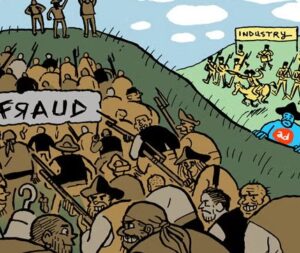
The purported best ways to counter ad fraud; CPG brands struggle in the face of GLP-1s; and the open web might be meeting its end.

We’re witnessing the end of the pageview era. But the interesting question isn’t how publishers replace their lost search traffic; it’s what they do with the audience they already have.

Google has to hand over some of its AI features to competitors; when LLMs will (or won’t) be critical; and publishers are productizing GEO offerings.
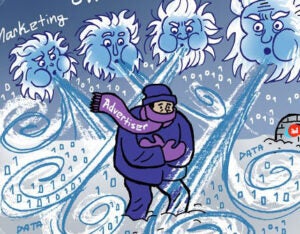
Google and Meta are quietly rewriting the rules of ad measurement, and they’re doing it with open-source marketing mix modeling tools that many marketers don’t even realize they’re using.

Advertising in AI-native destinations and experiences is already starting to look less like a series of experiments and more like an emerging market.

Instead of relying on rigid audience segments, modern systems can interpret a real-world moment in real time, combining layers of information to better predict what someone might actually care about right now.
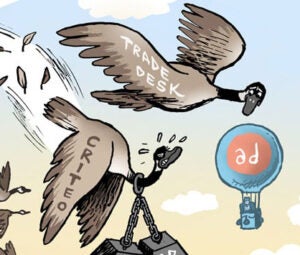
Criteo has two potential buyers; publishers consider blocking Google’s joint AI-scraping/search-indexing bot; and Microsoft’s billion-player gaming goal might make sense for mobile.

In a world being agentically orchestrated at scale, human judgment is the indispensable guardrail preventing us from optimizing right over the cliff.

Everyone’s investing in AppsFlyer; NBCU launches Rock Studios, a creative studio for brand integrations; and Meta wants to hop on the TV bandwagon.

Ask Ad Manger offers instant troubleshooting help when a campaign isn’t delivering as expected, ideally by diagnosing the problem and suggesting how to fix it.
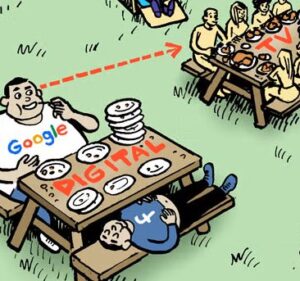
Where will OpenAI put its ads?; YouTube may or may not be considered TV; and Uber and Lyft deals really are too good to be true.

Viant creates a direct pipeline between its DSP and media companies; Google and TTD won’t renew their TAG accreditations; and OpenAI may lower the cost of tokens.

The pitch for dynamic take rates is reasonable. Total volume goes up, and the publisher sees more impressions clearing. But the problem is where the extra volume comes from.

Amazon has third parties selling some of its ad inventory; Scope3 selling Adloox to Peer39 suggests sustainability is out; and “fabric” is the new AI-related buzzword for ad tech.

The programmatic intelligence layer is owned by the same parties that are extracting margin from it. That structure is now being dismantled by an AI-underpinned protocol that moves the intelligence layer into the open.

Agentic shopping is the next big thing. At least that’s the message from Google’s big annual conference for ad product updates.
Keywords, Kinda The tabs, they are a-changin’. As in, campaign analytics tabs and what they’re meant to show advertisers. The biggest shift has been the move from “analytics” to “insights.” “Analytics” used to mean detailed, exportable data that brands could plug into their own systems. “Insights,” by contrast, are curated summaries and useful-sounding takeaways about […]

The DOJ targets another Google Search ad scam; ICE relies on “advertising intelligence” and support from Palantir to ramp up deportations; and TikTok now lets you book vacations in its app.

People Inc. previewed plans to downsize by focusing mainly on its key properties. The strategy makes sense considering its publishing portfolio has lost about two-thirds of its Google traffic.

Google is launching Meridian Studio, an enterprise version of its Meridian media mix modeling platform and an updated open-source version of its GeoX tool for measuring incrementality across geos.

Going viral isn’t great; AI search is a nightmare; and CTV is forcing everyone to get along.

Generative AI search has pushed traffic off a cliff across most of the internet, but not on social platforms. Reddit included.
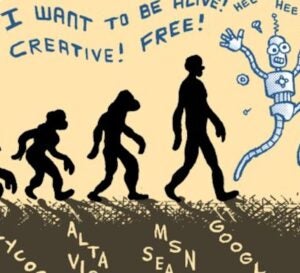
Google announced new features and ad types for AI Max, its AI-based bidding product for search and shopping or sponsored product ads. The company also touted “hundreds of thousands” of advertisers using AI Max.
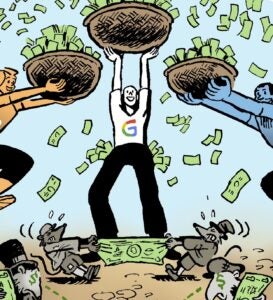
Alphabet earned $109.9 billion in Q1 this year, up from $90.2 billion a year ago. And that’s not even the truly gobsmacking number.

With its new funding, commerce data platform Chord plans to help brands access their data more easily by unifying it within one platform.

A proposed standard under discussion at W3C aims to redefine how ad effectiveness is measured across the web. This proposal would centralize measurement of ad effectiveness under the control of Google, Apple and Meta.
Law firm Keller Postman is leading mass arbitration suits against Google, seeking advertiser damages for alleged monopoly overpricing. The total available pot is a quarter-trillion dollars.

Surprise! Platforms ignore users opting out of ad tracking; the marketing machine claims credit for Geese’s popularity; and Meta’s MAGA-friendly moderation makes an unforced error.

ChatGPT’s ads manager leaves something to be desired; beware booking vacations via search ad; and YouTube is jacking up its premium prices again.

Now that we have not one but two reporters covering the CTV advertising space, we thought we’d try something different and share the roundup newsletter this week!