
Intent IQ Has Patents For Ad Tech’s Most Basic Functions – And It’s Not Afraid To Use Them
An unusual dilemma has programmatic vendors and ad tech platforms worried about a flurry of potential patent infringement suits.

An unusual dilemma has programmatic vendors and ad tech platforms worried about a flurry of potential patent infringement suits.
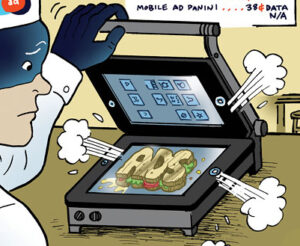
Outbrain is trying to shed its chumbox rep by bringing social media-style vertical video to mobile publishers on the open web.

Billups, a managed services agency that specializes in OOH, is making its attention measurement solution and a related analytics dashboard available for general use.
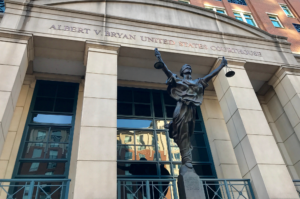
Just three weeks after it began, the Google ad tech antitrust trial in Virginia is over. The court will now take a nearly two-month break before reconvening for closing arguments right before Thanksgiving.
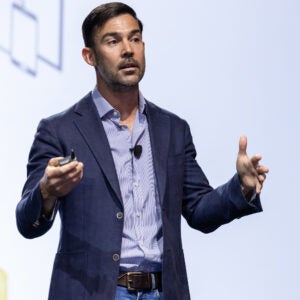
Publishers are initiating more and more auctions – but doesn’t mean DSPs are listening to more bids, according to Chris Kane.

During certain periods this year, advertisers blocked more than 40% of The Washington Post’s inventory over brand safety concerns.

A lot has already been said and cited during the Google ad tech antitrust trial, with more to come. Here are a few of the most notable quotables from the first two weeks.
The FTC’s latest staff report has strong message for social media and streaming video platforms: Stop engaging in the “vast surveillance” of consumers.
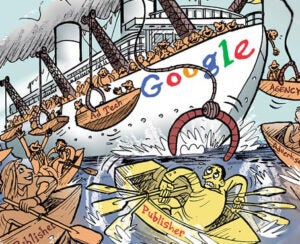
Publishers were encouraged to see the DOJ highlight Google’s stranglehold on the ad server market and its attempts to weaken header bidding.

Albert Thompson, a buy-side veteran with 20+ years of experience, weighs in on attention metrics, the value of MFA sites, brand safety backlash and how publishers can improve their inventory.

Someone will eventually need to make a Netflix-style documentary about the Google ad tech antitrust trial happening in Virginia. (And can we call it “You’ve Been Ad Served?”)
In the process of the investigation into Google, the Department of Justice unearthed a vast trove of separate evidence. Some of these findings paint a whole new picture of how Google interacts and competes with its main DSP rival, The Trade Desk.
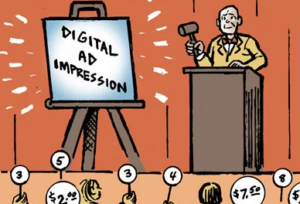
On Thursday, the US district court in Alexandria, Virginia boarded a time machine back to April 18, 2019 – the day of a tense meeting between Google and publishers.

Confidential matching – which uses a TEE built on Google Cloud infrastructure – will now be the default setting for all uses of advertiser first-party data in Customer Match.

PubMatic’s $5 million loss from DV360’s bidding algorithm fix earlier this year suggests second-price auctions aren’t completely a thing of the past.
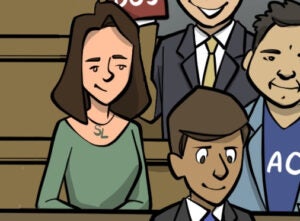
Day Two of the Google antitrust trial in Alexandria, Virginia on Tuesday was just as intensely focused on the intricacies of ad tech as on Day One.

It’s not often one gets to hear sworn witnesses in federal court explain the intricacies of header bidding under oath. But that’s what happened during the first day of the Google ad tech-focused antitrust case in Virginia on Monday.
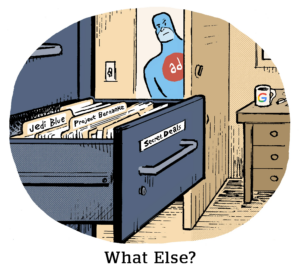
What do Hercule Poirot, Ben Bernanke, Star Wars and C.S. Lewis have in common? If you’re an ad tech nerd, you’ll know the answer immediately.

Wonderful hadn’t done an out-of-home (OOH) marketing push in more than 15 years. That is, until a week ago, when it began a campaign across six major markets to promote its new no-shell pistachio packs.

Google doesn’t want AppNexus founder Brian O’Kelley – you know, the godfather of programmatic – to testify during its ad tech antitrust trial starting on September 9.

Publishers trafficking in pirated movies, TV shows and games sold programmatic ads alongside this stolen content, while using domain cloaking to obscure the “cashout sites” where the ads actually ran.
Starting last week and into this week, hundreds of court-filed documents have been unsealed in the lead-up to the Google ad tech antitrust trial – and it’s a bonanza.

Ever since Nielsen was dinged for undercounting TV viewers during the pandemic, its competitors have been fighting to convince buyers and sellers alike to adopt them as alternatives. And yet, some industry insiders argue that alt currencies weren’t ever meant to supplant Nielsen.

In the past year, Baby product and mattress brand Newton Baby has put all its media channels through a new testing regime for incrementality. It was a revelatory experience.
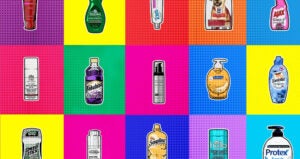
Colgate-Palmolive redesigned all of its consumer-facing sites and apps to make it easier to collect opted-in first-party user data.

History can be a burden for a brand, if it means that company is too set in its ways to pivot and try new things. Just consider e.l.f. Cosmetics, the digitial-first, social-native brand that made good.

Digital-native brands need to figure out how to win in retail shelves. They’re finding it difficult, to say the least.

A group of 20 web app developers sent a letter to the CMA claiming the regulator’s proposed remedies for increasing competition among mobile browsers do not address barriers to entry for mobile web extensions on iOS and Android.

“There are billions of additional screens outside of mobile phones,” says Dan Page, TikTok’s global head of partnerships and new screens. “We want to be in all of them.”

The Trade Desk delivered another smash earnings report. Meanwhile, Unified ID 2.0, the open-source identity initiative, has “reached a critical mass of adoption,” CEO Jeff Green told investors.