
Scope3 Announces New AI Products To Reduce Ad Tech’s Growing Carbon Emissions Levels
Scope3’s new agentic AI platform can automatically filter out inventory that’s considered a high climate risk, including made-for-advertising content.

Scope3’s new agentic AI platform can automatically filter out inventory that’s considered a high climate risk, including made-for-advertising content.
AI and machine learning services have come a long way in the past couple years, and these changes have introduced a whole new vocabulary for marketers trying to get a handle on how products like PMax work.

AI-equipped consumer products keep failing; why the newsletter boom might be nothing but spam; and retaliatory tariffs hit America where it hurts.

What exactly are joint business partnerships? Plus, AI chatbot responses may be susceptible to Russian propaganda.

There are many open questions for marketers who want to implement AI-driven ad tech – and for customers considering the new AI-powered Oral-B. What does it even mean when a vendor touts its AI capabilities?

According to CreativeX, ad creative is responsible for nearly half of sales lift, which is more than reach, recency and targeting combined. So why doesn’t creative get the credit it deserves? Until recently, says Anastasia Leng, CEO and founder of CreativeX, technology wasn’t advanced enough to measure creative decisions at scale.

Experimenting more with AI is an item on the top of many New Years resolution lists – including with agencies. SKDK CEO Doug Thornell talks about where he sees opportunity for agencies to use AI in its processes. In this interview on the CES showroom floor, he also recaps the big changes in political spending […]

Recorded from the showroom floor at CES, the AdExchanger editorial team talks about the intersection of consumer electronics and advertising with our guest, Dave Meeker, head of AI innovation at Monks.
Meta recently revisited its goal to create AI-generated “characters” — which backfired. Plus, Apple’s trying to avoid a class-action lawsuit.
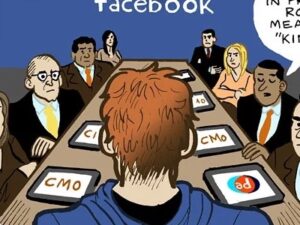
Enjoy this weekly comic strip from AdExchanger.com that highlights the digital advertising ecosystem …
Publisher C-suite drama has been making headlines recently. Plus, there are now 27 different active lawsuits against various AI content generation companies.

Marketers are already beginning to prepare for a world without TikTok. Plus, the TV manufacturing industry is more focused on user tracking and monetizing with ads.

AppLovin’s ecommerce advertising beta program has sparked optimism and speculation. Plus, the results of YouTube’s auto-reply program have been mixed.

Omnicom is acquiring IPG. We unpack the proposed deal with ad agency expert Brian Wieser, founder of the constancy Madison and Wall.

Publicis outperforms its agency holding company rivals because of three primary factors: technology strategy, leadership and deal-making.

Call it a Glitchmas miracle. Maybe. Meta finally appears to have resolved a glitch in its ad platform that prevented new financial services advertisers from running campaigns.

When social media platform Nextdoor launched advertising in 2017, CEO Nirav Tolia declared it would be a $1 billion business by 2020. That didn’t happen. Nextdoor generated $66 million overall in Q3 of this year, and Tolia chides himself for his hyperbole. But Nextdoor has an ambitious plan for advertising growth.

Perplexity AI, the generative AI search engine trying to out-Google Google, began rolling out its ads products last week. Plus, An AI-powered shoppable ad platform is causing problems for readers of BuzzFeed Australia.

Can Netflix do live programming? Plus, efficiency gains from generative AI are causing some ad agencies to rethink how they bill clients.

Meta’s capex in 2024 will clock in somewhere between $38 billion and $40 billion, roughly $1 billion more than previously anticipated. Where’s most of that money going? AI, of course.

Albert Thompson, a buy-side veteran with 20+ years of experience, weighs in on attention metrics, the value of MFA sites, brand safety backlash and how publishers can improve their inventory.

In typical data analysis, you need to know what you’re looking for before starting. But deep learning models can reveal links between cause and effect regardless of whether anyone would think to look for them.

If attention is treated like viewability 2.0, high or low attention could become a blanket requirement for a campaign and hinder performance.
Inside a cloaking scam that funneled ad spend to piracy websites. Then: your AI agency assistant is here, and it’s ready to build your media plan.

As AI eases one process, it creates new concerns around data privacy. And with more regulations like California’s AI safety bill surely coming soon, marketers need to stay on top of their ethics game.

While you may have been making strides in diversity, equity and inclusion, your AI journey has the power to derail and undermine your actions.

These days it seems like there’s an AI tool for everything. Now there’s even an AI tool to manage your AI tools.

Instead of erasing the idea of brand safety, we should be developing smarter, more nuanced solutions that protect both news publishers and advertisers.

Recent moves by major ad tech players prove the industry doesn’t actually need cookies. But Chrome’s cookie pivot doesn’t clarify what will happen to the 1% of its audience that’s already cookieless or what will become of plans to deprecate the Android Ad ID on mobile.

In today’s newsletter: The DOJ sues TikTok alleging COPPA violations; Disney wraps a competitive upfronts season as it faces stiller competition for streaming ad budgets; and more than $107 million was spent on ads for AI products in the first half of this year.