
The Enslopification Of Pinterest; Stagwell Beats WPP On Growth
Pinterest is being overrun with low-effort generative AI slop. Plus, Stagwell partially credits its 14% growth last year to – you guessed it – AI.

Pinterest is being overrun with low-effort generative AI slop. Plus, Stagwell partially credits its 14% growth last year to – you guessed it – AI.

WPP shares dipped to a four-year low on after posting its 2024 earnings results. Plus: How brands are courting virality.

Like Kendrick Lamar during the Super Bowl halftime show, Interpublic Group CEO Philippe Krakowsky had a message for all the haters out there: the impending Omnicom merger won’t affect IPG’s ability to do business in the meantime.

The Google Chrome team is getting closer to deciding on its cookie consent mechanism. And Paramount resolves its four-month standoff with Nielsen, as the mechanics behind currency change forever.

Publicis looks to capitalize on potential fallout from the Omnicom/IPG merger; Google Cloud is seeing an influx of ad sales talent; and Spotify advises investors to be patient with its growing programmatic ads biz.
Why worry about AI replacing jobs when a megamerger might make them redundant?

Ad buyers agree that Nielsen’s decision to pivot from panel-only ratings is a step in the right direction for TV ad measurement. But some also suggest it may be too late for Nielsen to recover the ground it ceded to competitors.

Nielsen told ad buyers that it plans to drop panel-only ratings later this year. The decision signals an inflection point in media measurement that publishers and buyers have both been waiting for.

Criteo’s Brian Gleason shared how it is working with agencies to capitalize on curation and measurement opportunities in retail media and CTV.

It’s not easy competing for business with massive holding companies (which are only getting more massive). But the Omnicom-IPG deal “also creates opportunities for the rest of us,” says Remy Stiles, North America CEO of programmatic agency Kepler.

For many advertisers and agencies, returning to TikTok this week felt a bit like remote working through a natural disaster: Business as usual, except not really.

What do toasters have in common with transparency and online advertising standards? Quite a lot, actually, says Ben Hovaness, chief media officer at OMD Worldwide. No, really.
Enjoy this weekly comic strip from AdExchanger.com that highlights the digital advertising ecosystem …

DirecTV expanded its stake in addressable TV ad platform Invidi on Wednesday. It’s now the majority owner.
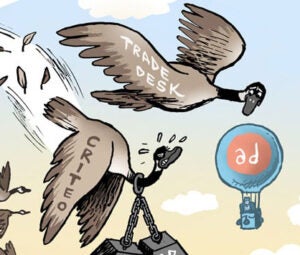
Mohegan and LiveRamp partner on a “casino media network;” Criteo hires its new CEO from the agency side; and Publicis Groupe consolidates

New forms of media that attract massive consumer attention, but more tentative interest from marketers, present a huge opportunity for those that are willing to brave the unfamiliar waters. Right now, that channel is gaming. On the ground at CES, Digitas head of innovation solutions Morgan Pomish explains why gaming is her top recommendation to […]
Experimenting more with AI is an item on the top of many New Years resolution lists – including with agencies. SKDK CEO Doug Thornell talks about where he sees opportunity for agencies to use AI in its processes. In this interview on the CES showroom floor, he also recaps the big changes in political spending […]

Morgan Pomish, head of innovation solutions at Digitas, shares what brand leaders and advertisers should consider before jumping on a tech bandwagon.

Tune into the first episode of the year with guest Andrew Frank, VP and distinguished analyst at research firm Gartner. We cover a lot of ground, from the impact of multiple major Big Tech antitrust trials to practical AI use cases (minus the BS).

Three years after launching its own data clean room, Roku is trying to bring something new to the table. On Monday, the company announced the launch of a new offering, the Roku Data Cloud, which allows marketers access to more granular streaming TV data via ad tech and agency API partners.
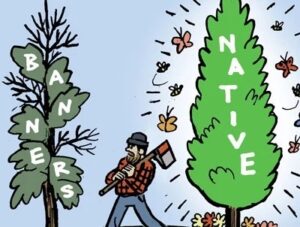
Dealmaking and AI (and blackjack) are top of mind for those heading to CES. Plus, don’t expect brands to reengage with hard news in 2025.
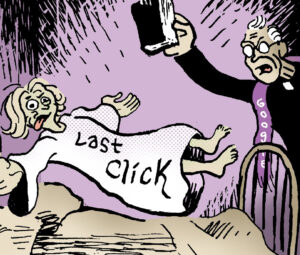
Trap More Flies With Honey Honey, a free browser extension that automatically finds and applies discount codes, is being accused of defrauding its users and the online content creators who championed it. That’s according to a YouTube tech investigator who goes by MegaLag. He alleges that the PayPal-owned Honey effectively steals the credit for online […]

2024’s most popular guest columns offer a snapshot of an industry in flux – and one that’s grown cynical due to repeated promises of unrealized change.

The in-game advertising market’s stagnation is both unsurprising and frustrating. The onus is on the gaming industry to make gaming an essential channel for advertisers, rather than a nice-to-have.

Two perspectives have emerged on curation: The value argument highlights refined audience targeting, while the ad network argument emphasizes enabling smaller players to compete with scaled giants.
Omnicom is acquiring IPG. We unpack the proposed deal with ad agency expert Brian Wieser, founder of the constancy Madison and Wall.

Retail media and tech platforms now represent a return to agency scale dynamics. The proposed Omnicom and IPG merger is the latest example.

Antitrust regulation has counterintuitively favored the biggest ad industry players. Plus, another streaming service, anyone?

Publishers expect the agencies will eliminate tech redundancies as they consolidate, which could compel pubs to shed redundant tech themselves. The merger could also entrench principal-based buying, which may not be a bad thing.
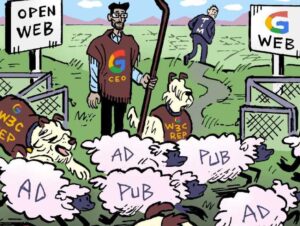
Rival browsers raise an objection to Google being forced to sell Chrome; ad agencies pivot to software and services; and people are turning to chatbots instead of search, with error-filled results.
Apple has a new block list for data brokers and ad tech vendors that do cross-site user tracking – which could expand to include a much broader slate of ad tech and martech vendors across the entire ecosystem. Plus: a few thoughts on Advertising Week New York.

Against the backdrop of Advertising Week New York this week, the programmatic ecosystem has been buzzing madly like the inhabitants of an overturned beehive after the release of Apple’s iOS 27.

Given how much agentic AI pervades nearly every conversation these days, it’s easy to overlook how nascent the technology still is, particularly when it comes to buying ads on connected TV.


OAAA COO Patrick Dolan explains how the organization is changing to guide the out-of-home channel through programmatic’s agentic era.

PubX has acquired media-quality startup Compliant and raised a $5 million Series A as it expands its agentic ad-buying platform into the US.

Warner Bros. Discovery has a new white paper analyzing the data and methodologies of five top video measurement providers: VideoAmp, iSpot, Comscore, Innovid and Samba.