
Here’s today’s AdExchanger.com news round-up… Want it by email? Sign up here.
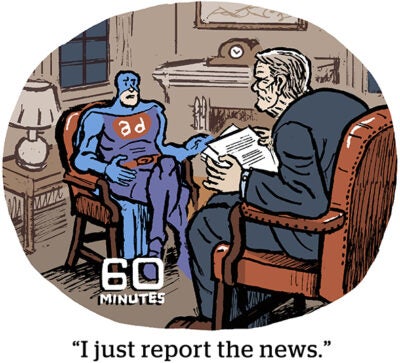
Winning The News But Losing The War
Twitter trails Snapchat, Pinterest and LinkedIn when it comes to active users. (And it’s not even worth comparing the size of Twitter’s user base to YouTube, Facebook, Instagram or TikTok.)
But there is one category in which Twitter is the uncontested champion: media publishing. Every publisher has a Twitter account. Not even Facebook or Instagram can boast the same, Axios reports, and publishers overall have their largest followings on Twitter.
But – and it’s a big but – news publishing is not a lucrative sector.
In yesterday’s newsletter, we cited Instagram’s attempted evolution from photo sharing to video sharing as being a more alienating change than the company expected. As a primarily text-based platform, Twitter is a different bird entirely. Text-based social media lends itself to news readership, but is also a cheaper canvas for ads and less likely to drive online sales.
Consider this: The size of the audience that most news, sports and entertainment publishers have on YouTube is just one-third the size of their audience on Twitter, and they probably have more engagement on Twitter, too. Still, YouTube is the platform these publishers invest in because it promises greater revenue and engaging video supply.
It’s not a coincidence that Twitter doesn’t face much competition on the news front. Facebook deliberately stopped sharing news since the 2016 election, and TikTok has never cared much for hard news.

Hunting For The Next Beast
Influencers are big business, and not just as social media spokespeople. Many creators have become booming brands in and of themselves.
Just take Jimmy Donaldson, aka Mr. Beast. He’s a YouTube megastar turned entrepreneur with his own burger brand, MrBeast Burger, and his own food company, called Feastables.
But can Mr. Beast’s success be replicated?
Investment firm TCG believes the answer to that question is yes, writes The New York Times. TCG recently invested $100 million in Night Capital, a firm co-founded by Mr. Beast’s manager, Reed Duchscher, to identify and invest in creator businesses that generate ecommerce sales.
Night plans to give creators equity, which shifts the burden on creators to appease platform algorithms to earn a living.
Pairing DTC commerce with influencers is a decidedly nonadvertising way to make money, and that’s by design.
“In recent years, traditional media companies have been left to fight over the advertising scraps left behind by tech platforms like Facebook, Google and Amazon,” according to the Times. “TCG is betting that it’s pointless to invest in a new media business based purely on advertising, unless it has the chance to become a big platform, like Snapchat.”
Spoilt For Choice
Roku is updating its remotes and UI to improve discoverability and viewer-funneling options when people are on the fence about what to watch.
There will be category choices, such as “sports,” “news” “music” and “crime,” Fierce Video reports, as well as personalized categories (“subscribed,” “favorites,” “recents,” you get the idea).
Categories give big streaming players like HBO Max, Netflix and Paramount+ a quicker, easier way to reengage viewers or quick-resume shows (although likely for a price).
Roku, which aggregates a long tail of streaming apps, will have a TikTok-esque video feed from CTV content creators that users can flick through to check out new shows or quickly favorite something from an app they might not be familiar with.
In a similar vein, Netflix introduced the “Play Something” button last year, which is like a safety valve for the nightly frustration that occurs in many streaming households. (“Can we play something already?!”)
TV manufacturers, including Samsung, LG and Vizio, have small but booming ad businesses built on the same premise. Their bread and butter is advertisers like Disney, Amazon and Netflix, who will pay to get ahead of the streaming bottleneck that occurs when users have time and space to choose what they want to see but don’t know what they want to watch.
But Wait, There’s More!
Google is backing IAB Tech Lab’s Seller-Defined Audiences. [Adweek]
The latest crypto scam uses fake sites, live chats and SEO tricks to dupe victims. [Bloomberg]
The Google September 2022 core search update is live. [Search Engine Roundtable]
Meta is merging its content moderation teams for ads and organic posts. [Axios]
Alicia Kennedy: On selling yourself, selling merch and selling a lifestyle as a food and recipe writer. [blog]
Bridgepoint confirms its investment in the programmatic company MiQ. [release]
Tremor completes its $240 million acquisition of Amobee. [release]
You’re Hired!
Scott Bender joins data commerce company Narrative I/O as VP of media and advertising. [LinkedIn]
Paramount ad sales shake-up: John Halley promoted, Jo Ann Ross shifts to advisory role. [THR]









