
Here’s today’s AdExchanger.com news round-up… Want it by email? Sign up here.
OneView, Meet ONE
AdExchanger has previously referred to Roku and Nielsen’s relationship as a “strategic accord.”
Roku was the first streaming media platform to use Nielsen ratings and has delivered semi-annual doses of good PR to Nielsen during a dismal streak. And when Nielsen ratings light up Roku inventory, spend follows. Nielsen is also one of Roku’s sponsoring members, so to speak, to the country club of TV advertisers.
Oh, and last year, Roku acquired Nielsen’s ACR data business made up of former Gracenote and Sorenson Media assets.
The latest chapter in their romance came on Thursday when Roku inked perhaps its biggest Nielsen partnership yet with the news that Roku will be a pilot media partner for Nielsen’s Total Ad Ratings, the four-screen measurement product (mobile, desktop, linear TV and CTV) launching in December.
Total Ad Ratings is critical for Nielsen, because it forms the data set that underpins Nielsen’s plans for Nielsen ONE, its cross-video inventory supply product that’s been in alpha testing this year.
Roku is uniquely suited to prove out Nielsen ONE’s (eventual) value, because Roku inventory is all logged-in and that identity data can be connected to the Roku OneView DSP (formerly dataxu)
Proving that ONE works for traditional TV campaigns will be a taller order, though.

Nonplussed
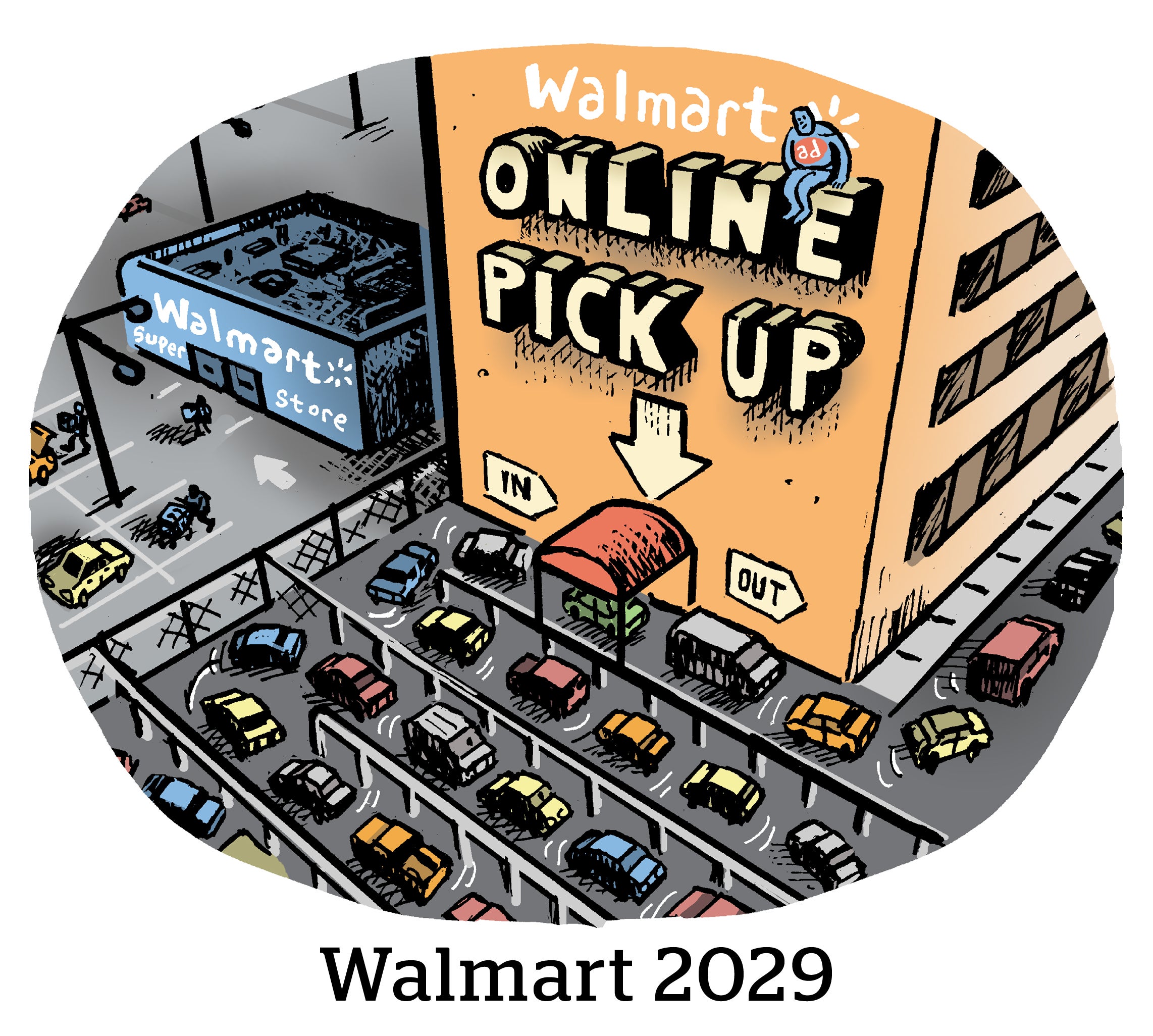
Is Walmart+ the biggest consumer product that no one is talking about?
That’s the thesis outlined in a Twitter thread by startup investor Turner Novak.
Walmart needs a subscription package anchored by shopper loyalty programs, delivery guarantees and media. (Ask yourself, is Prime important to Amazon? Yup.)
But other built-in Walmart+ benefits maximize Walmart’s profitability. Walmart+ includes fuel discounts and many of its store locations have gas stations. This setup incentivizes shoppers to drive to the store – a cheaper form of fulfillment than shipping. Another Walmart+ add-on is scan-and-go payments in stores – an even cheaper form of fulfillment, since a Walmart employee doesn’t need to bag groceries and/or put them out curbside for pickup.
Having its very own “plus” sign brings Walmart into the media realm, too, where it’s an absolute whale.
Walmart doesn’t have its own studio, à la Amazon, but earlier this month it announced that Walmart+ will include an AVOD subscription to Paramount+ (typically $5 per month). On top of that, this year, Walmart+ also started bundling in six months of Spotify Premium ($60 value).
Walmart wasn’t an early mover on ecommerce and advertising, but it’s got a lot going for it. And while other services might get cut during a recession, as consumers trim their subs, Walmart+ with all its perks might seem an oasis in the desert.
Failed Stadia
Google is shutting down its Stadia game streaming service just two and a half years after it debuted, TechCrunch reports.
The decision was prompted by a lack of adoption, according to Stadia VP and GM Phil Harrison.
Google’s ability to compete with gaming giants like Microsoft, Amazon and Sony was pretty much always in doubt. Recently, Google had turned to offering months-long free trial subscriptions in an attempt to build Stadia’s user base.
As such, the demise of Stadia was long rumored, and the rumors picked up steam in February after Google shut down its Stadia Games and Entertainment studio, which was tasked with developing first-party exclusive games for the platform. Still, Google was denying any rumors of Stadia’s impending shutdown as recently as July.
Google will issue refunds for Stadia hardware and software purchases, and subscribers will retain access to their Stadia game libraries until January 18, 2023.
But Stadia wasn’t a total wash. Rather than throwing away the low-latency streaming technology that powers the service, Google hopes to repurpose the tech in other parts of its business and offer it to partners, Harrison says.
But Wait, There’s More!
IPG’s Magna: Fall update to the 2022 and 2023 US advertising report and forecast. [release]
EZPR CEO Ed Zitron: There is simply too much internet. [Medium]
How to advocate for data privacy and user’ rights. [Wired]
Google and Warner execs invested in this anti-fraud ad tech startup’s $15 million funding round. [Insider]
Artists are staying at the top of music charts for longer periods, as the industry fails to turn out new hits. [Bloomberg]
You’re Hired!
Walt Disney promotes global streaming leader Alisa Bowen to president of Disney+. [release]
Stagwell Marketing Cloud hires Mansoor Basha as its first CTO. [release]
Choozle elevates its chief client officer, Adam Woods, to CEO. [release]







