
Here’s today’s AdExchanger.com news round-up… Want it by email? Sign up here.
No Alternative
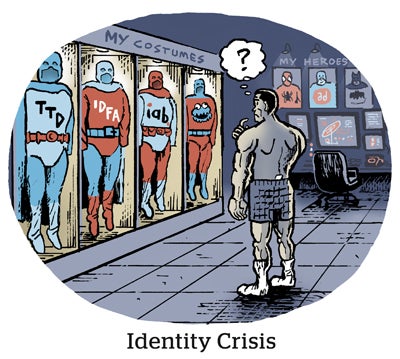
Third-party cookies are not the future of digital advertising in the EU (or anywhere for that matter). But it looks like alternative IDs may not be either.
European publishers are pushing back against alternative IDs that use publisher data to build third-party audiences, saying these solutions perpetuate digital advertising’s worst practices, Digiday reports.
“We don’t believe in bringing back the world of yesterday where publishers weren’t compensated for their reporting,” says Thomas Lue Lytzen, director of sales and ad tech at Danish newspaper Ekstra Bladet, which refuses to integrate with deterministic or probabilistic IDs.

But there’s no reason publishers shouldn’t be able to use cookies for profiling and targeting, Lue Lytzen says. In his view, only publisher-provided IDs or one-to-one IDs that share an identifier with an SSP or demand partner for specific purposes – not for building third-party profiles – will emerge as winners.
But these IDs tend to work only for publishers with a logged-in user base that has enough scale to be attractive to advertisers, while smaller publishers must experiment with many IDs or risk losing revenue.
Spending on alternative IDs remains low for now because advertisers are waiting for more premium publishers to adopt these identifiers first.
Ticket To Stream
Streaming services aren’t golden tickets to profitability.
Take AMC Networks, which, as TechCrunch reports, decided to shut AMC Theatres On Demand, its service that lets people buy or rent movies online after they first premiere in theaters.
AMC is still reeling from the pandemic’s effects on its theater business. It reported $179 million in losses in Q1 this year. And so something had to give.
But instead of nixing its On Demand service entirely, AMC is moving it to Vudu, a streaming service owned by Fandango. This way, AMC can still make revenue on Vudu purchases without having to front the full cost of managing a streaming service. And because Fandango also handles AMC’s movie ticket sales, AMC is able to keep tabs on how theatrical windows affect on-demand viewing.
AMC isn’t the only broadcaster to license content when money gets tight. To relieve some of its merger-related debt, Warner Bros. Discovery licensed canceled HBO Max titles to Roku and Tubi last year.
Guess the new rule is, if you can’t afford to keep it, license it.
Alexa, Delete My Data
Amazon just paid two hefty fines totaling more than $30 million for mishandling sensitive consumer data, Bloomberg reports.
One fine, for $25 million, had to do with Alexa. Previously, roughly 30,000 Amazon employees could listen to voice recordings of Alexa users, which the FTC called an “overbroad grant of access.” Amazon also indefinitely retained the audio clips, including geolocation information and other related data.
The global retail giant used the data to train its algorithms, such as the one that powers its speech recognition software. It neither informed users it was collecting the data nor honored user requests to delete it.
Since Amazon amassed children’s data without their parents’ consent and then hung onto it for years, the FTC slapped it with a Children’s Online Privacy Protection Act violation.
The second fine, part of a separate privacy-related lawsuit, was for $5.8 million. Amazon’s Ring security camera division allegedly gave employees sweeping access to customer videos.
Over time, Amazon has earned an unsavory reputation for its failure to protect personal data and its opacity regarding how it stockpiles and stores user data. For instance, check out this 2021 Wired exposé about Amazon’s cavalier approach to data privacy.
But Wait, There’s More!
The Brandtech Group acquires Jellyfish, with Nick Emery to take over as CEO. [CampaignLive]
Eyeo debuts its first programmatic private ad marketplace. [release]
Google’s AI-powered search engine could gobble up publishers entirely. [Intelligencer]
Meta says it will pull news from Facebook and Instagram if the California Journalism Preservation Act passes. [Axios]
You’re Hired!
Dave Peterson joins Epsilon as GM and global head of retail media. [release]
Emma Montgomery comes back to Omnicom Media Group as CEO of DDB Chicago. [Ad Age]
Verve Group appoints Prasanna Prasad as CTO. [release]
Agency StrawberryFrog names Rasika Narang as its first chief growth officer. [MediaPost]








