
Criteo Reports Flattish Q2 Earnings And Looks To Improve Its Total ‘Activated Media Spend’
Criteo’s Q2 earnings report on Wednesday was marked by flatness.
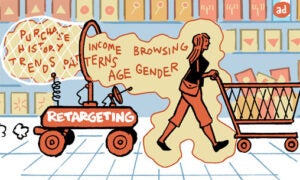
Criteo’s Q2 earnings report on Wednesday was marked by flatness.

X will begin scoring ads according to Elon Musk’s aesthetic preferences; what those Sydney Sweeney jeans ads say about how brands capture attention online; and a Google exploit lets sites be deleted from search results.

DSPs are building tools to bypass SSPs, and SSPs are trying to cut out the buy side. But the real question in the noise is whether the technology improves effectiveness, says Kara Puccinelli, chief customer officer at Nexxen, which just so happens to describe itself as an end-to-end platform.

DCG’s new tool analyzes the given moment – culturally, politically and economically – to understand how to best target its audience.

With over $200 billion in programmatic spending on the table next year, maximizing yield is the name of the game for publishers in 2026. Capturing that opportunity demands maximum optionality across demand paths and signals. And with AI reshaping the landscape (referrals from ChatGPT to news publishers saw a 25x increase from the first half of 2024 to the first half of 2025, while traditional search traffic heads in the other direction) it is more important than ever for publishers to optimize their monetizable inventory.

SaaS companies are abandoning interoperability in search of more revenue; Spotify’s ad business is growing slower than expected; and sports is an upfronts winner for Disney and NBCU.

Ride-hailing app company Curb Mobility is bringing TikTok’s user-generated content to Taxi TV, its network of more than 15,000 in-taxi screens across 65 US markets.

Google’s AI search tools are creating a paradox; Amazon pulled its Google ad budgets; and now’s a great time for indie commerce ad tech startups.

Eyeo has appointed a new CEO, Douglas de Jager, and is refocusing the company on privacy-first advertising tools while cutting 40% of its staff.

ChatGPT will google that for you; the Canadian TikTok shutdown gets real; and Elon’s crusage against media ratings organizations goes on.

Reddit is surging with advertiser demand; not everyone is Substack material; and Trump released his AI Action Plan.

The Trade Desk currently has no concrete plans to deprecate its legacy Solimar user interface in order to push adoption of its new UI, Kokai.

Brands spend millions activating around Coachella. Then they spend the next three months trying to figure out if any of it actually worked. It’s a reflection of our industry’s broken approach to measuring media effectiveness.

Amazon acquires AI-equipped wearable manufacturer Bee; the UK’s CMA shares competition guidelines for Google and Apple; and AI models may be learning from each other in unexpected, potentially harmful, ways.

The web is hurting. Google is doing splendidly. Q2 was a “standout,” Alphabet CEO Sundar Pichai told investors on Tuesday, with “robust growth across the company.”
What’s a CAPI and how does it work? Think of as a direct data pipeline that allow brands to circumvent privacy limitations set by browsers. It’s not a workaround, though. Let us explain.

Netflix cracks Nielsen’s top 3 channels, but YouTube is still tops; CTV is maturing as a marketing channel, but it comes with zits; and Google rolls out another core update for search.

Amidst post-tariff tumult, this campaign encouraged grocery shoppers across Canada to buy products featuring the maple leaf icon that designates Canadian brands.

Although there are tens of thousands of vendors across the Lumascape, helpfully bucketed by dozens of three-letter acronyms (CDPs, DMPs, SSPs, etc.) ) – nobody has any idea what anybody does. And it’s not like press releases help.
Social media companies are cutting the junk from their diet; Trump is trying to reshape American media; and selling ads is always the last resort.

Sing along, now: “Everything is an ad network!” Plus, Publicis is doing A-OK and Substack is changing its tune on advertising.

This year’s Amazon Prime Day event stood out in a couple important ways. One is the blasé results of Prime Day; the other is the guerilla pricing tactics adopted by brands and merchants that sell on Amazon and elsewhere across the web.

The Trade Desk makes the S&P 500, triggering a stock price rebound; Estée Lauder is the latest big legacy brand to embrace influencers; and CMOs are trying to measure their return on AI, but it’s tricky.

Over the past few years, sell-side curation has gained popularity as a way for advertisers to target high-quality publishers. Companies like OpenX are expanding their toolkits to support advertisers as well as publishers.

The return of in-banner video has resulted in a deluge of cheap video supply flooding the open web, driving down CPM rates for dedicated video inventory and creating user experience and ad quality concerns.
Nextdoor isn’t ruling out AI data licensing, but it has concerns; NBCU touts sports and streaming as drivers of its record Upfronts; and Scholastic follows kids and parents to YouTube.

Linkby, which connects brands with publisher content that advertisers pay for based on reader engagement, announced its $15 million Series B on Tuesday.

The IAB Tech Lab’s new initiative suggests regulations for how AI bots can access content, ensuring that publishers are fairly compensated.

Hearst has seen improvements in addressability between 30% and 200% since introducing AURA, its AI-powered ad targeting solution, last year.

The layoffs at TripleLift come roughly four months after the company hired Dave Helmreich as its new CEO.

Walmart and Vizio announced at NewFronts that unified account logins are coming to smart TVs using Vizio’s operating system.

The age-old question for streaming TV advertisers is, how to target the viewers they want while reaching the scale their businesses need. The quick-serve restaurant operator CKE, which owns Carl’s Jr. and Hardee’s, sought an answer in a case study with Attain and Amazon Ads.

America’s Test Kitchen introduced direct and programmatic buying for its free ad-supported TV channels – marking the first time it’s selling ad inventory as a standalone package.


Ad agency holding companies are among the most adaptable businesses out there. In recent years holdcos like Publicis, WPP and Omnicom-IPG have stretched our notions of what an agency business even is exactly.

Audience preferences are constantly evolving. So why not ads that evolve in real time, too? No, really.

MyFitnessPal has just announced the launch of a data-driven advertising business that draws on its wealth of user-provided meal planning, fitness and nutrition data.