
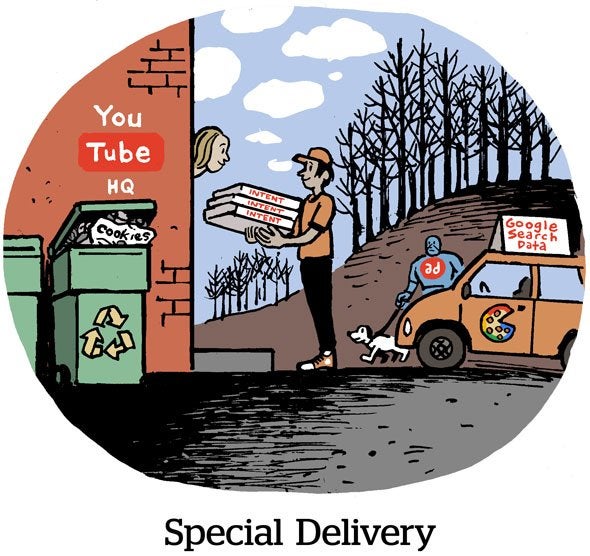
MyTube
Google has quietly increased its level of aggression toward ad-blocker users.
People are clamoring about it in forums like Reddit, because many ad-block users suddenly began reporting degraded YouTube video quality.
This happened last year, as Mashable reports, although at the time Google denied it was deliberately throttling viewers with ad blockers. This time, however, ad-blocker users are seeing prompts that say, “Experiencing interruptions?” Which lead to a page informing them that using ad blockers can affect video playback.

Another thing from last year: YouTube began forcing ad blocks – like, blocks of time – before ad-blocker users could see a video. Those users can’t skip ads like they used to, and like other YouTube audiences can.
Also this month, Google closed a loophole that allowed other web browsers to create built-in ad-blocking features for YouTube.
And as a media company, YouTube has begun flagging and suspending accounts that post videos detailing how to use third-party tools to avoid YouTube ads.
False-ish advertising
Microsoft should probably go ahead and change its name to “Copilot” at this point, right?
OK, maybe a full rebrand is a bad idea. (Just ask HBO.)
But according to the National Advertising Division (NAD) of BBB National Programs, the way Microsoft markets Copilot to consumers has recently gotten out of hand.
The Verge reports that, among other things, NAD takes issue with Microsoft claiming the Copilot AI assistant has a measurable effect on user productivity, and points out that the way Copilot branding is now used across Microsoft’s suite will likely lead to confusion about what the product can actually do.
This isn’t the first time NAD has announced decisions against AI-related product claims.
In late April, NAD suggested that Apple Intelligence was promoting certain upcoming features, such as ChatGPT integration into Siri, as already being available to consumers.
And in September 2024, Google had to pull a Gemini Ad demo video after the NAD inquired whether the video accurately reflected the performance and timing of Gemini’s responses.
Guess that’s one of the many problems with trying to rush out your AI product too quickly – all the branding and advertising you do to promote that product ends up getting rushed, too.
Legacy Lapse
Younger generations are measuring brand trust in new ways.
Unsurprisingly, this means top-trusted brands are often not the same as with older consumers who have been loyal to certain products for decades.
Morning Consult’s Most Trusted Brands report for 2025, released on Tuesday, finds that millennials and Gen Z are most trusting of digital brands, whereas older generations favor legacy brands like Kleenex and Clorox. Not a surprise.
Zero social or digitally native brands made their way onto the list of baby boomers’ top 25 most trusted brands.
Since Gen X and boomers “have been in the buying zone for longer,” Morning Consult Chief Growth Officer Jeff Cartwright tells Adweek, it stands to reason that they tend toward brands they know.
But it’s not just about time spent; it’s also about the brand’s story. Younger audiences are more likely to be influenced by stories, Deb Gabor, founder of Sol Marketing, tells Adweek.
This may be why YouTube is Gen Z’s top trusted brand and millennials’ third.
But Wait! There’s More
Zero-click marketing and Adobe’s AI. [tipsheet]
Apple gives the clearest hint yet that it may be developing a foldable iPhone. [9to5Mac]
Online marketplaces Vestaire Collective and eBay are lobbying to make used items exempt from Trump’s tariffs. [Wired]
YouTube launches a new “Open Call” service that lets marketers request branded content from members of the YouTube Partner Program. [Variety]
The man accused of shooting two Minnesota Democratic lawmakers reportedly used 11 registered data broker businesses to find the addresses of his intended victims. [Politico]
AI scraping bots are wreaking havoc on digital libraries, archives and museums. [404 Media]
Like a plastic Spring Fling tiara, the NFL is breaking up its CMO position into multiple executive roles. [Awful Announcing]
The UK Information Commissioner’s Office cracks down on how air fryers, speakers and other smart devices should handle private user data. [The Guardian]
XAI’s new data center is emitting noticeable plumes of air pollution in Memphis, Tennessee. [DeSmog] The pollution is drawing legal threats from the NAACP. [Reuters]
You’re Hired!
Spectrum Reach promotes Dan Callahan to SVP and CRO. [release]
Thanks for reading AdExchanger’s daily news round-up… Want it by email? Sign up here.









