It’s the end of email marketing as we know it.
Okay, that might be a bit dramatic. But there’s no arguing that agentic AI isn’t just changing the way marketers design and sell products; it’s also raising customer expectations.
Marketing Cloud Next, a new marketing platform launched by Salesforce on Wednesday, is fully agentic, from lead generation to campaign creation.
The platform is designed to bring the same level of personalization customers expect from interpersonal interactions to their communications with brands, while also reducing the amount of time and resources it would take marketers to do it themselves.

The agent can also monitor ad performance, pausing underperforming ads or suggesting improvements.
The first time a consumer experiences a new feature, it’s novel and exciting, said Bobby Jania, CMO of Marketing Cloud at Salesforce. But it quickly loses its luster and becomes an expectation – not just of the brand that introduced it but for all others, too.
(Who among us hasn’t become so used to the convenience of ride-sharing that they get annoyed when it takes more than a few minutes for their car to arrive?)
Salesforce is aiming to get ahead of the curve, before the exciting becomes the mundane.
Write back soon
Unfortunately, the mundane is already the status quo, as people’s inboxes regularly pile up with hundreds of unread emails – most of them from marketers.
And most of them are automated and give the recipient no option to respond.
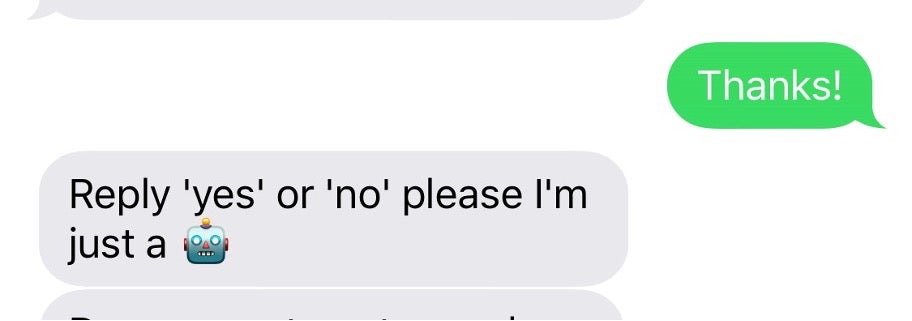
(This reporter is still stuck on a rather pitiful text received from a bot after signing a political petition five years ago.)
Salesforce hopes to mark the beginning of two-way conversations between AI-generated messages and customers. It’s “the end of do-not-reply,” Jania told AdExchanger, referring to automated marketing emails that come from no-reply email addresses.
Humans never “send an email to someone with the expectation that they can’t reply back,” he pointed out, so why should the expectation be different for emails from marketers?
But email marketing is a process full of manual tasks, from tracking ROI to double-checking every link, and marketers can get “bogged down” with monotonous, repetitive work, Jania said. This makes it harder to provide the level of personalization that customers have come to expect.
Salesforce’s solution is to not only automate those manual tasks but to also automate the personal touch.
The agentic AI in Marketing Cloud Next moves beyond static messaging, said Jania, and creates “truly personalized, two-way conversations with every customer.”
For example, a brand might send out a blast text message about an upcoming sale. Instead of just replying “STOP” or going directly to the website, customers could respond to the text asking for details, such as when the sale is happening and what items will be included. A customer could even go as far as to make a purchase through SMS, Jania said.
Teamwork makes the dream work
Yet Jania, echoing other marketing folks, insists that this isn’t the end of human creative, but rather the advent of a new dynamic between humans and machines.
It’s going to be “the human and the agent working together,” he said.
He described the human role as the editor-in-chief, brainstorming an outline for ad creative and the desired emotional effects, while the AI analyzes campaign performance and automates scheduling, along with some of the actual execution of the human’s ideas. Think of it as a really smart summer intern.
How much autonomy the AI has is up to the individual brand. Most brands are still using a human check on AI-generated content, Jania said. But for those willing to hand over the reins, Agentforce, Salesforce’s agentic AI development platform, has built-in testing capabilities that can demonstrate how the agent would respond to certain scenarios.
And like any good employee, the agent knows its limits. If you ask it for a chocolate chip cookie recipe, for example, Jania said, “it would recognize that that’s not something that’s within its scope, and would tell you what it can help you with.”
We might be entering an age of chatty bots and nearing the end of “do not reply” emails, but perhaps sometimes the best answer really is “I’m just a robot.”