
AdExchanger’s Most Popular Comics Of 2022
From the rise of alternative measurement currencies and retail media networks to the launch of Netflix’s AVOD tier, these are the stories that helped us animate the news in 2022.

From the rise of alternative measurement currencies and retail media networks to the launch of Netflix’s AVOD tier, these are the stories that helped us animate the news in 2022.

Here’s today’s AdExchanger.com news round-up… Want it by email? Sign up here. Yahoo? Yahoo has taken a 25% stake in Taboola as part of a 30-year exclusive ad deal (uhh … pardon?) that makes Taboola the primary native inventory seller for Yahoo’s media properties, The New York Times reports. The announcement leaves questions hanging. A […]

The Trade Desk’s revenue machine is still running strong. But with an economic downturn on the horizon, investors are pressing for TTD’s areas of optimism to translate into bottom line results.

Proctor & Gamble recently announced their support of The Trade Desk’s UID 2.0 identity framework. The partnership is significant for a couple of reasons. First, where P&G goes, other brands will follow. And second, approval hints at the rise of new walled gardens that could become even more powerful than Google and Facebook, writes Nancy Marzouk, CEO and founder of MediaWallah.

“The personalized targeting data points we’ve gotten used to are under examination,” said Jeremy Hlavacek, CCO of data services provider Experian. “Advertisers want better identity data, better segments and better understanding of consumer behavior. So they’re going to shift to higher-quality, more precise, more accurate, more trusted data sets.”

Supply-path optimization remains a hot industry topic. Increasingly, advertisers and publishers see the value in SPO to get closer to one another’s audiences. But identity is stoking the fire on the convergence of programmatic supply and demand, writes Lauren Fisher, GM of business intelligence at Advertiser Perceptions.

Podcast listeners bear a striking resemblance to CTV audiences. The majority (62%) of weekly podcast listeners regularly stream ad-supported content, according to research from Acast, a podcast monetization and distribution platform.

Optable is latest company to partner with The Trade Desk via UID2. The integration is in closed beta and set to go live for all Optable customers in Q4. Like InfoSum, Amazon Web Services, Snowflake and Acxiom and Kinesso (both owned by IPG), Optable will be what’s known as a closed or private UID2 operator.

The emergence of large-scale data and identity resolution platforms with audience graphs across devices and households is a major step forward to helping reclaim control over reach and frequency. But there’s no single solution to the problem, writes Seraj Bharwani, chief strategy officer at AcuityAds.

How will the high-stakes game of antitrust chicken between Google and the US Department of Justice play out? It could be a first important proactive step toward true structural change – not just at Google but across many of the biggest players in the industry, writes Arnaud Créput, CEO of Equativ.
Salesforce quietly introduced a new app in its App Exchange on Wednesday that was developed by The Trade Desk as a way to convert CDP identity data to Unified ID 2.0 (UID2) IDs. “The evolution of ad tech and martech is toward more and more first-party data being stored in cloud databases and in CDPs,” said Ben Sylvan, The Trade Desk’s GM of data partnerships.

What exactly does “premium” mean? It seems the definition varies depending on who’s using it – that “premium” is in the eye of the beholder. But there are some areas of agreement. And the industry isn’t setting the premium bar as high as you might think.

P&G publicly signaled its support for Unified ID 2.0 on Thursday. But the CGP giant had already been using UID 2.0 since last year to create anonymized identifiers tied to its first-party data for activation in the bidstream.

Here’s today’s AdExchanger.com news round-up… Want it by email? Sign up here. Leaked Sneak Peek The TV industry waits with bated breath for Netflix’s and Disney’s ad-supported tiers to face off in 2023. In the meantime, Disney’s plans got leaked to Insider. Disney is pushing hard to promote its streaming inventory to advertisers before ads […]
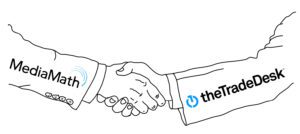
Add MediaMath to the list of Unified ID 2.0 partners. On Tuesday, MediaMath announced its integration with UID2, which is an open-source industry initiative, spearheaded by The Trade Desk, that aims to replace third-party cookies with hashed and encrypted email-based IDs.

AppLovin wants Unity – but only if Unity calls off its planned acquisition of ironSource. Why doesn’t AppLovin want ironSource? And how is Apple’s ATT driving consolidation in mobile ad tech? Listen in. Plus: The Trade Desk claims to benefit whenever a regulator starts investigating Google.

Are public ad tech companies totally screwed? “Um, do you want the short answer?” said Rocco Strauss, a partner at independent equity research firm Arete Research. “Because the short answer is … yes,” he said.

The Trade Desk has been hammering the same messages about tailwinds in quarterly earnings calls the past couple years: hyping the CTV business first and foremost, along with the retail media segment and a dash of Google-bashing for good measure. The company’s investor call on Tuesday adhered to the trend.

Many publishers are betting big on seller-defined audiences (SDA) as a centerpiece of their post-third-party-cookie monetization plans. Problem is, although publishers are eager to test the performance of SDAs, there’s still very little demand from the buy side. AdExchanger spoke with ad agencies and buy-side tech platforms to get their side of the story.

Having a profile on a dating app doesn’t mean that you’re dating. It just means you’re out there. The same could be said for many (of the many) cookieless identifiers on the scene. They’ve been deployed by publishers – the code is on the page – but they aren’t getting picked up in the bidstream.

If addressable ad IDs are the new keys to the kingdom, then you’ll find The Trade Desk at Epcot this summer. Which is to say, Disney and The Trade Desk announced an identity integration on Tuesday that will allow advertisers to activate against Disney’s first-party data programmatically via its clean room data product using Unified ID 2.0 (UID2) IDs.

What happens when your main monetization partner starts flagging your content as spam? Freecycle turned to header bidding to reduce its reliance on Google AdSense, but the company’s one-person engineering team had trouble managing the header-bidding system and the constant stream of Prebid updates on top of web development duties. So, after a 70% drop in ad revenue, Freecycle handed its digital ad business over to PubWise’s managed service.

The Trade Desk keeps adding new partners to the Unified ID 2.0 roster, but it’s still looking for someone to fill the administrator role after the IAB Tech Lab backed out earlier this year.

The Trade Desk’s OpenPath gives advertisers a direct link with premium publishers, collapsing the supply chain from the DSP directly to the publisher’s inventory. While a win under the guise of supply path optimization, it also spells danger for SSPs, the traditional guardians of publisher inventory who now risk being squeezed out entirely, writes Joseph Lospalluto, US Country Manager of ShowHeroes Group.

As clients look for alternatives to third-party cookies, ad agency Dentsu can steer them to its in-house Contextual Intelligence tool, which launched today. Although contextual targeting is often considered inferior to demographic or behavioral targeting, it can drive performance. Jewelry retailer Pandora piloted the tool during the 2022 Valentine’s Day season. Ads placed using the solution represented 2% of campaign spend, but drove 36% of revenue, a 24x return on investment.

Here’s today’s AdExchanger.com news round-up… Want it by email? Sign up here. Brick By Brick-And-Mortar The march of the retail media networks cannot be stopped. Dollar General on Tuesday announced a rebrand of its advertising business, now DGMN (for Dollar General Media Network), to extend its data to ad-buying across the web. According to the […]

Vibenomics announced a $12.3 million Series B round on Tuesday, led by Panoramic Ventures, bringing its total funding to just over $30 million. Vibenomics expects to grow its roster of 6,000 retail locations (just over half of which are grocery stores like Hy-Vee, QuikTrip, Kroger and GetGo) to more than 20,000 locations by the end of 2023.

Even the experts at companies whose future depends on explaining the value exchange of personalized advertising to consumers struggle to make a convincing argument. Part of the problem is that the ad industry’s MO has been to “overcomplicate” matters, said Lauren Wetzel, chief operating officer at InfoSum, speaking at LUMA’s Digital Media Summit earlier this week.

Jay Glogovsky, vice president of revenue operations and analytics for The New York Times, talked to AdExchanger about how The Times relies on direct partnerships to create a positive ad experience for its readers, why open-web programmatic is the wrong choice for a privacy-centric in-app experience and why publishers should double down on close partnerships rather than worry about who will control the keys to monetization.

Here’s today’s AdExchanger.com news round-up… Want it by email? Sign up here. The Titans Are Tired So many entertainment hubs – Netflix, Amazon Prime and Freevee, Paramount+ and sister app Pluto TV, Apple TV+, HBO Max, Discovery+ and the Disney triumvirate of Hulu, ESPN+ and Disney+ – so little time. Which means there just isn’t […]