
Wait, TTD Is Doing A TV OS?; Social Ad Clicks Covertly Switched People’s Health Care
The TV newsletter Lowpass is back with another barn burner. Plus, some more proof that social media can impact your health.

The TV newsletter Lowpass is back with another barn burner. Plus, some more proof that social media can impact your health.
In the process of the investigation into Google, the Department of Justice unearthed a vast trove of separate evidence. Some of these findings paint a whole new picture of how Google interacts and competes with its main DSP rival, The Trade Desk.
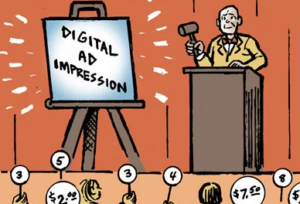
On Thursday, the US district court in Alexandria, Virginia boarded a time machine back to April 18, 2019 – the day of a tense meeting between Google and publishers.
Is advertising to kids on social media as bad as advertising cigarettes to kids? Plus, DuckDuckGo doesn’t want Google’s scale to go away.

OMD Worldwide Chief Media Officer Ben Hovaness, thinks the advertising world might be thinking about the open internet wrong way, right down to the terminology we use to describe it.

Confidential matching – which uses a TEE built on Google Cloud infrastructure – will now be the default setting for all uses of advertiser first-party data in Customer Match.
Day three of the Google ad tech-focused antitrust trial in Virginia was like a guided tour of arcane auction mechanics.

Is there a secret society of socialists within programmatic? Probably not. Plus, rumor has it that The Trade Desk is building its own smart TV OS.

In today’s newsletter: Google Demand Gen is the industry’s latest over-attribution controversy; data from third-party brokers might not be worth it; and The Trade Desk launches a CTV operating system.
In today’s newsletter: Amazon stands out among Upfronts CTV rookies; Google reveals how much revenue its ad tech divisions make; and women hold more marketing leadership positions than men, but churn is worse for women.

Admiral, a startup that first got its start with ad block recovery tools, announced the close of a $19 million growth equity and debt funding round on Wednesday.

In today’s newsletter: Walmart’s hottest growth drivers are ads and subscriptions; why The Trade Desk’s UID 2.0 could be regulators’ next target; and how the growth of CTV content fortresses is preventing breakout streaming hits.

The Trade Desk delivered another smash earnings report. Meanwhile, Unified ID 2.0, the open-source identity initiative, has “reached a critical mass of adoption,” CEO Jeff Green told investors.

Recent moves by major ad tech players prove the industry doesn’t actually need cookies. But Chrome’s cookie pivot doesn’t clarify what will happen to the 1% of its audience that’s already cookieless or what will become of plans to deprecate the Android Ad ID on mobile.

Athletes aren’t the only ones competing during the Paris Olympics. Advertisers are bidding to reach tens of millions of viewers during the first programmatic Olympic Games.

Yahoo may have earned itself a stay of execution with The Trade Desk. Plus, TV buyers are clinging to Nielsen for yet another upfront season.

Publishers and SSPs aren’t incentivized to accurately label their video inventory. But increased pressure from the buy side could correct the skewed pricing dynamics that result from outstream being sold as instream.

TTD confirmed to AdExchanger that, as of June 17, it had removed support for at least some of the online video inventory sold by Yahoo as a publisher.
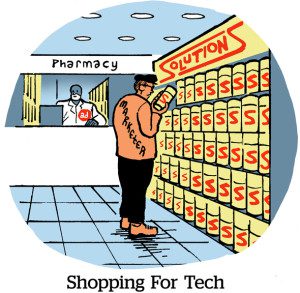
Incrementality is a retail media term for attribution. It’s the attempt to measure the actual contribution of advertising to a business’ bottom line. But in a market where everything old is new and everything new has been done a thousand times, it’s important to focus on other kinds of incremental gains.

Pandora can match the email addresses of its logged-in users to UID2 tokens, which can then be passed through AdsWizz, The Trade Desk and other ad platforms that integrate with UID2.

In today’s newsletter: Pinterest launches an ad optimization solution with familiar-sounding name; consumers can’t live without YouTube; and ad tech leaders try out trade journalism.

Media governance measures advertisers can put in place to navigate the complexity of brand safety and gain better control of the quality of their media spend.

E.W. Scripps becomes the first CTV publisher to adopt OpenPass, The Trade Desk’s single sign-on product for user authentication.

How big of a deal is The Trade Desk’s top 100 list? AdExchanger spoke to industry experts for their reactions and bounced some of their hot takes off The Trade Desk.

Who gets to decide what is premium? Is it dangerous to outsource that decision to The Trade Desk (or any one DSP)? And how should publishers position themselves within the future of this so-called premium internet?

SPO is moving from efficiency to curation to ranking the top 500 publishers. We talk through industry reactions to The Trade Desk’s SP500+ product. Plus: Seedtag acquired Beachfront, a deal that’s emblematic of multiple trends in CTV, privacy and the rise of contextual.

Since launch, 82% of advertisers that buy inventory through the Yahoo DSP have tried Backstage at least once. And buyers are seeing lower CPMs from cutting out SSPs.

Future believes its new monetization offering can succeed where other publishers have struggled with selling ad tech and consulting to third-parties.

In today’s newsletter: Why Apple’s SKAdNetwork 4.0 is a bust; advertisers are irked by Google’s optimization-driven demand for different creative formats; The Trade Desk releases a baffling list of top 100 publishers.

In today’s newsletter: Publishers fear they’ll be excluded from The Trade Desk’s “premium internet”; buyers weigh in on Netflix’s plans to offer an ad server; and PayPal launches an ad network and data brokerage.