
The Trade Desk Reframes Its Open Internet Vision As ‘The Premium Internet’
The Trade Desk is focusing beyond the overall “open internet” and on what CEO Jeff Green calls the “premium internet.”

The Trade Desk is focusing beyond the overall “open internet” and on what CEO Jeff Green calls the “premium internet.”

There are other motivating factors for crossing the LUMAscape, besides increased efficiency and less ad fraud. These businesses are trying to position themselves to win in a transformative era that will make or break many ad tech companies.

In today’s newsletter: Roku and The Trade Desk expand their partnership; Instagram changes its content recommendation system; and the European Commission investigates Meta for potential Digital Services Act violations.

Screenverse plans to add about 20 employees over the next 12 months with the help of its new cash reserve. The company also earmarked a portion of its funding for enhancing its publisher suite.

If you’re looking for a think piece about what Google’s most recent third-party cookie deprecation delay means for the online ad industry – this isn’t it. 😅
Bonbon gives users rewards – such as discounts or chances to win merchandise – for setting up email registrations with publishers. Now The Trade Desk’s OpenPass will include that same rewards functionality.

AdExchanger and AdMonsters are pleased to announce the honorees for the 2024 Top Women in Media & Ad Tech Awards! An awards gala will follow on June 3 in NYC.

Industry experts weigh in on Forbes’s MFA subdomain and why ad verification tools still regularly fail to flag some instances of alleged SIVT.

In today’s newsletter: Adalytics reveals Forbes was running a separate MFA sub-domain; The New York Times seeks to use attention benchmarking to validate its premium publisher status; and Google is reportedly looking to buy HubSpot.

The past decade has been tumultuous for supply-side platforms. But SSPs will be fine, according to SSPs. They’re simply evolving.

In today’s newsletter: Amazon’s DSP doesn’t compare to Google’s and TTD’s; US ad spend looks strong this year; European Commission will investigate Google, Apple and Meta under the EU’s DMA.

Buyers will soon have far more transparency into video ad inventory sold through Google’s platform. But some publishers and video platforms have concerns.

In today’s newsletter: Criteo invests heavily in the Privacy Sandbox; the open web is not too big to fail; and Amazon aims to grow its ad business to rival Google’s and Meta’s.

Third-party cookie deprecation creates an opportunity for publishers to increase inventory value, efficiency and partnerships in the open exchange. Here are some efficiency initiatives that should make your inventory more valuable to advertisers.

Despite the backlash against MFA websites, there is still no industry standard to define MFA. So the 4A’s is hosting monthly meetings between buyers and sellers to nail down more explicit criteria for what constitutes MFA.

In today’s newsletter: Under DMA’s gatekeeper rules, Apple reinstates Epic Games’ developer account one day after it suspended it; brands are building first-party-data-based walled gardens to weather cookie deprecation; and Kevel raises $23 million.
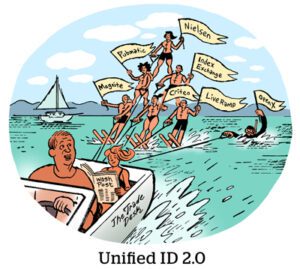
In today’s newsletter: Can The Trade Desk make UID2 happen?; IAB Tech Lab weathers a European legal challenge to OpenRTB, but the TCF’s fate remains undecided; and Meta removes the Facebook News tab in the US and Australia.

In today’s newsletter: The New York Times is rolling out a generative AI ad product; the current state of adoption of Apple’s SKAdNetwork 4; Google seeks explicit consent for retargeting and personalization in the EU.

“I know you’re going to ask me specifically about Privacy Sandbox, because nearly everyone else does,” The Trade Desk CEO Jeff Green said on the company’s Q4 earnings call.
In today’s newsletter: could an open-source website template fix programmatic advertising?; The Trade Desk’s new tool for targeting only the top 500 sites; and some of Apple and Microsoft’s services won’t fall under DMA regulation.

DoubleVerify added a feature to its platform on Tuesday that classifies MFA sites based on a tiered system.

In today’s newsletter: The Trade Desk opens up OpenPath to CTV inventory; subscriptions remain an important revenue source for news publishers; and a class-action lawsuit alleges PHE violated the California Invasion of Privacy Act.

In today’s newsletter: Buyers are relatively blasé about made-for-advertising sites; Meta is riding high, having fully adapted to ATT, while Google’s search dominance is under threat; and Publicis Groupe reports strong growth.
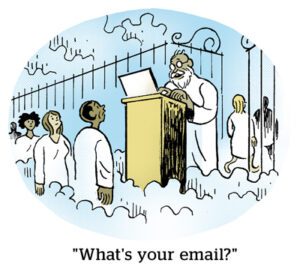
Bonbon, which officially launched on Monday – wants to reward people for their signups. The company, co-founded by two ad tech vets in July 2022, has a cross-site, single-sign-on service for the 30 publishers in its network.

Here’s today’s AdExchanger.com news round-up… Want it by email? Sign up here. Don’t Look For Me The FTC isn’t slowing its crackdown on location data brokers. On Thursday, it issued a complaint against InMarket for failing to obtain informed consent from users on its own apps and third-party apps that use InMarket’s SDK before collecting […]
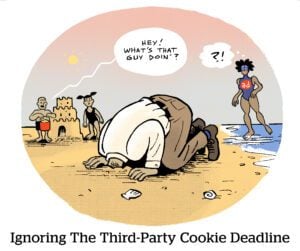
Here’s today’s AdExchanger.com news round-up… Want it by email? Sign up here. Tough Cookies Some industry observers (including AdExchanger) have deliberated on The Trade Desk’s apparent withdrawal from – and direct antagonism with – the Chrome Privacy Sandbox. Bill Simmons, TTD’s VP of product, penned a column in December for The Current, which is The […]

The end of third-party cookies is upon us, and independent ad tech is diverging on the best approach for cookieless targeting. Meanwhile, agencies and marketers are zooming out from programmatic to a bigger picture that’s focused on first-party data.

Given the deprecation of third-party cookies and the reemergence of contextual targeting, 2024 could be a big year for in-game ads – so long as game publishers position themselves as a source of premium inventory.

2023 saw SPO become further cemented in the strategies of DSPs and SSPs for capturing market share. But the long-term trend might see SPO become the default for programmatic advertisers.

Mark your calendars for Jan. 4, 2024 all you deprecation skeptics. On Jan. 4, Google will begin cutting off third-party cookie access for 1% of a randomly selected group of Chrome users globally.