
The Sports World Is Getting The Retail Media Bug
The retail media revolution of data-driven, digital marketing monetization is coming to the sports industry.
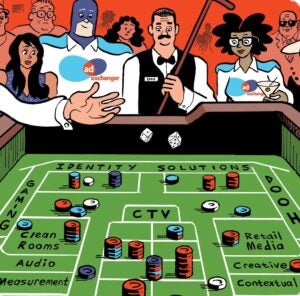
The retail media revolution of data-driven, digital marketing monetization is coming to the sports industry.

MyFitnessPal has just announced the launch of a data-driven advertising business that draws on its wealth of user-provided meal planning, fitness and nutrition data.

Sallie, the major issuer of US education loans, is getting into the retail media network business.

The future of retail media depends on a shift away from siloed in-store and online metrics to a full-funnel approach that reflects how customers actually shop.
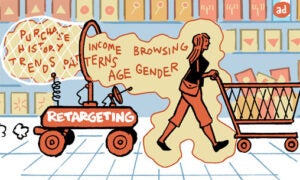
Infillion, an ad tech business built on M&A, is back with another acquisition. This time it’s Catalina, a century-old market research and shopper marketing company with roots in physical cash register machines.

“Fully a third of our profit in the most recent quarter was related to advertising and membership income,” Walmart CFO John David Rainey told investors on Thursday.

Why influencer marketing is all the rage; Target forays into ChatGPT ads; and Paramount Skydance’s difficult week.

The OAAA’s new content taxonomy introduces new subcategories that OOH media owners can use to classify their inventory in OpenRTB bid requests.

This Wednesday marks the beginning of Hershey’s first major brand marketing campaign since 2018
Retailers court luxury goods to compete with Amazon; indie agency Tombras acquires Opinionated; and talk of an AI bubble dominates discussion at Davos.

Retail’s Big Show, the annual NRF event in New York City, was big on agentic commerce, unsurprisingly, as well as influencer and creator marketing, which was an eye-opener.

The year ahead in commerce, with insights from the NRF Big Show conference, where retailers congregate every January. Plus, the 2026 privacy policy cheat sheet.
On Wednesday, retail and CPG data company SPINS added a new piece with its acquisition of MikMak, a click-to-buy ad tech and analytics startup that helps optimize their commerce media.

Believe it or not, car oil change service company Valvoline is in the midst of a fascinating retail marketing transformation.

Inside Coca-Cola’s pivot from TV advertising to influencer marketing; Netflix inks another exclusive video podcast deal with iHeartMedia; and Madison & Wall predicts slow US ad spend growth in 2026.
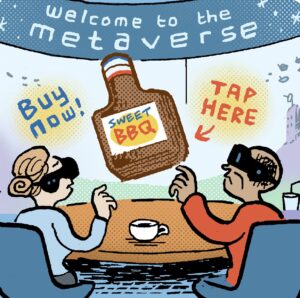
The grocery chain Albertson’s is trying to reduce the time and number of clicks it takes to add an item to an online shopping cart. It’s new click-to-cart product should help.
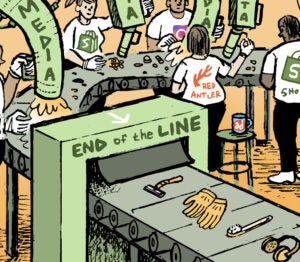
People tend to think of digital-native product brands as a single bucket. But there’s a huge difference between companies that are social natives, for instance, rather than an Amazon-based brand.
Shopify launched its latest advertising business line on Wednesday, called the Shopify Product Network.

Grocery TV’s Marlow Nickell joins AdExchanger’s Inside the Stack to explain why in-store retail media is “inevitable” and what brands miss when they overlook the shelf.

America’s biggest department stores are changing, and changing fast.

AI agents have infiltrated retail media. At least, that’s how it felt to big Wall Street advertising and tech investors, who brought a sense of existential dread to Criteo’s quarterly earnings call on Wednesday.
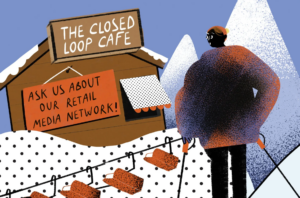
PayPal Ads is continuing its new product announcement whirlwind with news that it’s partnering with the commerce media startup Rokt to bring non-endemic advertisers to some PayPal and Venmo post-payment pages.

Walmart’s AI shopping deal with ChatGPT might ding its retail media biz; the MRC shares updates on which platforms won and lost accreditation; and kids’ sports streaming is becoming a real media channel.
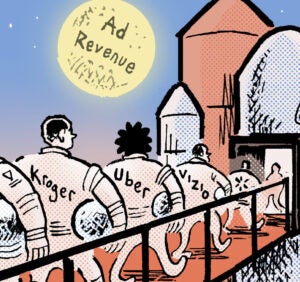
Retail media has broken through some critical threshold, and is no longer the straightforward digitalization of shopper marketing budgets.
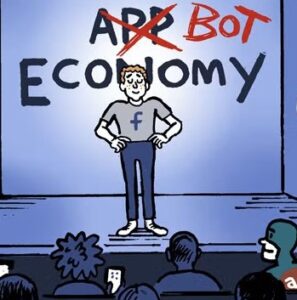
Mastercard launched an ad network; Meta plans to sell targeted ads based on engagement with its AI products; and the Washington Post is in trouble if Ad Chief Johanna Mayer-Jones departs.

Marketing has long struggled to prove itself as a growth engine. What if agentic AI isn’t the threat many fear but the breakthrough marketing always needed?

The fundamental shift from traditional search to AI chatbots has major implications for the entire marketing organization, says Bluefish CEO Alex Sherman. If brands want control over how they appear in AI search results, they must think about the content they feed to large language models.
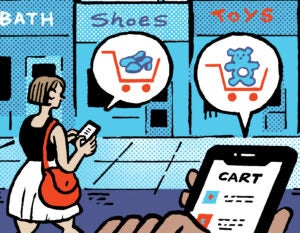
Last year, Shipt went hunting for a DSP, eyeing new programmatic reach and hyper-local targeting down to the ZIP code.

Retail media is entering what might be called its Socratic phase. The closer we to get to understanding an ad campaign’s real impact and business results, the clearer it is that we have no idea how this thing works.
Criteo announced a partnership with Google Search Ads 360 (SA360), Google’s enterprise search advertising platform, making Criteo the first third-party vendor to integrate with Google for on-site retail media supply.