The grocery chain Albertsons is trying to reduce the time and number of clicks it takes to add an item to an online shopping cart. Its new click-to-cart product should help.
On Monday, Albertsons Media Collective announced the new click-to-cart product, based on its “Add-It” technology for off-site media, which is to say that those ads have a button that can be clicked to add something to a cart without leaving the current page. The product is available for display and product listing ads to start, with plans to expand to connected TV and social media next year.
General Mills is trying to reduce the number of clicks it takes to add a product to a cart and increase the number and type of items that can be added in one click, Janine Cushman, the brand’s customer marketing manager, told AdExchanger. General Mills is one of the pilot partners for the new Albertsons product.

Click bait
General Mills has been working with Albertsons retail media group on quicker, easier online checkouts for years now, Cushman said. A previous partnership involved a checkout and advertising integration with Albertsons and Pinterest. For that partnership, Pinterest users were linked to Albertsons product pages from select cooking and recipe content on the social platform.
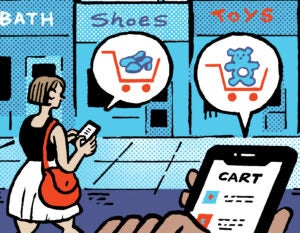
The new click-to-cart product drops items into the cart but doesn’t click off the current page. The product is reducing “multiple steps for the shopper,” Cushman said, compared to an ad that directs traffic to an Albertsons landing page.
“Our partnership has grown over the years,” Cushman said, as the number of potential clicks has now come down to one.
Another advantage with the new Albertsons Add-It tech for off-site media is that those clicks don’t simply add one General Mills product to a cart.
Sometimes, she said, a shopper might add a single item to their cart, like the Chex cereal being advertised, but not the rest of the Chex party-mix recipe, which could include snacks like pretzels or ingredients like a Worcestershire sauce. By the time that person is ready to buy, they may forget to add the other items and not be so interested in the lone cereal box.
Being able to click-to-add a whole recipe or even a small shopping list at once is an important win for brands and grocers. General Mills has partnerships with brands like Betty Crocker, which may other ingredients for recipes like eggs and icing.
The new shopping list
Albertsons is far from the first and only grocery chain pursuing the same idea of creating or prompting entire shopping carts en masse.
Walmart, for one, has been piloting a new click-to-cart shopping list product in Chile, where the company has begun curating and suggesting shopping lists for customers via WhatsApp, said Kathryn McLay, the company’s international business lead, on an earnings report last month. Those lists are based on what people have bought regularly in the past and on what general schedule. And the product already accounts for 20% of Walmart’s ecommerce business in Chile.
For General Mills, ecommerce success can often come down to where there’s less friction between the moment of product inspiration and an item being added to a cart and then purchased, Cushman said.
She also noted that, aside from Albertsons, she has a vast network of other grocers, big chains like Kroger as well as other stores, all of which have their own kinds of online presence and retail media business, though not all have invested so much in frictionless commerce.
“I’ve got quite a few,” Cushman said of the retail media networks under her purview. “And it does get difficult to decide where to invest our next dollars.”
If the technology to drive those sales exists within one retailer or not the other, then brands will follow the easier sales.
“So as technology is evolving, Albertsons is evolving as well,” Cushman said.