
Adalytics Claims Colossus SSP Is Misdeclaring IDs In Its Bid Requests
Colossus SSP, a DEI-focused supply-side platform owned by Direct Digital Holdings (DDH), is the subject of Adalytics’ latest report released Friday. It’s a doozy.

Colossus SSP, a DEI-focused supply-side platform owned by Direct Digital Holdings (DDH), is the subject of Adalytics’ latest report released Friday. It’s a doozy.

The Trade Desk is focusing beyond the overall “open internet” and on what CEO Jeff Green calls the “premium internet.”

Google Search, the web’s largest traffic and revenue generator for two decades, is in the midst of sweeping overhauls that have already altered how users are funneled around the internet.

Digital-native brands are racing to break free of their social media roots to reach a broader base of US customers. For many brands, this means betting big on sports.

Criteo split out its retail media segment revenue for the first time during its earnings report on Thursday.
By next year, Google will have three separate business lines – Search, YouTube and Cloud – with an annual run rate to generate at least $100 billion, CEO Sundar Pichai told investors.

If you’re looking for a think piece about what Google’s most recent third-party cookie deprecation delay means for the online ad industry – this isn’t it. 😅

The IAB projects digital video ad spend will rise to $63 billion in 2024, representing a 16% increase from last year. Of the three video ad categories the report breaks out (social and online video and CTV), the clear winner is social video.

Pour one out for third-party data. These days, AB InBev’s digital marketing strategy is built squarely on first-party data.

The 4A’s measurement committee, a working group for marketers and media buyers to discuss their opinions and concerns about video ad measurement, has some thoughts on the status of alternative TV currencies.

American consumers are buying more and more online products directly from Chinese manufacturers. It’s an important change, though many online shoppers are unaware.

Television commerce, or T-commerce, is similar to shoppable TV: both refer to buying something you see on television. But shoppable TV is far more nascent – and also has different implications on attribution.

A booze brand and a “headless commerce” platform walk into a meeting with the CFO. That might sound like the setup for a punchline, but it’s just how mar tech works these days.
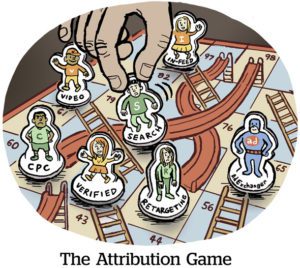
Tracking is a mess. Attribution is broken beyond repair. IP address identity data may go the way of the dodo. Which means marketing mix modeling is back, baby!
As ecommerce adoption has grown, measurement has shifted away from proxies towards metrics that show business results – a move away from clicks and views towards sales and profitable growth.

Retail media is built on its attribution quality, but real purchases can be gamed by programmatic metrics and create perverse incentives for RMNs to serve ads across low-quality inventory.

Google and Meta are playing with fire. Their opaque refund practices have already exposed them to customer blowback – and could lead to class-action lawsuits by disgruntled advertisers.

Mike Yeagley, an independent contractor who has scouted and acquired commercial data and technology on behalf of intelligence agencies, is one of the earliest evangelists of using ad tech tracking information to identify and surveil government targets.

Practically every ad tech vendor has put out a press release in recent months full of bluster about cutting out made for advertising sites – and yet supply sources remain oversaturated with garbage inventory.

Cross-cloud data collaboration technology is the best bet for a post-cookie solution. But it’s vulnerable to similar privacy concerns.

Topsort raised $20 million, with plans to seize the 2024 opportunity for post-cookie ad tech.

Programmatic advertising is rife with misinformation. Brands can protect themselves this election season without blocking the news.

Data clean rooms are becoming an important part of how agencies analyze and use data. Canvas, for one, added InfoSum as its first data clean room and collaboration tech partner.

AdExchanger consulted with agencies about how they are evaluating new generative AI tools for marketing use cases as well as the tech companies behind these startups breaking new ground in generative AI.

Google announced a suite of updates to PMax that expand its generative AI creative capabilities, including auto-generated videos.

Don’t get me wrong – Walmart is going to sell a lot of Vizio TVs. But its bigger interest in Vizio stems from data and advertising.

“I know you’re going to ask me specifically about Privacy Sandbox, because nearly everyone else does,” The Trade Desk CEO Jeff Green said on the company’s Q4 earnings call.
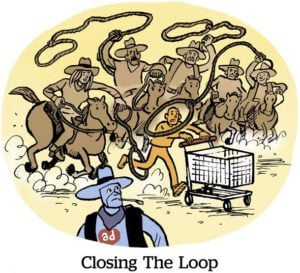
This week, I’m examining how the era of standalone walled gardens and content fortresses has given way to new forms of ad platform partnerships.

This is the story of Adalytics, the advertising analytics startup founded by a computational biology researcher with a knack for uncovering ad tech’s ills and publishing blockbuster research reports to expose them.

The Criteo bounce back is in full effect after the company reported strong profit growth and continues to hit benchmarks distancing it from the old days of retargeting.