Meta’s Shady Characters; Apple’s Shady Recordings
Meta recently revisited its goal to create AI-generated “characters” — which backfired. Plus, Apple’s trying to avoid a class-action lawsuit.
Dealmaking and AI (and blackjack) are top of mind for those heading to CES. Plus, don’t expect brands to reengage with hard news in 2025.
AppLovin’s ecommerce advertising beta program has sparked optimism and speculation. Plus, the results of YouTube’s auto-reply program have been mixed.
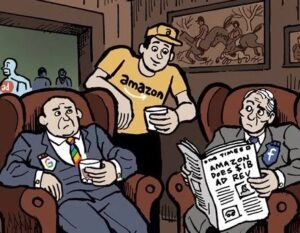
Antitrust regulation has counterintuitively favored the biggest ad industry players. Plus, another streaming service, anyone?
Despite CEO Jeff Green’s denials, the rumors turned out to be true: The Trade Desk has spent the last three years quietly building its streaming OS, called Ventura, to compete with the likes of Roku, Amazon’s Fire TV and Google’s Android.
Here are 12 essential tips to help advertisers optimize their retail media investments and thrive in this fierce new arena, based on insights from the ANA’s Retail Media Networks Fair.
Is the marketing funnel as we know it officially dead? Variations of that eternal question were posed over and over again to panelists at Paramount Advertising’s Performance Now Summit in New York City on Tuesday.
Forrester released its first SSP wave since 2014 last week, and there’s a surprise. The research firm ranked Google – whose sell-side ad tech platform is facing federal antitrust charges – as a mere challenger.
IRIS.TV will remain an independent company, and Viant will push for CTV platforms to adopt its IRIS ID to provide contextual signals beyond what streamers typically share about their ad inventory.
Threads will introduce ads to capitalize on users fleeing X; Perplexity tests ads and sponsored queries; and Amazon pulls the plug on Freevee.
Nielsen has received accreditation from the MRC for a product that integrates a broadcaster or media company’s first-party streaming data into Nielsen’s TV panel ratings. Plus, Google launches a curation service that bundles ad inventory within its own Google Ad Manager.
Google Search dings big-name pubs’ affiliate-link-laden articles; Google’s new audience prospecting guesses user intent from less obvious keywords; and TikTok Shop’s success could finally make social commerce a thing in the US.
The term “data clean room” has gotten co-opted. Plus, a useful one-pager on the new baseline standards for DTC marketing.
Airbnb gets one step closer to launching a retail media biz; Google shakes up its ad tech executive team; and streamers struggle to balance ad and subscriber revenues.
TikTok announced this week that it would allow search advertising to be targeted by keyword. Plus, streaming ad supply now outpaces demand.
Google isn’t perfect. But it offers convenient, cost-effective advertising tools that millions of small businesses use to find customers, grow and succeed. If the DOJ breaks up the company, it will also break those tools.
Winners and losers are emerging from the streaming melee. (Or at least the winenrs are.) Plus, CNN will begin testing metered content.
The FTC’s got a new report on the data collection practices of large social media and video platforms. Plus, Amazon has its own “Shark Tank.”
Two of the EU’s biggest Big Tech antagonists are set to resign; a GAM breakup could usher in post-ad-server programmatic; and how Google kept Prebid separate from the IAB Tech Lab.
The bottom is falling out of the mass multichannel TV bundle. Plus, Amazon crushed its first-ever upfront this year.
In today’s newsletter: Google Demand Gen is the industry’s latest over-attribution controversy; data from third-party brokers might not be worth it; and The Trade Desk launches a CTV operating system.
In today’s newsletter: Amazon stands out among Upfronts CTV rookies; Google reveals how much revenue its ad tech divisions make; and women hold more marketing leadership positions than men, but churn is worse for women.
Is it time to retire references to the advertising “duopoly?” Plus, Omnicom wants to bring its major agency brands under unified leadership.
In today’s newsletter: Digital twins are marketers’ cool new AI tool; Netflix pulls a Prime Video and defaults lapsed subscribers to the ad-supported tier; and California compromises with Big Tech on two journalism bills.
Adelaide used this latest cash injection to boost its valuation to $60 million ahead of an all-stock acquisition of Rita, an Amsterdam-based data marketplace with a focus on the EU.
In today’s newsletter: Walmart’s hottest growth drivers are ads and subscriptions; why The Trade Desk’s UID 2.0 could be regulators’ next target; and how the growth of CTV content fortresses is preventing breakout streaming hits.
With a landmark ruling potentially forcing Google to change its business practices, who is actually likely to steal some of its search market share? And what should marketers do about it?
Amazon is well positioned to seize the growth of social app-based shopping. Plus, Apple updates are wreaking havoc on publishers again.
In today’s newsletter: US rules Google has a monopoly in search, but not search ads; Nvidia’s unreleased AI has been scraping online video from YouTube, Netflix and others; and streaming app Max debuts a new personalized home page.
The acquisition puts Reddit in a better position to compete with Google, Meta, Amazon and TikTok, which all built or expanded their AI creative generation and optimization tools within the past year.