
Dentsu Taps Out; Prebid Thwarts Transaction Tracking
Dentsu might sell its overseas business; a Prebid update worries the buy side; and Washington State imposes a new ad tax.

Dentsu might sell its overseas business; a Prebid update worries the buy side; and Washington State imposes a new ad tax.

Publishers like News Corp are walking a fine line—suing AI companies for scraping their work while cutting multimillion‑dollar licensing deals with others.
Amazon gets a taste of its own AI medicine; LinkedIn continues its pivot to video; and YouTube and Fox are on a fight.
IAB Tech Lab CEO Anthony Katsur didn’t mince his words when declaring unauthorized generative AI scraping of publisher content “theft, full stop.”
Web publishers are seeing revenue and traffic evaporate thanks to AI searches; LG Ads is finally preparing to go public; and women’s dating safety app Tea has some shady marketing practices.

Programmatic OOH and video ad platform Adomni wants to make DOOH approachable to more small and local businesses by simplifying the process and lowering the cost.

Native advertising has been around for a long time. But creating a native ad unit online is way more complicated than a standard programmatic placement, because multiple teams and systems have to compose it on the fly, says Priti Ohri, CEO and co-founder of startup Advertible, which describes itself as “native-as-a-service.”

Walmart Connect’s deal with The Trade Desk isn’t so exclusive anymore; Amazon is competing with everyone except publishers; and Meta’s chatbots don’t exactly inspire confidence in the company’s ability to deliver effective AI tools.

Protected by Mediaocean, Mediaocean’s ad verification division, is partnering with the Internet Watch Foundation to crack down on CSAM and ensure children’s online safety.

Human-made content will remain the most important source of information for consumers online. And our appreciation for human expression will only grow as we experience derivative outputs created by AI models.

Some accuse The Trade Desk of becoming a walled garden; short form video clips are the only way to go viral; and a new startup touts “micro-dramas.”

Television advertising has undergone a remarkable transformation in recent years, with connected TV (CTV) emerging as a powerful channel for marketers seeking the impact of traditional television with the precision of digital targeting.

Product review site HouseFresh bounced back from losing 91% of its Google traffic last year. Here’s how it’s pivoting in response to stiffer affiliate marketing competition and zero-click AI search.

New social media content moderation policies will enable connections with audiences that reflect a broader range of perspectives, expand inventory, and provide opportunities for contextual alignment.

In today’s digital advertising landscape, speed, scale and sophistication have become both a promise and a problem. Innovation has accelerated – but so too has fragmentation. Marketers are expected to drive performance across an ever-expanding universe of platforms, formats and data streams – often without the clarity or confidence they need to succeed.

I didn’t attend WWE’s “Monday Night RAW” event in Brooklyn for love of wrestling. No, I was there to check out the ad content – to the point where I set up a brand-new ad-supported Netflix account from my phone to see where and when the ad breaks actually start.

The SSP is betting on the DOJ’s antitrust remedies, plus closer relationships with agencies, DSPs and mid-sized advertisers, to help it eat some of Google’s lunch.

The New York Times’ growth rate blows other large news companies out of the water; Shopify’s shares leapt by 20% after an upbeat Q2 earnings report; and Google’s AI Overviews may or may not be causing web traffic to plummet, depending who you ask.

Ever open the Disney+ app and experience cognitive dissonance when shows like “The Handmaid’s Tale” and “It’s Always Sunny in Philadelphia” appear in the recommendations? Well, expect more of that in the future.

People Inc. – the former Dotdash Meredith – is fighting on multiple fronts to keep its business growing as Google Search declines precipitously as a source of referral traffic.

“I tried to write it so it’s not exclusively for ad tech nerds,” Ari Paparo told AdExchanger of his new book, about Google’s advertising dominance. “And I mean that affectionately.”

CleanTap, an ad tech startup launched by the founder of Method Media Intelligence, wants to separate the wheat from the chaff in CTV by serving as a curation layer between DSPs and SSPs.

As the quality of answer engines improves, people will click through to publisher websites less often. The solution isn’t to wage war against AI. It’s time to build a sustainable future for all stakeholders.

Dotdash Meredith is People now; brands love influencers again; and Apple’s gonna finally help you with all those spam calls.

Roku’s video advertising business has really been booming lately, as CEO Anthony Wood shared on a call with investors Thursday evening.

NBCU’s streaming losses were down to $100 million in Q2 from $348 million year-over-year, representing significant progress as the platform nears break-even.

With over $200 billion in programmatic spending on the table next year, maximizing yield is the name of the game for publishers in 2026. Capturing that opportunity demands maximum optionality across demand paths and signals. And with AI reshaping the landscape (referrals from ChatGPT to news publishers saw a 25x increase from the first half of 2024 to the first half of 2025, while traditional search traffic heads in the other direction) it is more important than ever for publishers to optimize their monetizable inventory.

SaaS companies are abandoning interoperability in search of more revenue; Spotify’s ad business is growing slower than expected; and sports is an upfronts winner for Disney and NBCU.

Ride-hailing app company Curb Mobility is bringing TikTok’s user-generated content to Taxi TV, its network of more than 15,000 in-taxi screens across 65 US markets.
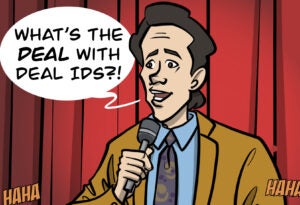
Enjoy this weekly comic from AdExchanger.com that highlights the digital advertising ecosystem …

There’s MMM and MTA, but no single ad measurement works for brands with multiple points of sale. On Tuesday, Northbeam launched an incrementality tool to complete what it calls “the trifecta of digital attribution.”

If you want to know what privacy regulators think about online advertising, it’s not a mystery. Just listen to what they’re saying.

The effect wasn’t just limited to news content. The Reuters.com/lifestyle vertical also had some of its brand-suitable pages blocked.


Swivel and Olyzon’s new partnership brings buy-side and sell-side agents together as early examples of an agentic marketplace.

Inside how Jones Road Beauty is trying to turn messy, conflicting measurement signals into a single testing roadmap for its media mix.

IAPP’s Global Summit in DC was a reminder that AI is moving fast – and judges, privacy lawyers and practitioner are racing to keep up.