

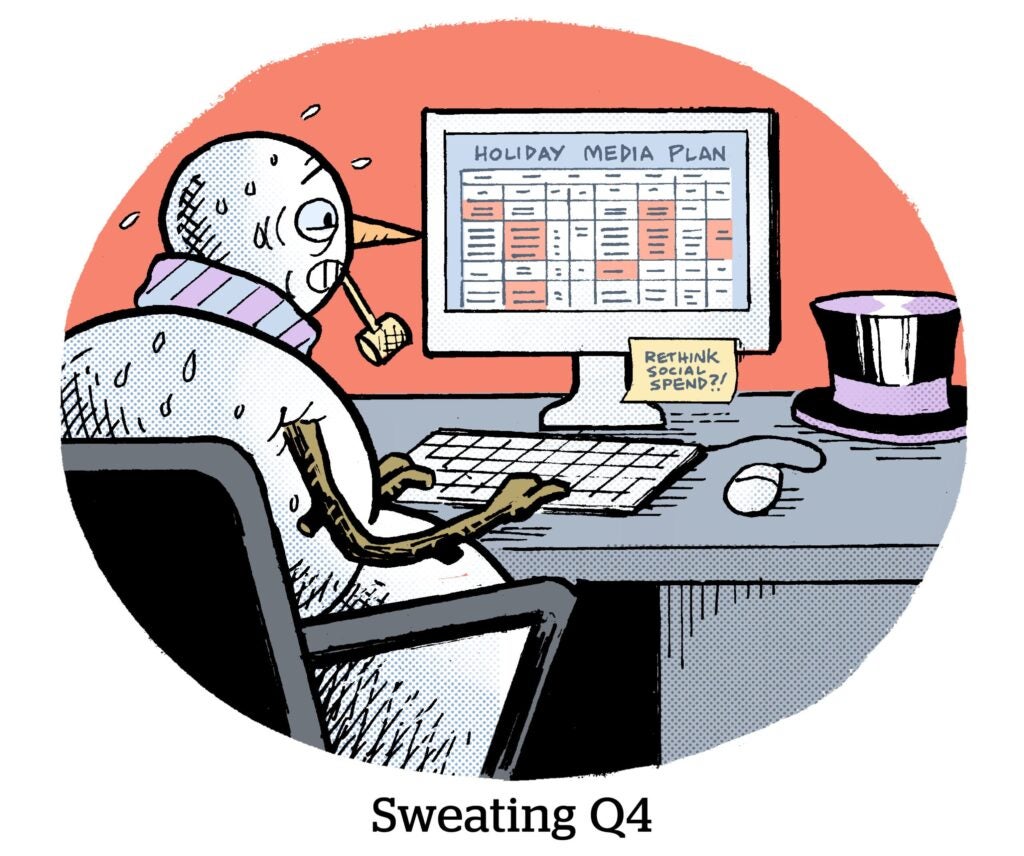
Citing revenue shortfalls and underwhelming Q4 ad spend, several major publishers announced layoffs in December and November.
BuzzFeed said it is cutting 12% of its staff. CNN also announced it will eliminate hundreds of positions. The Washington Post shut down both its Sunday print magazine and its stand-alone Zeus Prime ad tech business. Gannett is cutting 6% of its US media division.
The past two months have also seen Morning Brew, Vice Media, IGN and more announce plans to cut costs by eliminating positions. Some publications, like Protocol, Future and The Recount, announced they will cease publication entirely.
The most commonly cited rationale for these cuts has been marketers’ hesitance to spend on advertising amid persistent economic uncertainty. But publishers’ latest pivot to video and increased competition among digital channels is also likely to blame.

Unfortunately, the current macroeconomic uncertainty doesn’t look likely to give way anytime soon. When BuzzFeed announced its 12% reduction in headcount last week, CEO Jonah Peretti said the cuts were necessary “to weather an economic downturn that I believe will extend well into 2023.”
Marketers are rethinking their spending priorities, creating more competition for ad dollars from other digital channels.
“[Thanks to] media inflation, budget cuts and slower consumer spending, CMOs are scrutinizing, questioning and measuring every single dollar spent,” said Kelsey Chickering, principal analyst at Forrester. “As they squeeze as much value as possible from each impression, media planners will also consolidate to fewer media partners.”
While BuzzFeed prepares for a year-long downturn, how long economic uncertainty will impact ad spending levels is an open question. “There are a lot of questions about advertising spend going into next year: how quickly spending will start in the next year and how fast it will ramp up,” said Jeffrey Hirsch, chief commercial officer at PubMatic.
A push for more US data privacy legislation at the state and federal levels, along with signal loss caused by Apple’s AppTracking Transparency (ATT) initiative, are contributing to this uncertainty, prompting advertisers to take a conservative approach to their marketing investments as we head into the new year, Hirsch said.
Growth in US ad spend is expected to slow down to 4.6% in 2023, compared to 10.2% in 2022, according to Forrester’s 2022 Advertising Forecast. Digital advertising will take a larger share of the pie. The channel is expected to grow its share of total US ad spend to 67% in 2023.
“Despite digital channels growing share of the media mix, publishers aren’t only competing with one another for ad dollars, but also against channels like CTV, retail media and TikTok,” Chickering said.
Another common theory for the pain publishers are experiencing is a negative trickle-down effect from the hits Big Tech platforms have taken in the wake of ATT.
Meta announced a 13% cut to its workforce (representing a whopping 11,000 employees) last month. Also in November, Amazon started rolling out 10,000-plus planned layoffs. Google is expected to announce layoffs soon, too.
But larger publishers, like the ones who have recently announced staffing cuts, should be well protected against the negative effects of ATT, said Stephanie Liu, privacy and marketing analyst at Forrester.
“Premium publishers who have a sizable volume of authenticated traffic, like the Washington Post and BuzzFeed, could actually benefit from data deprecation by offering advertisers better targeting controls,” Liu said.
“Due to the deprecation of cookies and the lower reach and targeting available via indirect sources of impressions – meaning anything not purchased directly through a publisher, whether programmatically or via IO – we see a higher share of impressions and spending going toward walled gardens and large publishers,” agreed Mike Froggatt, a senior director at Gartner and an analyst for its marketing practice.
Since even walled gardens like Facebook and Amazon are making staffing cuts, major publishers may be taking these Big Tech layoffs as a signal that it would be wise to cut back on expenses to weather any pullback in ad spending, Froggatt said.
But digital publishers may be unwise to take too many cues from Big Tech. Many publishers are likely paying the price for following the major social platforms in their latest pivot to video, Froggatt said.
“Video ad production is expensive, and the shelf life is very short,” Froggatt said. But many publishers invested heavily in sales, measurement and creative staff for video. “The vast majority of advertisers don’t have the means to create and run these ads at scale, and video impressions declined faster than display according to our analysis, which ultimately hurts the publishers and causes them to miss forecasted revenue.”
Making heavy investments in video is especially unwise during an economic downturn.
When marketers are under increased pressure to connect every dollar invested to a meaningful increase in sales, they spend more on channels like retail media where sales attribution is easier to provide. Video, in contrast, tends to be more of a branding play, Froggatt said.
While new dollars may be elusive, publishers are less likely to see a pullback in spending from their existing big brand clients. Major brands tend to be slower to change their ad spend in response to short-term economic shocks, he said.
But big brands made up fewer of the total impressions served across desktop and mobile over 2022 compared to historic numbers, Froggatt said. So publishers can’t rely solely on big brands to keep them afloat.
While uncertainty reigns at the moment, publishers should prepare for an eventual return to normal spending levels, Hirsch said. However, they should keep in mind that this economic downturn may last longer than anyone hopes.
“You have to plan for the unknown,” Hirsch said. “And that means not planning for a certain time in which things turn around.”









